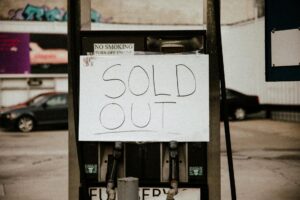

No, Americans cannot currently demand refunds for the gas price spike hitting their wallets in March 2026. There is no federal refund program, no FTC reimbursement mechanism, and no enacted legislation that entitles drivers to compensation for the surge that has pushed the national average to $3.63 per gallon — up nearly 35 cents in a single week. Several bills have been proposed in Congress, including one that would send $500 rebate checks directly to drivers, but none have become law. For now, consumers are absorbing the full cost of a crisis driven largely by the U.S.-Israel military strikes on Iran, which sent crude oil past $100 per barrel for the first time since Russia’s 2022 invasion of Ukraine.
That does not mean the situation is without legal or legislative movement. Lawmakers in both chambers have introduced measures to suspend the federal gas tax, issue direct rebate payments, and even refund consumers for tariff-related price increases. California has a price-gouging law on the books that was specifically designed for moments like this — and has never once been enforced. Meanwhile, the only gas price settlement that actually paid consumers real money, a $63.93 million antitrust case in California, closed its claims deadline in January 2025.
Table of Contents
- Why Can’t Americans Demand Refunds for the Current Gas Price Spike?
- What Proposed Bills Could Put Money Back in Drivers’ Pockets?
- California’s Price Gouging Law — Power on the Books, Never Used
- What Can Consumers Actually Do Right Now?
- Why Gas Price Class Actions Are Rare and Difficult to Win
- The Political Blame Game and What It Means for Relief
- What Could Change and What to Watch For
Why Can’t Americans Demand Refunds for the Current Gas Price Spike?
The short answer is that rising gas prices, even dramatic ones, are not illegal in themselves. Prices at the pump are driven by crude oil markets, refining costs, taxes, and distribution — and when geopolitical events like a military conflict in the Middle East disrupt supply chains, prices rise. That is how commodity markets work, and no law guarantees consumers a stable gas price or a refund when costs increase. The FTC monitors fuel markets for anticompetitive behavior and price-fixing, but as of March 2026, the agency has not launched any refund program tied to the current spike. Refunds in the consumer protection context typically require proof of wrongdoing — a company overcharged you, sold you a defective product, or engaged in deceptive practices. Gas price increases caused by global supply disruptions do not meet that threshold under existing law.
The 74 percent of Americans who told Rasmussen Reports that gas prices have increased this year are not wrong, but being affected by a price increase is different from being entitled to a refund for one. Where refunds have historically been available — like the $63.93 million California gasoline antitrust settlement against Vitol Inc. and SK Energy Americas — they resulted from proven market manipulation, not from prices rising due to external geopolitical forces. The distinction matters. If oil companies are found to be colluding, gouging, or manipulating spot markets during this crisis, future enforcement actions or class action settlements could follow. But those processes take years, and any resulting payments would come long after the current pain at the pump has subsided.

What Proposed Bills Could Put Money Back in Drivers’ Pockets?
Three separate pieces of legislation introduced in 2026 would, if enacted, provide some form of financial relief to americans dealing with high gas prices. None have passed. The most direct is a bill from Rep. Josh Harder that would send drivers $500 gas price rebate checks. The proposal is straightforward — a flat payment to offset the increased cost of fuel — but it faces the same political headwinds that have stalled similar consumer relief measures in a divided Congress. Senators Mark Kelly of Arizona and Richard Blumenthal of Connecticut, along with Rep. Chris Pappas in the House, introduced the Gas Prices Relief Act of 2026.
Rather than a direct payment, this bill would suspend the 18.4 cents per gallon federal gas tax through October 1, 2026. It includes a safeguard worth noting: the Treasury Secretary would be required to monitor whether the savings are actually passed through to consumers rather than absorbed by oil companies as additional profit. That mechanism matters because a gas tax holiday without enforcement simply becomes a windfall for refiners. However, even if the bill passed tomorrow, the savings would amount to roughly $2.76 on a 15-gallon fill-up — meaningful over months, but not transformative for a household already stretched by a 20 percent price increase. The third proposal, the American Consumer Tariff Rebate Act of 2026, takes a different angle entirely. It would provide direct refunds to taxpayers for increased consumer costs attributable to tariffs imposed without congressional authorization. While not exclusively about gas, the bill reflects a broader recognition that current trade and foreign policy decisions are raising costs across the board. The limitation here is significant: tariff rebates would not cover the portion of gas price increases driven by the Iran conflict itself, only the portion tied to unauthorized tariffs.
California’s Price Gouging Law — Power on the Books, Never Used
California offers the most striking example of a government tool that was built for exactly this moment and has sat unused. In March 2023, Governor Newsom signed SB X1-2, which gave the California Energy Commission the authority to cap refinery profit margins and penalize oil companies engaged in price gouging. The law was a direct response to the price spikes Californians endured in 2022 and was meant to prevent a repeat. As of March 13, 2026, with California’s average gas price at $5.34 per gallon and warnings it could surpass $7, the CEC has not exercised those powers. The reason is bureaucratic delay. The CEC voted to postpone implementing the law’s enforcement rules for five years, a decision that has drawn sharp criticism as prices surge.
Governor Newsom himself has publicly blasted the situation, noting that the national average is 56 cents per gallon higher since the Iran conflict began and calling on the Trump administration for accountability. But accountability from Washington does not help California drivers today, and the state’s own enforcement apparatus remains dormant. This matters beyond California because it illustrates a pattern. Consumer protection tools often exist in theory but fail in execution. If you are a California driver paying over $5 per gallon, you live in a state that specifically passed a law to protect you from this scenario — and that law is doing nothing. For drivers in Kansas paying $3.01 per gallon, the difference is not just geography. It reflects the absence of any uniform federal price-gouging standard for fuel.
What Can Consumers Actually Do Right Now?
With no federal refund program and no enacted relief legislation, the practical options for consumers are limited but worth understanding. The most immediate is to track prices and buy strategically. Apps like GasBuddy show real-time local prices, and the spread between the cheapest and most expensive stations in a single metro area can be 50 cents or more. Over the course of a month, choosing the lower-priced station on every fill-up can save a household $30 to $60 depending on driving habits — not a refund, but real money. The tradeoff with driving further to find cheaper gas is obvious: at some point, the extra miles burn the savings. A general rule is that a station more than five miles out of your way needs to be at least 15 to 20 cents cheaper per gallon to break even on fuel costs alone.
Warehouse clubs like Costco and Sam’s Club consistently price gas 20 to 40 cents below surrounding stations, but membership fees and wait times at the pump are part of the calculation. For consumers who believe oil companies are engaging in price manipulation — not just responding to market conditions — the FTC accepts complaints through its online portal. Historically, FTC investigations into fuel pricing have been slow, but they have led to enforcement actions. State attorneys general offices are another avenue. The $63.93 million California gasoline settlement, which combined a $50 million attorney general action with a $13.9 million private class action, began with evidence that Vitol Inc. and SK Energy Americas manipulated spot market prices in California between February and November 2015. That kind of case takes years to develop, but it starts with someone flagging the behavior.
Why Gas Price Class Actions Are Rare and Difficult to Win
Class action lawsuits over gas prices face a fundamental challenge: plaintiffs must prove that the price increase resulted from illegal conduct, not from legitimate market forces. When crude oil jumps past $100 per barrel because of a military conflict that disrupts supply from the Strait of Hormuz, the resulting price increase at the pump is a predictable market response. It is painful, but it is not fraud. The California antitrust settlement succeeded because investigators could demonstrate specific acts of manipulation — trading strategies designed to distort spot market prices in particular counties during a defined time period. That level of specificity is what courts require. A class action arguing that gas is simply “too expensive” would be dismissed. Attorneys evaluating potential cases right now are looking for evidence that refiners are holding back supply, coordinating pricing, or exploiting the crisis to inflate margins beyond what the market conditions justify.
If that evidence emerges, lawsuits will follow, but proving coordination among oil companies is one of the most resource-intensive challenges in antitrust law. There is also a timing limitation that catches consumers off guard. Even when a gas price class action succeeds, the payout per individual is typically modest. The California settlement covered gas purchased in specific counties during a narrow window, and the claim deadline passed on January 8, 2025. By the time a hypothetical 2026 case reaches settlement — likely in 2029 or 2030 — the individual payment might cover a few tanks of gas. That does not mean such cases are not worth pursuing; the deterrent effect on corporate behavior has value. But anyone expecting a class action to reimburse them for this month’s gas bill is working with the wrong timeline.
The Political Blame Game and What It Means for Relief
According to Axios polling from March 12, 2026, 48 percent of Americans blame President Trump and his administration for high gas prices — more than any other factor. This political dimension matters not because blame is inherently productive, but because it shapes the likelihood of legislative relief. A president who is politically invested in gas prices being perceived as someone else’s problem has limited incentive to sign legislation that implicitly acknowledges the crisis.
Meanwhile, the congressional proposals from Kelly, Blumenthal, Pappas, and Harder are all from Democratic lawmakers, and none have attracted the bipartisan support that would be needed for passage. The result is a policy stalemate. Consumers are caught between a geopolitical crisis that is raising costs, a legislature that has proposed but not enacted relief, a regulatory framework that moves too slowly to help in real time, and state-level tools that exist but go unused. The 60-plus cent increase since the Iran conflict began is being borne entirely by consumers, with no mechanism to share that burden.
What Could Change and What to Watch For
The most likely near-term developments are not refunds but rather investigative actions. If the current price spike persists through spring and summer driving season, political pressure on the FTC to investigate refinery margins will intensify. State attorneys general in high-price states may open their own inquiries. If any of those investigations uncover evidence of price manipulation or collusion, the resulting enforcement actions could eventually produce settlements with consumer payouts — but on a timeline measured in years, not weeks.
The proposed legislation is worth tracking as well. If gas prices remain elevated through the 2026 midterm election cycle, the political calculus around bills like the Gas Prices Relief Act and the $500 rebate proposal could shift. Consumer advocacy organizations are also monitoring whether California will finally activate the enforcement provisions of SB X1-2. For now, the most honest answer to the question in the title is: Americans cannot demand refunds for the gas price spike, but the legal and legislative groundwork for future relief is being laid in real time.
You Might Also Like
- Legal Experts Debate If Americans Can Sue Trump For Bypassing Congress And Triggering 60 Cent Gas Price Spike
- Could Americans Recover Money From 60 Cent Gas Price Increase
- Could Trump Face Lawsuits If War Escalation Triggered Nationwide Gas Price Increase