
For most Americans watching gas prices climb roughly 60 cents per gallon in recent weeks, the short answer is no — there is no current legal mechanism to recover that money. The increase, driven by crude oil surging more than $25 per barrel since the Iran conflict escalated, tracks global market forces rather than proven illegal price manipulation. UC Berkeley economist Severin Borenstein has confirmed the spike is “not California-specific” and reflects legitimate supply-and-demand dynamics in the global crude market, which means no fraud claim or class action applies to this particular price jump. That said, the question is more detailed than a simple yes or no. While the current 60-cent spike offers no path to compensation, there are related legal actions — both past and pending — that have sought to return money to consumers harmed by artificial gas price inflation.
A $50 million settlement against gas trading firms Vitol Inc. and SK Energy Americas already resolved claims of California gasoline spot market manipulation in 2015, though the filing deadline has passed. And multiple federal class action lawsuits against major U.S. shale producers are still working through the courts, alleging collusion to limit oil production and inflate prices nationwide.
Table of Contents
- Why Can’t Americans Recover Money From the Current 60-Cent Gas Price Increase?
- The $50 Million California Gas Price Settlement — What Happened and Why Claims Are Closed
- The $59 Billion Unexplained Gas Premium California Drivers Have Been Paying
- Federal Lawsuits Against Shale Producers — What Consumers Should Watch
- Why Gas Prices Are Likely to Get Worse Before They Get Better
- What California’s Unused Price-Gouging Law Tells Us About Consumer Protection Gaps
- What Would Need to Happen for Future Gas Price Recovery
- Frequently Asked Questions
Why Can’t Americans Recover Money From the Current 60-Cent Gas Price Increase?
The critical distinction in any price-gouging or antitrust claim is whether prices rose because of market forces or because of illegal conduct. In the case of the current 60-cent increase, the cause is well-documented: the Iran conflict disrupted global oil supply expectations, crude oil prices jumped accordingly, and refiners passed those costs through to the pump. That chain of events, while painful for consumers, is how commodity markets are supposed to work. No attorney general or private plaintiff can file suit simply because gas got expensive. Compare this to the 2015 California gasoline manipulation case, where investigators found that trading firms Vitol and SK Energy Americas deliberately distorted spot market prices — conduct that had nothing to do with supply and demand and everything to do with market rigging.
That difference is what made a $50 million settlement possible. Without evidence of similar manipulation behind today’s prices, class action attorneys have no viable theory of liability to pursue. Even California’s much-publicized price-gouging law, ABX2-1, offers no help here. The legislation authorized the California Energy Commission to impose refinery profit caps, but the CEC delayed its rulemaking on those caps until 2029. The law exists on paper, but the enforcement tools simply are not built yet — leaving consumers exposed during the current oil shock with no regulatory backstop.

The $50 Million California Gas Price Settlement — What Happened and Why Claims Are Closed
The most relevant precedent for gas price recovery is the settlement California Attorney General Rob Bonta reached with Vitol Inc. and SK Energy Americas. These firms were found to have manipulated California’s gasoline spot market in 2015, artificially inflating prices across Southern California. The $50 million settlement split $37.5 million toward affected consumers and $12.5 million as a penalty under California’s Unfair Competition Law.
Eligibility was limited to people who purchased gasoline in 10 Southern California counties — Los Angeles, San Diego, Orange, Riverside, San Bernardino, Kern, Ventura, Santa Barbara, San Luis Obispo, and Imperial — between February 20 and November 10, 2015. The official settlement site at vlc.calgaslitigation.com administered claims, and payments are expected within 90 days of final approval, potentially arriving in late 2025 or into 2026 depending on the appeals timeline. However, the claims deadline passed on January 8, 2025, and no new claims are being accepted. If you did not file by that date, this settlement is no longer available to you regardless of whether you bought gas in the affected area during the eligible period. This is a common frustration with class action settlements — by the time most people hear about them, the window has already closed.
The $59 Billion Unexplained Gas Premium California Drivers Have Been Paying
Beyond specific instances of proven market manipulation, there is a broader and more troubling pattern. The California Energy Commission’s oversight division identified an unexplained gasoline premium averaging roughly 41 cents per gallon between 2015 and 2024. Over that decade, this mystery surcharge cost California drivers an estimated $59 billion — money that cannot be attributed to taxes, transportation costs, environmental regulations, or crude oil prices. That figure is staggering, and it raises an obvious question: if the premium is unexplained, why hasn’t anyone sued to recover it? The answer lies in the gap between suspicious pricing and provable wrongdoing.
Identifying an unexplained cost is the first step in an investigation, not the last. Regulators and attorneys would need to demonstrate that specific companies engaged in specific illegal conduct — price-fixing, supply manipulation, or anticompetitive agreements — to turn that $59 billion number into an actionable legal claim. No recovery mechanism has been enacted for this premium. The CEC has documented the problem, but neither the legislature nor the attorney general has moved to create a pathway for consumers to recoup what they overpaid. For now, it remains one of the most expensive open questions in American energy markets.
Federal Lawsuits Against Shale Producers — What Consumers Should Watch
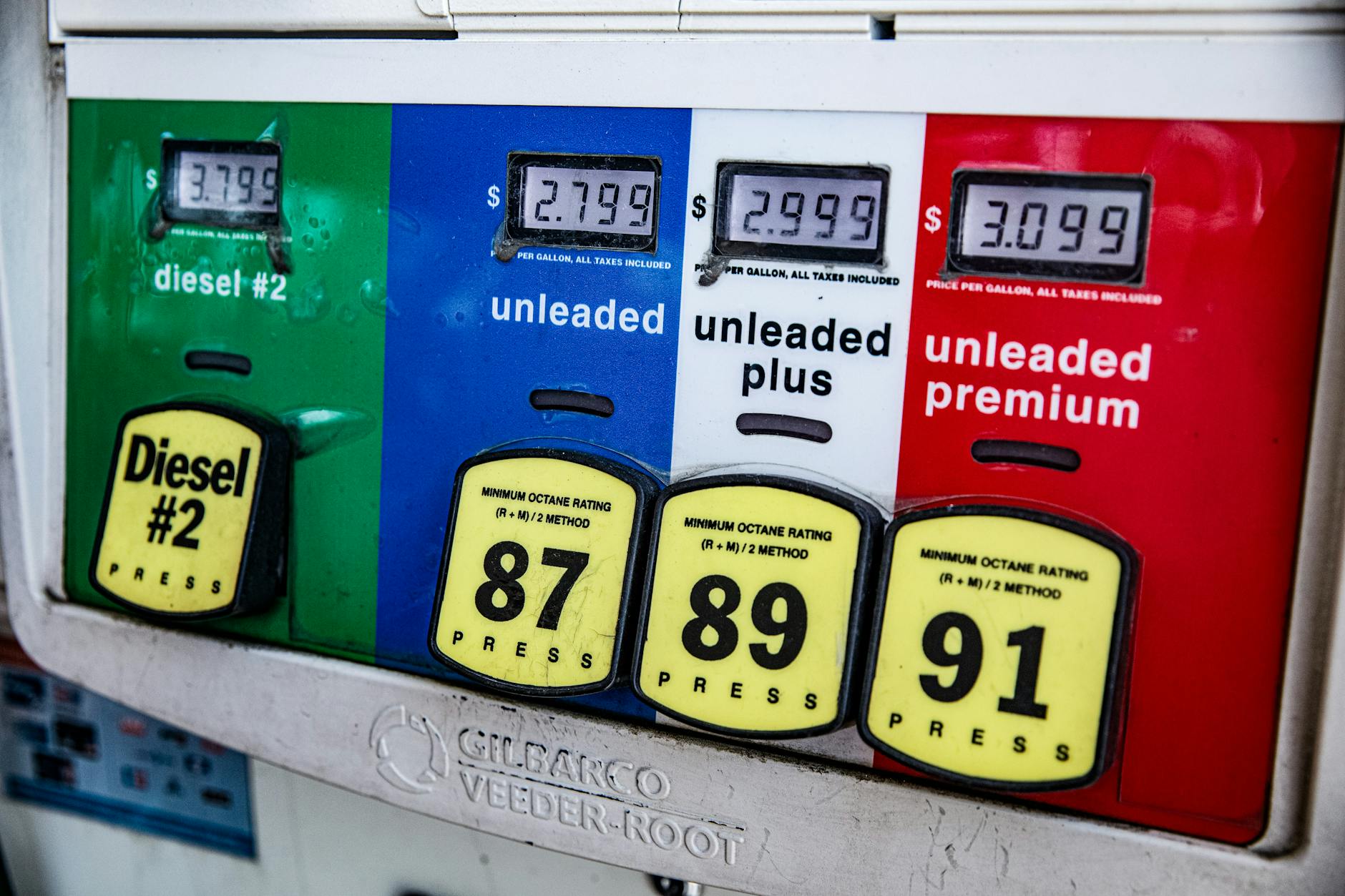
While the current gas price spike and the unexplained California premium offer no immediate relief, there is active federal litigation that could eventually result in consumer compensation on a national scale. Multiple class action lawsuits have been filed against major U.S. shale producers — including Hess, Pioneer Natural Resources, Occidental, and Diamondback Energy — alleging that these companies colluded to limit domestic oil production and inflate prices for American consumers. The Federal Trade Commission added weight to these allegations when it found that Pioneer Natural Resources’ former CEO colluded with OPEC officials to coordinate production cuts. That finding is significant because it moves the claims beyond speculation — a federal agency has already concluded that at least one executive engaged in the kind of conduct the lawsuits allege.
The tradeoff for consumers is time versus potential payout. These cases are still in litigation, and complex antitrust suits against well-funded oil companies can take years to resolve. No settlements have been reached, and there is no guarantee any will be. But if the plaintiffs prevail, the recovery could be substantial given the breadth of the alleged conspiracy and the number of Americans affected. The practical advice is to stay informed but manage expectations — this is a long game.
Why Gas Prices Are Likely to Get Worse Before They Get Better
Consumers hoping the current 60-cent increase is a temporary spike should brace for additional pressure. Two major California refinery closures are on the horizon: Phillips 66’s Wilmington facility shut down in late 2025, and Valero’s Benicia refinery is scheduled to close in April 2026. Researchers at UC Davis estimate these closures could add $1.21 per gallon on top of current prices by approximately August 2026. That projection means Californians who are already paying above $5.30 per gallon statewide — with Bay Area averages above $5.40 and some San Francisco stations posting $6.50 — could see regular unleaded approach or exceed $7.00 per gallon in some markets.
And because California’s refinery profit cap rules will not be in place until 2029, there is no regulatory ceiling to prevent prices from climbing as supply tightens. The important limitation to understand here is that refinery closures, like geopolitical supply disruptions, are generally legal. A company deciding to shut down an unprofitable refinery is not price manipulation, even if the downstream effect is higher prices. Unless evidence emerges that closures were coordinated to reduce competition — a much harder case to prove — these price increases will also fall outside the scope of legal recovery.
What California’s Unused Price-Gouging Law Tells Us About Consumer Protection Gaps
California passed ABX2-1 specifically to address gas price spikes, yet as of March 2026, the law has never been used. The California Energy Commission was tasked with establishing refinery profit caps, but the rulemaking process was delayed until 2029. The result is a law that exists in name only during the very type of crisis it was designed to address.
This gap between legislative intent and regulatory implementation is worth noting for consumers in any state. The existence of a consumer protection law does not guarantee protection. Enforcement mechanisms, funding, rulemaking timelines, and political will all determine whether a statute actually functions. Californians who assumed ABX2-1 would shield them from the current price spike are learning that lesson in real time — at roughly 60 extra cents per gallon.
What Would Need to Happen for Future Gas Price Recovery
For Americans to recover money from gas price increases in the future, one of several things would need to occur. Federal antitrust suits against shale producers would need to reach settlements that include consumer restitution — a plausible but uncertain outcome given the complexity of the cases. State attorneys general would need to identify and prove specific instances of price manipulation beyond the already-settled 2015 California case. Or legislatures would need to create new recovery mechanisms, such as enforceable profit caps with consumer rebate provisions.
The most likely near-term development is progress in the federal shale collusion cases. With the FTC already on record finding that Pioneer’s former CEO coordinated with OPEC, plaintiffs have a factual foundation that many antitrust cases lack at the outset. If those cases result in settlements, they could establish a model for future claims whenever oil companies are caught artificially inflating prices. Until then, the 60-cent increase Americans are absorbing today is, legally speaking, simply the cost of filling up during a geopolitical crisis.
Frequently Asked Questions
Can I file a claim for the current 60-cent gas price increase?
No. The current increase is driven by the Iran conflict and global crude oil market dynamics, not proven illegal manipulation. There is no active lawsuit or settlement related to this specific price spike, and no legal basis for a claim at this time.
Is it too late to file a claim in the Vitol/SK California gas price settlement?
Yes. The claims deadline was January 8, 2025, and no new claims are being accepted. The official settlement site is vlc.calgaslitigation.com. If you filed before the deadline, payments are expected within 90 days of final court approval.
Who was eligible for the $50 million California gas price settlement?
Consumers who purchased gasoline in 10 Southern California counties — Los Angeles, San Diego, Orange, Riverside, San Bernardino, Kern, Ventura, Santa Barbara, San Luis Obispo, and Imperial — between February 20 and November 10, 2015.
Are there any pending lawsuits that could result in gas price refunds?
Yes. Multiple federal class action lawsuits are pending against U.S. shale producers including Hess, Pioneer Natural Resources, Occidental, and Diamondback Energy, alleging collusion to limit production and inflate oil prices. These cases are still in litigation with no settlements yet.
Why hasn’t California used its gas price-gouging law during the current spike?
California’s ABX2-1 law authorized refinery profit caps, but the California Energy Commission delayed its rulemaking on those caps until 2029. The enforcement tools authorized by the law have not been built yet, leaving no regulatory mechanism available during the current crisis.
How much higher could gas prices go in 2026?
UC Davis researchers estimate that two upcoming California refinery closures — Phillips 66 Wilmington and Valero Benicia — could add approximately $1.21 per gallon above current prices by around August 2026, on top of any increases from the ongoing Iran-related crude oil spike.
You Might Also Like
- Can Americans Claim Financial Harm From 60 Cent Gas Price Increase After War Escalation
- Legal Experts Debate If Americans Can Sue Trump For Bypassing Congress And Triggering 60 Cent Gas Price Spike
- Lawyers Ask If Americans Can Recover Money After Gas Prices Jumped 60 Cents