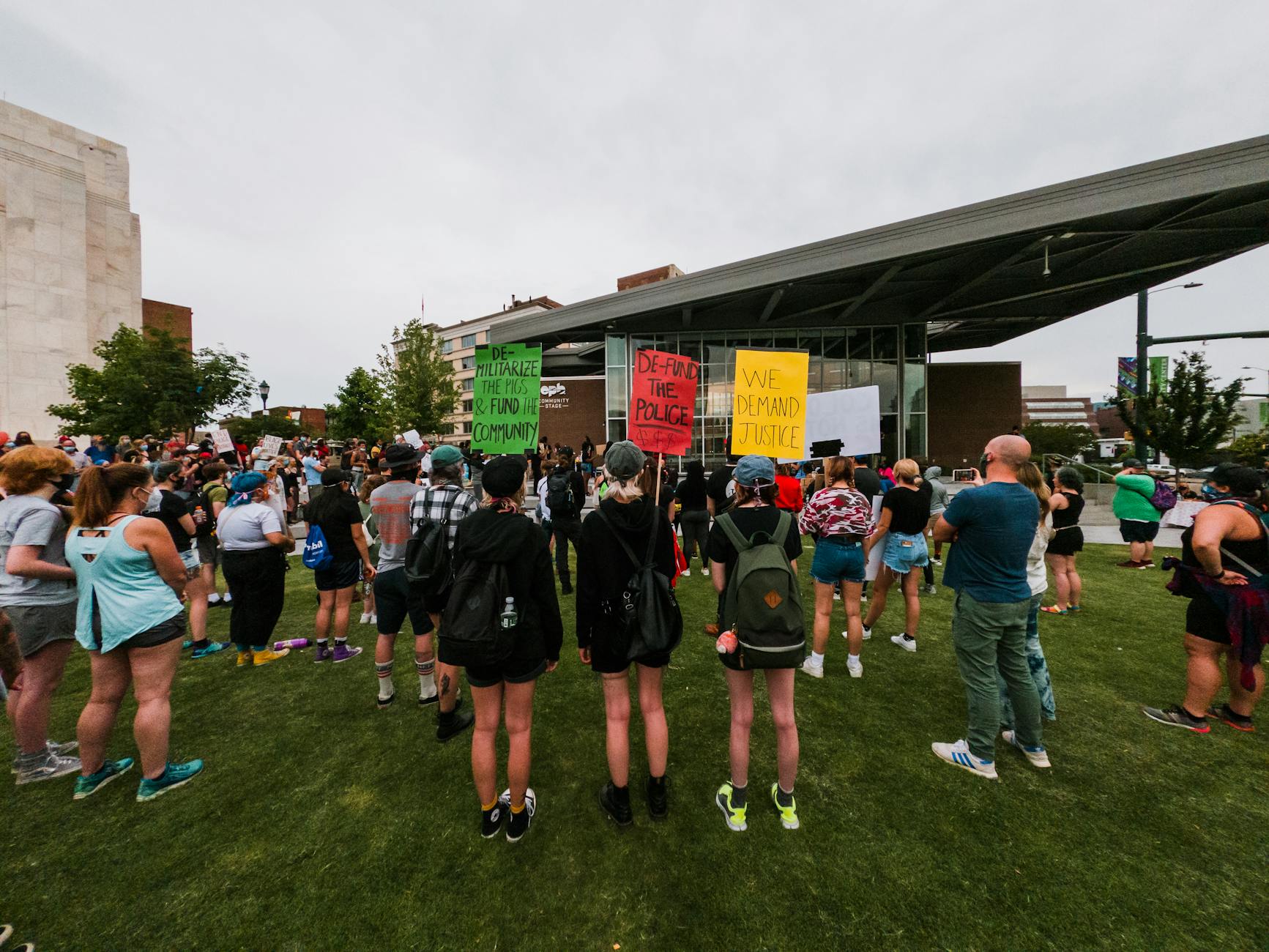
Americans feeling the sting of gas prices that have jumped more than 60 cents in a single month do have some legal options, but the path to “demanding justice” is narrower than most people realize. There is no federal price gouging law on the books, and while more than 37 states have anti-price gouging statutes, most of those laws only kick in during a declared state of emergency and target excessive retail markups rather than the upstream forces actually driving prices higher. The legal avenues that do exist — state attorney general complaints, antitrust litigation, and in rare cases class action settlements — require specific conditions that not every price spike meets. The national average hit $3.58 per gallon as of March 11, 2026, up from $2.94 just one month earlier, a spike driven largely by the U.S.-Israel war on Iran and Iran’s closure of the Strait of Hormuz.
Crude oil has surged to $119 per barrel, climbing more than 25 percent since the conflict began in late February. California drivers are paying an average of $5.34 per gallon, while Kansas sits at the low end at $3.01. Prediction markets place 36 percent odds on gas hitting $5 per gallon nationally by the end of March.
Table of Contents
- What Legal Rights Do Americans Have When Gas Prices Spike?
- Why Federal Price Gouging Protections Still Do Not Exist
- The $50 Million California Gas Settlement That Proved Manipulation Happens
- How To Report Suspected Gas Price Gouging in Your State
- The 18 Oil Company Antitrust Lawsuits and What They Mean for Consumers
- How the Iran Conflict Is Driving the Current Spike
- What Comes Next for Gas Prices and Consumer Protections
- Frequently Asked Questions
What Legal Rights Do Americans Have When Gas Prices Spike?
The short answer is that it depends entirely on where you live and what is causing the spike. At the federal level, Congress has introduced bills like the gas price Gouging Prevention Act (S.3920) multiple times, but none have been enacted into law. Federal antitrust statutes can apply if companies are engaged in price-fixing conspiracies — meaning they collude to set prices artificially high — but they do not cover price increases that result from market forces like a war disrupting global oil supply. In other words, gas costing more because crude oil went from $95 to $119 a barrel is not, by itself, illegal. State laws offer more protection, but with significant limitations. More than 37 states have anti-price gouging statutes on the books, according to FindLaw, though the details vary widely. California bars price increases of more than 10 percent during a declared state of emergency.
Kansas sets the threshold higher, at 25 percent. The critical caveat is that most of these laws require a governor or other official to formally declare a state of emergency before they activate. A geopolitical conflict overseas, even one that directly drives up fuel costs domestically, does not automatically trigger those declarations. If your state governor has not declared an emergency related to energy prices, the price gouging statute in your state may simply not apply to the current spike. There is an important distinction between a gas station owner marking up fuel far beyond what wholesale costs justify versus prices rising because the underlying commodity — crude oil — has gotten more expensive. State price gouging laws generally target the first scenario. If a station is paying more for its wholesale supply and passing that cost along with a typical margin, that is usually legal even if the resulting price feels outrageous to consumers.
Why Federal Price Gouging Protections Still Do Not Exist
Despite years of legislative attempts, the United States remains one of the few major economies without a federal price gouging law for fuel. The Congressional Research Service has documented multiple efforts, including the Gas Price Gouging Prevention Act, but these bills have consistently stalled amid debates over government intervention in energy markets. Opponents argue that price controls distort supply signals and can worsen shortages. Proponents counter that consumers are left defenseless during crises when companies exploit disruptions for outsized profits. The absence of federal law means enforcement is a patchwork. A consumer in California has access to some of the strongest protections in the country, while a consumer in a state without a price gouging statute has essentially no recourse beyond federal antitrust claims — which require proving an actual conspiracy, not just high prices.
This creates a situation where the legal options available to you are largely an accident of geography. However, even in states with strong laws, enforcement is not guaranteed. California passed a landmark law in 2023 (ABx2-1) giving regulators the power to cap refinery profit margins and penalize oil companies for gouging. Yet as of March 13, 2026, the state has not invoked those powers despite the current spike. The law exists on paper, but its practical value to consumers depends on political will to enforce it. If Congress ever does pass a federal price gouging law, it would likely face immediate legal challenges and take months or years to implement. For the current crisis, consumers are stuck with the tools that already exist at the state level.
The $50 Million California Gas Settlement That Proved Manipulation Happens
The most significant precedent for consumers came from The State of California v. Vitol Inc., et al., which resulted in a $50 million settlement. Vitol Inc., SK Energy Americas, and SK Trading International were accused of manipulating gasoline spot market price indices, which in turn inflated retail gas prices across Southern California. The case was brought under California’s Cartwright Act, the state’s antitrust law. Of the $50 million, $37.5 million went directly to consumers who purchased gas in 10 Southern California counties between February 20 and November 10, 2015. The remaining $12.5 million was assessed as a penalty under California’s Unfair Competition Law.
Claims closed on January 8, 2025, and payments began disbursing on April 29, 2025. A separate $13.9 million settlement was established for non-California residents affected by the same gasoline spot market manipulation, acknowledging that price manipulation in one region can ripple outward. This case matters because it demonstrated that gas price manipulation is not hypothetical. Companies were caught, sued, and forced to pay. But it also illustrates the timeline problem. The manipulation occurred in 2015, and consumers did not start receiving payments until 2025 — a full decade later. Anyone expecting quick relief from a class action lawsuit during the current crisis should understand that litigation moves slowly, and settlements, when they come, often arrive years after the harm occurred.

How To Report Suspected Gas Price Gouging in Your State
The most immediate step any consumer can take is filing a complaint with their state attorney general. Every state AG office accepts consumer complaints, and during periods of rapid price increases, many offices actively monitor fuel prices for signs of gouging. U.S. PIRG provides a state-by-state guide on how to file these complaints, which typically involves documenting the price you paid, when you paid it, the station’s location, and any evidence that the markup is disproportionate to wholesale cost changes. The tradeoff between filing a complaint and pursuing private litigation is significant. A complaint to the attorney general costs nothing and can trigger an investigation that benefits all consumers in the state.
Private litigation or joining a class action, by contrast, requires legal representation and years of waiting, but can result in direct financial compensation. For most consumers, the complaint route is the better first step. Attorney general investigations can also lead to enforcement actions that have broader impact — California’s Vitol settlement originated from a state AG investigation. One limitation worth noting: filing a complaint does not guarantee action. Attorneys general have limited resources and must prioritize cases where the evidence of gouging is clearest and the potential impact is largest. A single station charging 50 cents more than its neighbors might get investigated. A statewide increase that tracks with rising crude oil prices probably will not, because that pattern is consistent with market forces rather than gouging.
The 18 Oil Company Antitrust Lawsuits and What They Mean for Consumers
A separate but related legal front involves 18 oil companies currently facing antitrust lawsuits alleging a conspiracy to limit shale oil production to artificially inflate fuel prices. The defendants include major names like Hess Corp., Pioneer Natural Resources, Occidental Petroleum, and Diamondback Energy, among others. A judicial panel has consolidated these cases, which allege that companies coordinated to restrict supply rather than compete, keeping prices higher than they would have been in a genuinely competitive market. These cases are distinct from the current Iran-related price spike, but they underscore a pattern that consumer advocates have long identified: the oil industry’s structure makes coordinated behavior possible even without explicit agreements. If plaintiffs prevail, the result could include both damages for past harm and injunctive relief that changes how these companies operate going forward. However, antitrust cases of this scale are enormously complex.
The consolidation itself signals that courts expect a long, resource-intensive process. For consumers watching gas prices climb today, these lawsuits are a reminder that the legal system does eventually catch up with market manipulation — but “eventually” can mean years. The Vitol case took a decade from manipulation to payout. These shale production cases may follow a similar timeline. Anyone counting on litigation to solve the immediate pain at the pump will be disappointed. These cases are about accountability after the fact, not real-time price relief.

How the Iran Conflict Is Driving the Current Spike
The current price surge is rooted in a specific geopolitical event: the U.S.-Israel war on Iran and Iran’s subsequent closure of the Strait of Hormuz, through which roughly 20 percent of the world’s oil supply passes. Crude oil has jumped to $119 per barrel, up more than 25 percent since the conflict began in late February 2026. The Center for American Progress has noted that the war will raise fuel prices and costs throughout the broader economy, affecting everything from shipping to food prices.
Economists warn that consumers could be “hammered” by prolonged energy price disruption even if the Iran conflict ends quickly. CSIS analysis points to the risk of damaged facilities and disrupted logistics chains that could keep supply constrained well after hostilities cease. This matters for any legal analysis because a price increase driven by a genuine supply disruption — as opposed to corporate manipulation — is much harder to challenge in court. Oil companies can credibly argue they are responding to the same market forces as everyone else, making price gouging claims harder to prove.
What Comes Next for Gas Prices and Consumer Protections
The outlook depends heavily on two unknowns: how long the Iran conflict lasts and whether any state or federal officials take action on the enforcement tools they already have. California’s unused ABx2-1 powers represent the most immediate opportunity — if regulators invoke the law, it could cap refinery margins and provide a test case for whether such interventions actually moderate prices at the pump. Other states may face pressure to declare emergencies that would activate their own price gouging statutes.
On the legislative front, the current crisis may provide the political momentum that previous spikes lacked. Every major gas price surge renews calls for federal price gouging legislation, and with prediction markets placing meaningful odds on $5 per gallon nationally, the pressure on Congress will intensify. Whether that translates into actual legislation remains uncertain, but consumers should watch for new state-level enforcement actions and consolidated antitrust rulings in the months ahead, as those are the most likely sources of near-term legal developments.
Frequently Asked Questions
Is it illegal for gas stations to raise prices during a crisis?
It depends on your state. More than 37 states have price gouging laws, but most only apply during a declared state of emergency. Even then, the laws typically target excessive markups beyond a threshold (such as 10 percent in California or 25 percent in Kansas), not all price increases. If no emergency has been declared in your state, general price increases are usually legal regardless of how steep they feel.
Can I join a class action lawsuit over high gas prices?
Class actions require evidence of specific illegal conduct, such as price-fixing or market manipulation, not just high prices driven by market conditions. The current antitrust lawsuits against 18 oil companies allege a conspiracy to restrict shale production. If those cases succeed and a class is certified, affected consumers may be able to file claims. But this process takes years — the Vitol settlement took a decade from harm to payout.
How do I report suspected gas price gouging?
File a complaint with your state attorney general’s office. Document the price, date, station location, and any evidence that the markup exceeds what wholesale cost changes would justify. U.S. PIRG maintains a state-by-state guide to reporting price gouging. The complaint is free to file and can trigger an investigation.
Did the California gas price settlement actually pay out?
Yes. The $50 million settlement in The State of California v. Vitol Inc., et al. resulted in $37.5 million going to consumers who bought gas in 10 Southern California counties between February 20 and November 10, 2015. Payments began disbursing on April 29, 2025. A separate $13.9 million settlement covered non-California residents affected by the same manipulation.
Why hasn’t California used its new gas price gouging law?
California’s ABx2-1, signed in 2023, gives regulators the power to cap refinery profit margins and penalize oil companies. As of March 13, 2026, the state has not invoked these powers despite gas averaging $5.34 per gallon. The reasons likely involve political considerations and the complexity of determining whether current prices reflect genuine supply disruption versus excessive profiteering.
Will gas prices hit $5 per gallon nationally?
Prediction markets place approximately 36 percent odds on gas reaching $5 per gallon nationally by the end of March 2026. The outcome depends largely on the duration of the Iran conflict and whether the Strait of Hormuz remains closed. Economists warn that even a quick resolution may not bring immediate relief due to damaged infrastructure and disrupted logistics.
You Might Also Like
- Could Americans Demand Refunds For Gas Price Spike
- Could Americans Recover Money From 60 Cent Gas Price Increase
- Could Americans File Claims Over Gas Price Surge