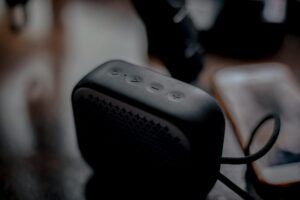

The Sonos Speaker Bricking Planned Obsolescence Class Action refers to multiple lawsuits alleging that Sonos deliberately rendered older speaker models obsolete through forced software updates while simultaneously releasing a catastrophically flawed app redesign that broke core features for millions of customers. The saga spans from Sonos’s 2020 decision to discontinue software support for legacy products like the original Zone Players and Connect models, to May 2024 when a major app redesign left 15.3 million customers unable to control their speakers, missing alarm functionality, experiencing app crashes, and losing access to playlists and subwoofer controls. These alleged practices represent a pattern of either engineering products to fail prematurely or deliberately sabotaging functionality to force consumer upgrades.
This controversy has resulted in multiple federal class action lawsuits, including a case filed by Raymond Goodrow in June 2025 (Case 2:25-cv-05776 in the Central District of California) and additional litigation brought by Bornemann et al. in May 2024. As of April 2026, these lawsuits remain in active litigation with no settlement reached, though Sonos has faced severe financial consequences including a reported $100 million impact and the departure of CEO Patrick Spence in January 2025.
Table of Contents
- How Did Sonos Practice Planned Obsolescence on Legacy Speakers?
- The May 2024 App Redesign Catastrophe
- Which Sonos Devices and Customers Were Actually Impacted?
- The Legal Response and Current Lawsuit Status
- Financial and Personal Impact on Customers
- What Customers Should Do Right Now
- The Broader Implications for Consumer Rights and Smart Device Obsolescence
How Did Sonos Practice Planned Obsolescence on Legacy Speakers?
In January 2020, Sonos announced it would discontinue software updates for some of its oldest speaker models, including the original Zone Players from 2006, Connect and Connect:Amp devices from 2011-2015, and the first-generation Play:5 speakers from 2009. The company’s justification was that maintaining backward compatibility with these decade-old products was no longer “practical or cost-effective,” as stated in its Q4 2019 10-K financial filing. This language signaled corporate intent to stop supporting older hardware, effectively ending the useful lifespan of products customers had purchased for $300-$600 each. What made this particularly controversial was Sonos’s initial response in December 2019, when the company attempted to incentivize customers to discard their functioning speakers through a “Recycle Mode” trade-up program.
The program offered a 30% discount on new Sonos products but only after customers activated an irreversible mode that completely bricked their existing devices, rendering them non-functional. The backlash was immediate and severe—customers felt forced to choose between keeping a non-updated speaker or destroying it to get a discount. CEO Patrick Spence issued an apology in January 2020, pledging continued support for legacy models, and Sonos subsequently modified the program to offer the 30% discount without requiring device bricking. However, the underlying issue remained: Sonos had made clear its intention to eventually discontinue service for older products, and the company followed through on that threat. Legacy Sonos owners found themselves in a bind—purchase new equipment or accept that their existing speakers would eventually become unsupported and potentially unable to function with future app updates.
- —

The May 2024 App Redesign Catastrophe
If the 2020 legacy product discontinuation represented planned obsolescence through neglect, the May 2024 app redesign represented something arguably worse: the destruction of functionality in working devices through a software update. Sonos released a completely redesigned mobile app that was fundamentally broken at launch, and the company’s failure to properly test or QA this update affected an estimated 15.3 million customers globally. Unlike the legacy product issues, this problem didn’t discriminate between old and new speakers—it impacted the entire Sonos user base across all device generations. The 2024 app update removed or severely degraded critical features that customers relied on daily. Alarm control disappeared entirely, leaving customers unable to set or manage speaker-based alarms. Speaker visibility in the app became inconsistent, sometimes showing devices and sometimes not. Volume controls became unresponsive, making it impossible to adjust speaker levels reliably.
Subwoofer controls were removed, eliminating users’ ability to fine-tune bass levels. Playlist management functionality vanished, preventing customers from accessing their saved playlists. The app crashed frequently, sometimes rendering it unusable for extended periods. For a company that built its entire ecosystem around software-enabled convenience, shipping an app that removed convenience features was a fundamental betrayal of customer expectations. The financial impact on Sonos was severe: the company reported an estimated $100 million hit to its business as a direct result of the app disaster. The reputational damage forced the company to delay new product launches and eventually led to 200 employee layoffs in February 2025. These weren’t consequences of market forces or competition—they were direct results of Sonos’s own software failure.
- —
Which Sonos Devices and Customers Were Actually Impacted?
The Sonos bricking controversy had two distinct victim pools. First, owners of legacy devices discontinued in 2020 faced the threat of obsolescence: anyone who owned original Zone Players, Connect, Connect:Amp, or first-generation Play:5 speakers found themselves in an unsupported category. These customers had invested $300-$600 per speaker years earlier, with reasonable expectations that the devices would continue functioning and receiving updates for their entire operational lifespan. Instead, Sonos essentially told them their purchases had expiration dates. The second and far larger group was the 15.3 million customers affected by the May 2024 app redesign disaster. This included anyone with any Sonos speaker who relied on the mobile app to control their speakers, set alarms, manage playlists, or adjust subwoofer levels. A Sonos user in 2024 could have purchased their first speaker just months earlier and still be impacted by the broken app—the problem wasn’t limited to older hardware.
Customers with brand-new Sonos speakers found those devices essentially crippled because the software designed to control them had become unreliable. A music listener who wanted to stream audio and adjust volume faced app crashes and unresponsive controls. A parent trying to set an alarm on a Sonos speaker for wake-up time discovered that feature no longer existed. A home theater enthusiast attempting to fine-tune subwoofer bass found the controls missing. The breadth of the 2024 impact made it exceptionally difficult for affected customers to even understand their options. Some considered the app issues temporary glitches and waited for fixes that came slowly. Others switched to competing ecosystems like Spotify or Apple AirPlay and stopped using their Sonos app entirely. Sonos eventually released updates that partially restored functionality, but the company never fully restored the depth of control users previously enjoyed, and millions lost trust in the company’s ability to maintain their products long-term.
- —
The Legal Response and Current Lawsuit Status
The failures described above prompted multiple class action lawsuits. Raymond Goodrow filed the primary federal class action lawsuit on June 25, 2025, in the United States District Court for the Central District of California (Case 2:25-cv-05776). This case specifically targeted the May 2024 app update debacle and alleges that Sonos either knew the update was broken before release or was negligent in deploying it without adequate testing. Goodrow’s lawsuit asserts that customers purchased Sonos products with the reasonable expectation that they would function properly and receive timely updates, and that Sonos breached that implied contract by releasing software that degraded product performance and removed essential features. A second lawsuit, Bornemann et al.
V. Sonos, was filed in May 2024 and takes a broader approach, targeting both the app update issues and the historical pattern of planned obsolescence. Collectively, these lawsuits allege that Sonos engaged in unfair and deceptive business practices by either knowingly shipping defective software or deliberately degrading older products to force consumer upgrades. As of April 2026, neither lawsuit has resulted in a settlement agreement. The cases remain in active litigation, with discovery ongoing and no trial date yet scheduled. This means that customers affected by Sonos’s practices do not yet have an established settlement through which to claim compensation, though they may be eligible to join the class action if they purchased Sonos speakers affected by either the 2020 discontinuation or 2024 app failure.
- —
Financial and Personal Impact on Customers
The impact of Sonos’s actions extended far beyond mere inconvenience. Customers who purchased legacy speakers like the Connect or original Zone Players in 2011-2015 for $300-$500 per unit found that their investments had diminishing lifespans. A customer who bought a $400 Connect speaker expecting 10+ years of use got roughly 9 years before Sonos announced discontinuation of software support. For a customer who had built an entire multi-room audio system using these legacy devices, the discontinuation threat forced a difficult choice: replace an entire setup (potentially costing $2,000-$5,000 or more) or accept an unsupported system. For the 15.3 million affected by the 2024 app crisis, the damage was sometimes more immediate and disruptive.
A small business that used Sonos speakers to stream background music during customer hours found the app too unreliable for everyday use, forcing a switch to competing systems and essentially writing off their Sonos investment. A family that had invested in Sonos speakers for multiple rooms discovered that one update left them unable to reliably control audio, adjust volume, or set alarms—features they had paid for and expected to work. Early adopters who had positioned themselves as Sonos loyalists felt personally betrayed by the company’s failure to properly test a major update before deployment. The layoffs and leadership changes at Sonos in early 2025 provided limited comfort to customers. Even as the company publicly acknowledged problems and worked to fix them, customers recognized that the company’s fundamental failure was organizational—no amount of CEO changes could undo the damage to customer trust. Someone who experienced app crashes in June 2024 and waited months for fixes questioned whether Sonos had the competence to build reliable software at all, and many made the permanent decision to explore alternatives.
- —
What Customers Should Do Right Now
If you own Sonos speakers and are reading this in 2026, several actionable steps are worth considering. First, determine whether any of your devices fall into the legacy product category discontinued in 2020 (original Zone Players, Connect, Connect:Amp, first-generation Play:5). If you own these devices, verify whether they still function with the current Sonos app. While Sonos eventually backed away from completely bricking these devices, functionality has gradually degraded as the company prioritizes newer hardware. If these legacy devices remain functional but are approaching obsolescence, you may want to evaluate replacement options before they become completely unsupported. Second, if you experienced problems with the May 2024 app update and are still dealing with missing features or unreliable functionality, document these issues.
Take screenshots of problems, note specific features that don’t work, and record dates when the app crashes. If you suffered financial loss—for example, you had to purchase replacement speakers from a different manufacturer—preserve receipts and invoices. This documentation will be valuable if you choose to join the pending class action lawsuits. You can look up the Raymond Goodrow case (Case 2:25-cv-05776) in the Central District of California federal court database to understand the specific claims being made and monitor the case’s progress toward a potential settlement. Finally, carefully evaluate your ongoing use of Sonos products. If reliability is critical to your setup—for example, if you rely on Sonos alarms for time-sensitive tasks, or if your home automation system depends on Sonos speaker commands—consider whether the company’s historical track record with planned obsolescence and software updates makes it a trustworthy long-term platform. Some customers have decided to gradually transition to alternative systems like Apple AirPlay, Google Home, or Amazon Alexa, which may offer more predictable long-term support and feature stability.
- —
The Broader Implications for Consumer Rights and Smart Device Obsolescence
The Sonos bricking scandal arrives at a critical moment in consumer technology history. As more devices become “smart” and software-dependent, questions about planned obsolescence and forced upgrade cycles will only intensify. A person who buys a smart speaker, smart thermostat, or connected appliance reasonably expects that device to continue functioning for years. Yet companies like Sonos have demonstrated that they reserve the right to declare older hardware “unsupported” and either gradually degrade functionality or explicitly brick devices through updates.
The May 2024 app disaster added a new dimension to this problem. It’s one thing for a company to announce that older devices won’t receive future feature updates—that’s arguably defensible based on hardware limitations. It’s another thing entirely for a company to release an update that removes previously working features from devices that are still widely used and relatively new. If Sonos can ship an app update that removes alarm functionality, subwoofer controls, and playlist management, what prevents other smart device manufacturers from doing the same? The Sonos lawsuits, if they succeed, could establish important precedent that companies cannot deliberately degrade product functionality through software updates, even if they claim to be fixing bugs or improving performance. A victory in these cases would signal to the entire tech industry that planned obsolescence through app degradation has legal consequences, potentially reshaping how companies approach software updates in the future.
- —
You Might Also Like
- iRobot Roomba Privacy Camera Class Action
- Wyze Camera Data Breach Security Class Action
- Whirlpool Front-Load Washer Mold Defect Class Action
Open Settlements You Can Claim Now
Browse current class action settlements accepting claims — several require no proof of purchase: