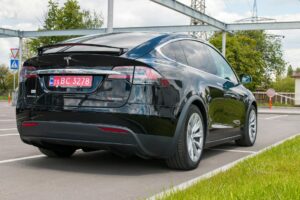

The Tesla Battery Range Misrepresentation Class Action is a lawsuit filed on August 2, 2023, in U.S. District Court for the Northern District of California, alleging that Tesla systematically deceived consumers about how far their vehicles could travel on a single charge. The case, Porter et al v. Tesla, Inc., claims the company fraudulently induced buyers to purchase vehicles by using inflated range projections on dashboards and marketing materials. For example, a Tesla owner who purchased a Model Y Long Range believing it would deliver 330 miles of range per the company’s claims discovered through EPA testing that the realistic range was only 310 miles—a significant difference that could mean the difference between reaching a charging station and running out of power on a long trip.
Tesla owners contend that the company’s range estimates violated California Consumer Legal Remedies Act, California Unfair Competition Law, and California False Advertising Law through negligent misrepresentation and unjust enrichment. The lawsuit was brought by Milberg class action attorneys Adam A. Edwards and Mitchell Breit on behalf of California Tesla owners. As of April 2026, the case remains in litigation and mediation with no settlement or verdict reached, though a significant procedural setback occurred in March 2024 when U.S. District Judge Yvonne Gonzalez Rogers ruled that Tesla owners must pursue their claims in individual arbitrations rather than as a class action.
Table of Contents
- HOW TESLA INFLATED RANGE ESTIMATES IN VEHICLES AND MARKETING
- EPA AUDIT AND THE OFFICIAL RANGE REDUCTION
- INTERNATIONAL REGULATORY ACTIONS AND COLD WEATHER RANGE LOSSES
- BATTERY ERROR DEFECTS COMPOUNDING RANGE PROBLEMS
- THE ARBITRATION RULING AND BARRIERS TO CLASS ACTION RELIEF
- REAL-WORLD IMPACT ON TESLA OWNERS AND PURCHASE DECISIONS
- ONGOING LITIGATION AND FUTURE OUTLOOK
- Conclusion
HOW TESLA INFLATED RANGE ESTIMATES IN VEHICLES AND MARKETING
tesla‘s range misrepresentation took multiple forms, according to court filings and regulatory investigations. The company allegedly designed algorithms to show “rosy” range projections on vehicle dashboards that did not align with real-world driving conditions. These inflated estimates appeared to be intentional: a Reuters investigation published in July 2023 revealed that Tesla created a “Diversion Team” in Nevada specifically to cancel range-related service appointments, a tactic the company allegedly employed to minimize expensive warranty service visits—which cost approximately $1,000 per appointment.
Additionally, Tesla’s historical policies dating back to around 2013 included directives to write algorithms that would display inflated range estimates for marketing purposes. This wasn’t a technical glitch or miscalculation—it was reportedly a deliberate strategy to make vehicles appear more capable than they actually were. When owners experienced real-world range shortfalls and sought service department help, the company apparently tried to prevent those appointments from happening, suggesting awareness that the range claims could not be substantiated.
EPA AUDIT AND THE OFFICIAL RANGE REDUCTION
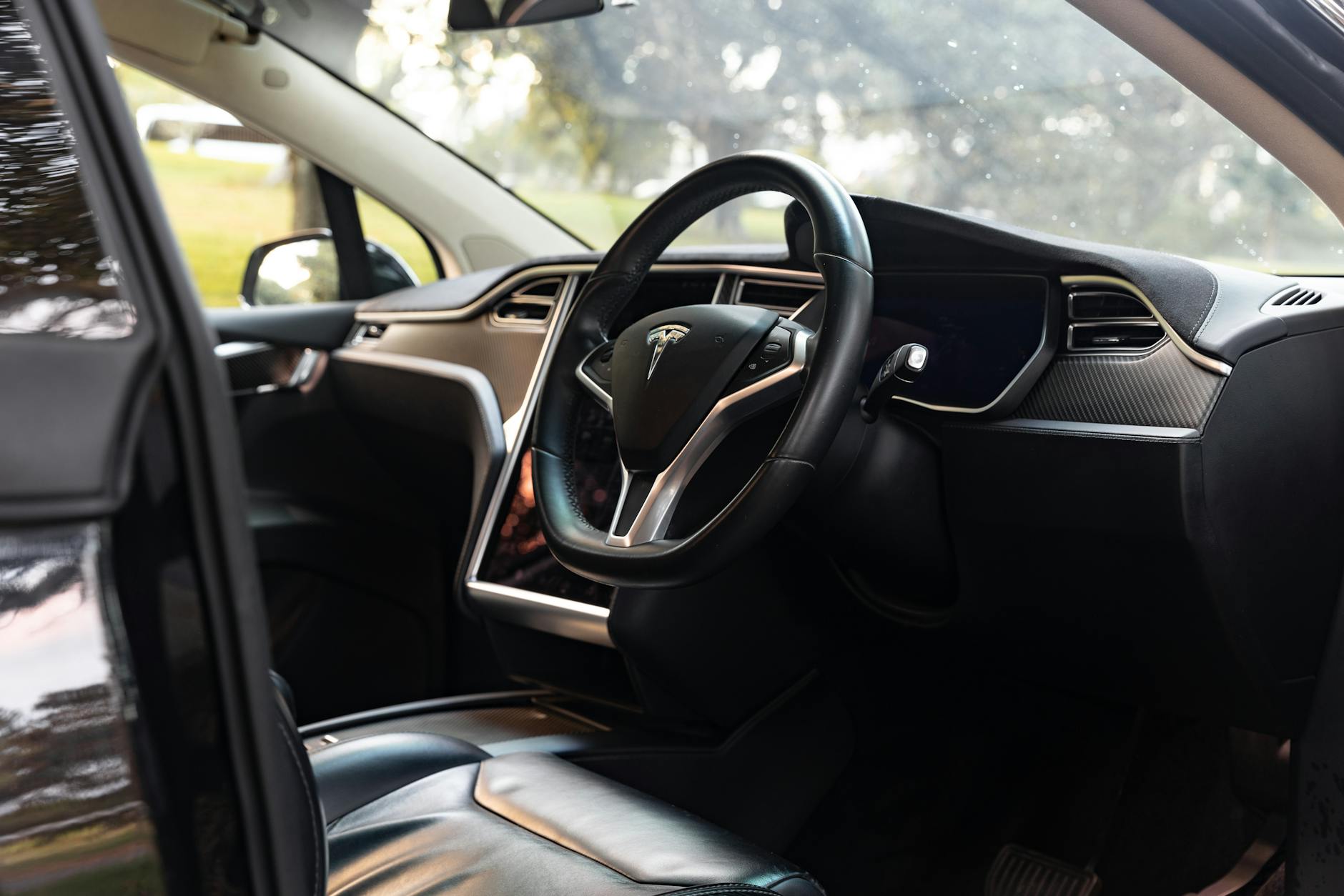
In 2023, the Environmental Protection Agency (EPA) conducted an audit of Tesla’s range estimates and determined that the company’s claims were overstated. The EPA ordered Tesla to reduce its official range figures across multiple models. The Model Y Long Range, one of Tesla’s most popular vehicles, saw its claimed range drop from 330 miles to 310 miles—a reduction of approximately 6 percent. The Model S Plaid with 19-inch wheels experienced a more dramatic cut, falling from 396 miles to 359 miles of estimated range.
These weren’t minor adjustments. Across Tesla’s lineup, reductions ranged from 7 to 37 miles depending on the specific model and wheel configuration. The noteworthy exception was the Model 3, which had no EPA range changes because it was already compliant with federal testing standards. For consumers who made purchase decisions based on original EPA figures—especially those choosing between the Long Range and Performance variants—these post-sale range reductions effectively changed the value proposition of their purchases. A buyer who selected a particular model specifically because of its 330-mile range now owned a vehicle rated at 310 miles, an important distinction for long-distance travelers who rely on specific range calculations.
INTERNATIONAL REGULATORY ACTIONS AND COLD WEATHER RANGE LOSSES
While the U.S. lawsuit developed, regulators in other countries took action against Tesla’s range claims. In January 2023, South Korea’s environmental and transportation authorities fined Tesla 2.85 billion Korean won (approximately $2.2 million USD) for deliberately failing to disclose that driving range drops significantly in cold and low-temperature conditions.
The specific finding was damning: Tesla’s vehicles lose up to 50.5 percent of their advertised driving range in cold weather—meaning a vehicle claiming 330 miles of range might realistically deliver only 164 miles in winter conditions. South Korea’s investigation found that Tesla had made exaggerated claims not only about driving range but also about fuel cost-effectiveness and Supercharger performance dating back to August 2019. This regulatory action in Asia provided additional evidence that the range misrepresentation was not a U.S.-specific problem or a recent oversight, but rather a sustained pattern of consumer deception affecting international markets. For owners in colder climates, this cold-weather penalty represents a material reduction in vehicle usability and value during winter months.
BATTERY ERROR DEFECTS COMPOUNDING RANGE PROBLEMS
Beyond the range overstatement issue, a separate battery management system (BMS) defect emerged in Tesla vehicles, further complicating the range situation. The BMS_a079 error triggered a safety mode in Model 3 and Model Y vehicles that limited charging to a maximum of 50 percent battery capacity—effectively cutting the vehicle’s usable range in half. In South Korea alone, 4,351 Tesla vehicles experienced this defect a combined 4,637 times, requiring owners to charge their vehicles to only half capacity and severely limiting their driving range until the error could be resolved.
For owners already frustrated by overstated range claims, encountering a battery error that crippled their remaining usable range added insult to injury. An owner who purchased a vehicle expecting 330 miles of range, then faced the EPA reduction to 310 miles, and then encountered the BMS_a079 error would be forced to operate their vehicle at half capacity—delivering perhaps 155 miles of range in peak conditions. This illustrates how multiple range issues compounded to create a far different ownership experience than what consumers expected when they made their purchase decision.
THE ARBITRATION RULING AND BARRIERS TO CLASS ACTION RELIEF
A significant procedural development occurred on March 7, 2024, when U.S. District Judge Yvonne Gonzalez Rogers ruled that Tesla owners could not proceed with a class action lawsuit. Instead, the judge determined that the arbitration agreements in Tesla’s vehicle purchase agreements required that owners pursue their claims individually through arbitration rather than collectively. This ruling was not a judgment on the merits of the range misrepresentation claims themselves—the judge did not decide whether Tesla actually defrauded consumers or whether the allegations were true.
The arbitration ruling creates a practical barrier for individual consumers. Pursuing a claim through arbitration requires hiring an attorney, gathering evidence, and paying fees—investments that may not be worthwhile for a single owner seeking compensation for a few thousand dollars in diminished vehicle value. Class actions work because they allow many small claims to be aggregated into one case where the potential recovery justifies legal action. With arbitration required, Tesla’s cost structure for defending itself shifts dramatically: instead of one lawsuit involving thousands of owners, the company faces individual arbitrations where the transaction costs and complexity favor settlement denial or minimal payouts.
REAL-WORLD IMPACT ON TESLA OWNERS AND PURCHASE DECISIONS
Tesla owners discovered the range problems in various ways. Some noticed that their vehicles consumed battery much faster than the dashboard estimates predicted. Others planned road trips based on EPA-claimed ranges, only to discover they couldn’t reach their destination without an unexpected charging stop. Long-haul travelers—the segment most dependent on accurate range information—were hit hardest by the discrepancy between claimed and actual performance.
The financial impact on individual owners varied. Some purchased vehicles at premium prices specifically because of their claimed range capabilities. A buyer paying a $10,000 premium for the Long Range variant over the Standard Range+ variant was making that choice based partly on the 330-mile claim. When the EPA reduced that claim to 310 miles post-purchase, the Long Range variant’s value proposition diminished, yet the owner had no opportunity to renegotiate their purchase price or cancel their transaction. Early Tesla adopters who bought vehicles based on the company’s marketing claims face the reality that their vehicles’ actual capabilities were materially overstated at the time of purchase.
ONGOING LITIGATION AND FUTURE OUTLOOK
As of April 2026, the Tesla battery range misrepresentation case remains in litigation and mediation with no final settlement or verdict announced. The March 2024 arbitration ruling means that individual owners pursuing claims will do so through separate arbitration proceedings rather than consolidated court action. Some owners have already initiated arbitrations, while others continue evaluating their options and gathering documentation to support their claims.
The case illustrates broader regulatory and consumer concerns about EV manufacturer transparency. Regulatory agencies—from the EPA to South Korea’s authorities—have independently concluded that Tesla’s range claims were inflated and required correction. The question remaining for the courts is whether consumers should be compensated for purchasing decisions made based on those inflated claims. Owners considering whether to pursue a claim should gather documentation of their purchase price, the stated range at time of purchase, their actual real-world range experience, and any service department communications about range problems.
Conclusion
The Tesla Battery Range Misrepresentation Class Action represents a significant challenge to how electric vehicle manufacturers communicate vehicle capabilities to consumers. Multiple independent investigations and regulatory actions—from the EPA to South Korea’s authorities—have documented that Tesla systematically overstated driving range on both dashboards and in marketing materials. The company’s algorithms were designed to show inflated projections, the company created internal teams to prevent owners from accessing warranty service for range complaints, and regulatory audits forced official range reductions of 6 percent to 37 percent depending on the vehicle model. If you purchased a Tesla based on the company’s range claims and experienced significantly lower real-world performance, you may have grounds to pursue a claim for misrepresentation and unjust enrichment.
Due to the March 2024 arbitration ruling, claims are being pursued through individual arbitrations rather than a class action. Gather your purchase documentation, maintenance records, and notes about your actual driving range experience. Consult with an attorney experienced in consumer protection law and arbitration to evaluate your specific situation, as claims must typically be pursued individually under Tesla’s arbitration agreement. Time limitations may apply, so reviewing your options sooner rather than later is advisable.