

The short answer is that citizens face enormous legal barriers when trying to sue the government over war decisions made without congressional approval. Courts have almost universally refused to rule on the merits of such cases, citing lack of standing and the political question doctrine. Between 1973 and 2012, the Congressional Research Service identified eight judicial decisions involving the War Powers Resolution, and in every single case, courts declined to issue a binding opinion. That does not mean no one has tried. Army Captain Nathan Michael Smith sued President Obama in 2016 over Operation Inherent Resolve against ISIS, arguing it violated the War Powers Resolution. The D.C.
District Court dismissed the case on November 21, 2016, finding Smith lacked standing and that the claims were non-justiciable political questions. More recently, families of civilians killed by U.S. military strikes have found a different legal path — suing not over the war power itself but under wrongful death statutes. The 2026 case Burnley v. United States represents one of the most significant current efforts to hold the government accountable for unauthorized military action.
Table of Contents
- Why Is It So Hard for Citizens to Sue Over War Decisions Made Without Congressional Approval?
- The Constitutional Framework Behind War Powers and Its Limits
- Smith v. Obama and the Service Member’s Dilemma
- How Families of Victims Are Finding a Different Legal Path
- The Trump Administration’s War Powers Claims and Their Legal Standing
- Could Courts Eventually Overcome the Political Question Doctrine?
- What the Future Holds for War Powers Accountability
- Frequently Asked Questions
Why Is It So Hard for Citizens to Sue Over War Decisions Made Without Congressional Approval?
The fundamental problem is standing — the legal requirement that a plaintiff must demonstrate a direct, concrete, and particularized injury to bring a case in federal court. An ordinary citizen who objects to an unauthorized military operation on constitutional grounds typically cannot show that they personally suffered a distinct harm different from the general public. Courts have consistently held that generalized grievances about government policy, no matter how legitimate, do not meet this threshold. The second and arguably more formidable barrier is the political question doctrine. Under Baker v. Carr, the landmark 1962 Supreme Court decision, courts apply six factors to determine whether a dispute belongs to the elected branches rather than the judiciary. War powers disputes have been almost universally dismissed under this doctrine.
The reasoning is straightforward from the court’s perspective: the Constitution assigns war-making authority to Congress and the president, and judges have been deeply reluctant to insert themselves into that relationship. Compare this with other constitutional rights cases — if the government violates your Fourth Amendment rights through an illegal search, you have a clear, individual injury and an established legal framework for relief. War powers claims lack that directness, which is why they almost always fail at the threshold stage before any court examines whether the military action was actually authorized. Even members of Congress themselves have been unable to overcome these barriers. In 2000, the Supreme Court rejected a challenge brought by 31 members of Congress who argued the U.S. bombing campaign in Yugoslavia violated the War Powers Act. If sitting legislators with a direct constitutional stake in the war-making process cannot get courts to hear these cases, ordinary citizens face an even steeper climb.

The Constitutional Framework Behind War Powers and Its Limits
Article I, Section 8 of the U.S. Constitution grants Congress the power to declare war. The War Powers Resolution of 1973, passed over President Nixon’s veto in the wake of the Vietnam War, was designed to enforce this principle by requiring the executive branch to consult with Congress before introducing U.S. Armed Forces into hostilities and to withdraw forces within 60 to 90 days absent congressional authorization. In practice, however, the War Powers Resolution has never been successfully employed to end any military mission. Presidents of both parties have repeatedly used military force without formal congressional approval, often relying on broad prior authorizations or claiming inherent executive authority.
The resolution functions more as a political pressure mechanism than an enforceable legal constraint. This gap between the law on paper and the law in practice is central to understanding why litigation in this area has been so unsuccessful — courts are being asked to enforce a framework that the political branches themselves have never fully resolved. There is an important limitation to understand here: even if a court were willing to hear a war powers case on the merits, the remedy is unclear. Courts cannot order troops to withdraw or missiles to stop mid-flight. Judicial power works through orders, injunctions, and damages — tools that are poorly suited to the fast-moving realities of military operations. This practical constraint reinforces judicial reluctance. However, if the claim is framed not as a challenge to the war power itself but as a wrongful death or civil rights violation arising from unauthorized military action, courts have shown somewhat more willingness to engage, as recent cases demonstrate.
Smith v. Obama and the Service Member’s Dilemma
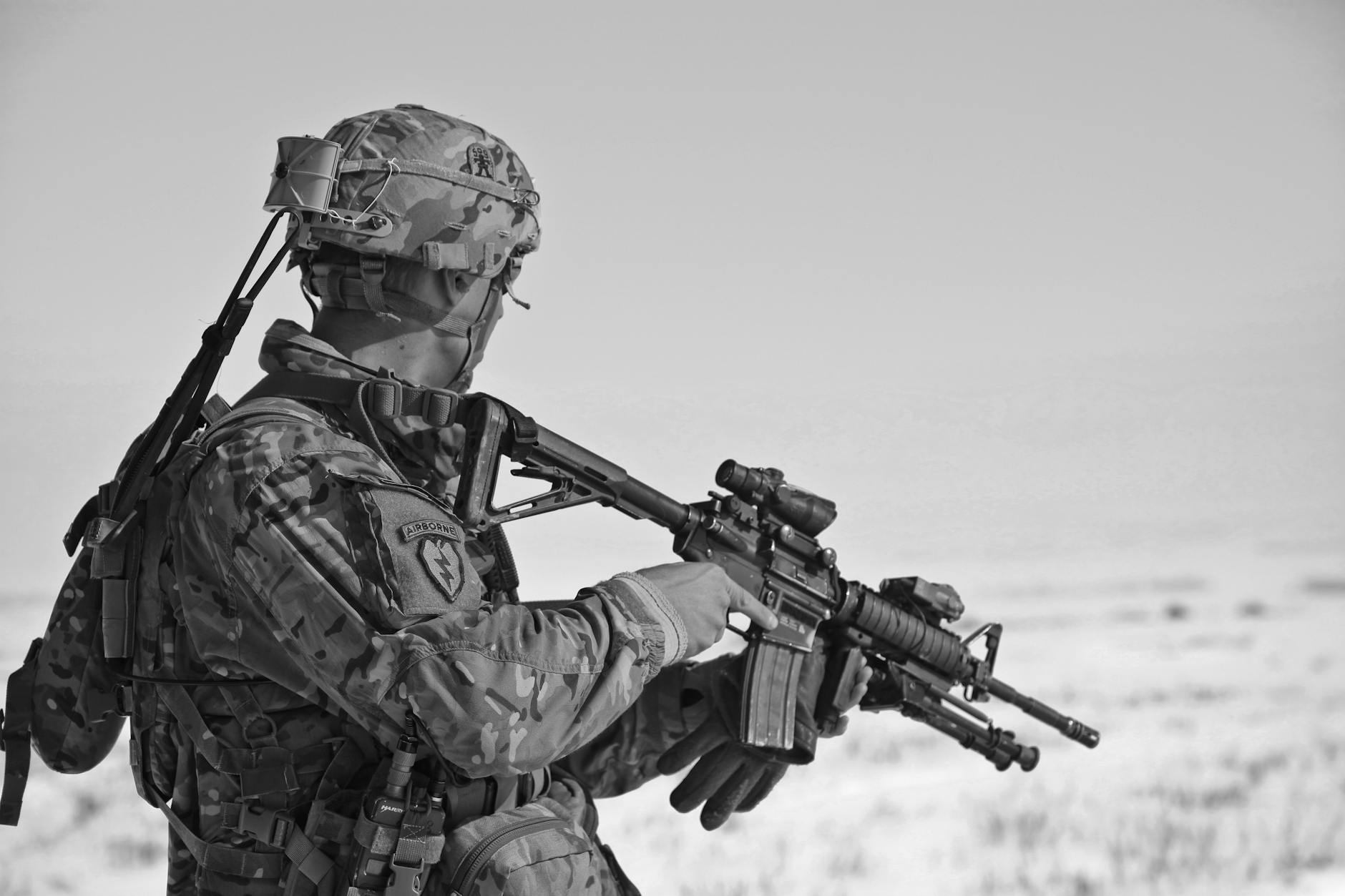
The case of Smith v. Obama illustrates the particular bind that active-duty service members face. In 2016, Army Captain Nathan Michael Smith filed suit against President Obama, arguing that Operation Inherent Resolve — the military campaign against ISIS in Iraq and Syria — lacked proper congressional authorization under the War Powers Resolution. Smith was not a war protester or political activist. He was an active-duty officer who believed in the mission but wanted legal clarity about its authorization, a position that carried real professional risk. The D.C. District Court dismissed the case on November 21, 2016, on two grounds.
First, the court found Smith lacked standing because he could not demonstrate a concrete, particularized injury — he was subject to military orders regardless of the legal basis for the operation. Second, the court ruled the claims presented non-justiciable political questions. Legal scholars at Just Security criticized the ruling, arguing the political question doctrine was misapplied and that the court could have addressed the statutory authorization question without wading into the broader separation-of-powers thicket. Smith’s case highlights a frustrating paradox. The people most directly affected by unauthorized military operations — the service members who carry them out — are simultaneously the people least able to challenge them in court. Military discipline requires following lawful orders, and courts have been unwilling to second-guess the chain of command by examining whether the underlying authorization was constitutionally sound. This leaves service members in a position where they bear the physical and moral costs of potentially unauthorized wars with no realistic judicial avenue for recourse.
How Families of Victims Are Finding a Different Legal Path
The most promising current legal strategy does not challenge the war power directly. Instead, it targets the consequences of unauthorized military action through wrongful death and human rights statutes. Burnley v. United States, filed in February 2026 by the ACLU, Center for Constitutional Rights, and ACLU of Massachusetts, represents this approach. The case was brought on behalf of the families of Chad Joseph, age 26, and Rishi Samaroo, age 41, two Trinidadian civilians killed by a U.S. missile strike on October 14, 2025, while traveling by boat from Venezuela to Trinidad. The lawsuit seeks accountability under the Death on the High Seas Act and the Alien Tort Statute — framing the claims as wrongful death and extrajudicial killing rather than a direct War Powers challenge.
This is a deliberate strategic choice. By avoiding the political question doctrine and focusing on concrete harm to identifiable individuals, the plaintiffs have a much stronger argument for standing. The tradeoff with this approach is significant. It can potentially deliver justice for individual victims and their families, but it does not address the underlying constitutional question of whether the military action was authorized. A wrongful death judgment does not establish that the president exceeded his authority or that Congress should have been consulted. The families may win compensation, but the structural problem — the erosion of congressional war powers — remains untouched. Conversely, a direct war powers challenge would address the constitutional issue but has virtually no chance of surviving a motion to dismiss. Plaintiffs and their attorneys must choose between a case that might succeed on narrow grounds and one that addresses the real problem but will almost certainly be thrown out.
The Trump Administration’s War Powers Claims and Their Legal Standing
Beginning in September 2025, the Trump administration launched lethal military strikes against suspected drug trafficking vessels in international waters. The ACLU has documented at least 36 strikes killing at least 125 people, carried out without specific congressional authorization. The administration claimed authority under existing terrorism-related authorizations — a significant stretch of those statutes, which were enacted in response to the September 11 attacks, not drug interdiction. In January 2026, President Trump went further, declaring the War Powers Act itself unconstitutional. This claim has no judicial support. As PolitiFact and Poynter both noted, no court has ever agreed that the War Powers Resolution is unconstitutional.
The declaration is a political assertion, not a legal finding, and it does not change the statutory landscape. The War Powers Resolution remains the law unless Congress repeals it or the Supreme Court strikes it down. A critical warning for anyone following this area: the failure of the 2026 congressional War Powers vote — in which Congress attempted but failed to invoke the resolution to constrain military strikes — does not mean the strikes were authorized. Congressional inaction is not the same as congressional approval, though administrations have historically treated it as tacit consent. The ACLU has urged Congress to use its power of the purse — blocking new war funding — as an alternative avenue, recognizing that the War Powers Resolution’s procedural mechanisms have proven toothless in practice. For citizens watching these developments, the lesson is that legislative action, not litigation, remains the most realistic path to constraining unauthorized military force.
Could Courts Eventually Overcome the Political Question Doctrine?
A January 2026 article in the Harvard Journal on Legislation analyzed what scholars call “Baker’s Fifth Factor” — one of the six factors from Baker v. Carr that courts use to determine whether a case presents a non-justiciable political question. The article argued that courts could potentially overcome the political question doctrine in some war powers circumstances, particularly where there is a clear statutory framework (like the War Powers Resolution) that provides judicially manageable standards for determining whether the executive has complied. This is not a guarantee of change, but it represents a meaningful shift in academic thinking.
If a future court were to adopt this reasoning, it could open the door to merits-based rulings in war powers cases for the first time. The most likely scenario for such a breakthrough would involve a case with a sympathetic plaintiff who has clear standing — such as a family member of someone killed in an unauthorized strike — combined with a factual record that makes it impossible for the court to avoid the authorization question. Burnley v. United States could potentially become that case, though it was deliberately framed to avoid the political question issue rather than confront it.
What the Future Holds for War Powers Accountability
The trajectory of war powers litigation suggests that the courts are unlikely to become a primary venue for accountability in the near term. The political question doctrine is deeply entrenched, standing requirements remain strict, and the judiciary has powerful institutional reasons to avoid inserting itself into military decision-making. But the legal landscape is not static. The combination of expanded executive military action, growing scholarly criticism of judicial abstention, and creative litigation strategies like those in Burnley v.
United States could gradually shift the boundaries. The most realistic near-term changes will likely come from Congress rather than the courts. Legislative tools — war powers votes, funding restrictions, new authorization frameworks — remain the constitutionally intended mechanism for checking executive war-making. For citizens concerned about unauthorized military action, political engagement and pressure on elected representatives remain far more effective than litigation. That said, the families of those directly harmed by unauthorized strikes now have demonstrated legal pathways, and how courts handle cases like Burnley could reshape the conversation about judicial accountability for years to come.
Frequently Asked Questions
Can an average citizen file a lawsuit challenging an unauthorized war?
Technically, anyone can file a lawsuit, but it will almost certainly be dismissed. Courts require plaintiffs to show a direct, particularized injury — a general objection to unauthorized military action, no matter how principled, does not meet this standard. Every war powers case to reach the courts has been dismissed on procedural grounds.
Have members of Congress ever successfully sued over unauthorized military action?
No. In 2000, the Supreme Court rejected a challenge brought by 31 members of Congress over the bombing campaign in Yugoslavia. Courts have consistently treated war powers disputes between the branches as political questions outside judicial authority.
What is the political question doctrine and why does it block war powers cases?
The political question doctrine, established in Baker v. Carr (1962), holds that certain constitutional disputes belong to the elected branches — Congress and the president — rather than the courts. War-making decisions have been classified as political questions in virtually every case, meaning judges refuse to rule on whether a military action was properly authorized.
What happened in Burnley v. United States?
Filed in February 2026 by the ACLU and Center for Constitutional Rights, this lawsuit was brought on behalf of families of two Trinidadian civilians — Chad Joseph and Rishi Samaroo — killed by a U.S. missile strike on October 14, 2025. Rather than challenging the war power directly, the suit seeks accountability under the Death on the High Seas Act and the Alien Tort Statute.
Is the War Powers Resolution actually unconstitutional as some have claimed?
No court has ever ruled the War Powers Resolution unconstitutional. While President Trump declared it unconstitutional in January 2026, this is a political assertion with no judicial backing. The resolution remains valid federal law unless repealed by Congress or struck down by the Supreme Court.
What can citizens realistically do about unauthorized military action?
The most effective avenue is political rather than legal. Contacting elected representatives, supporting organizations that litigate on behalf of affected families, and advocating for legislative reforms to the war powers framework are more likely to produce results than individual lawsuits.