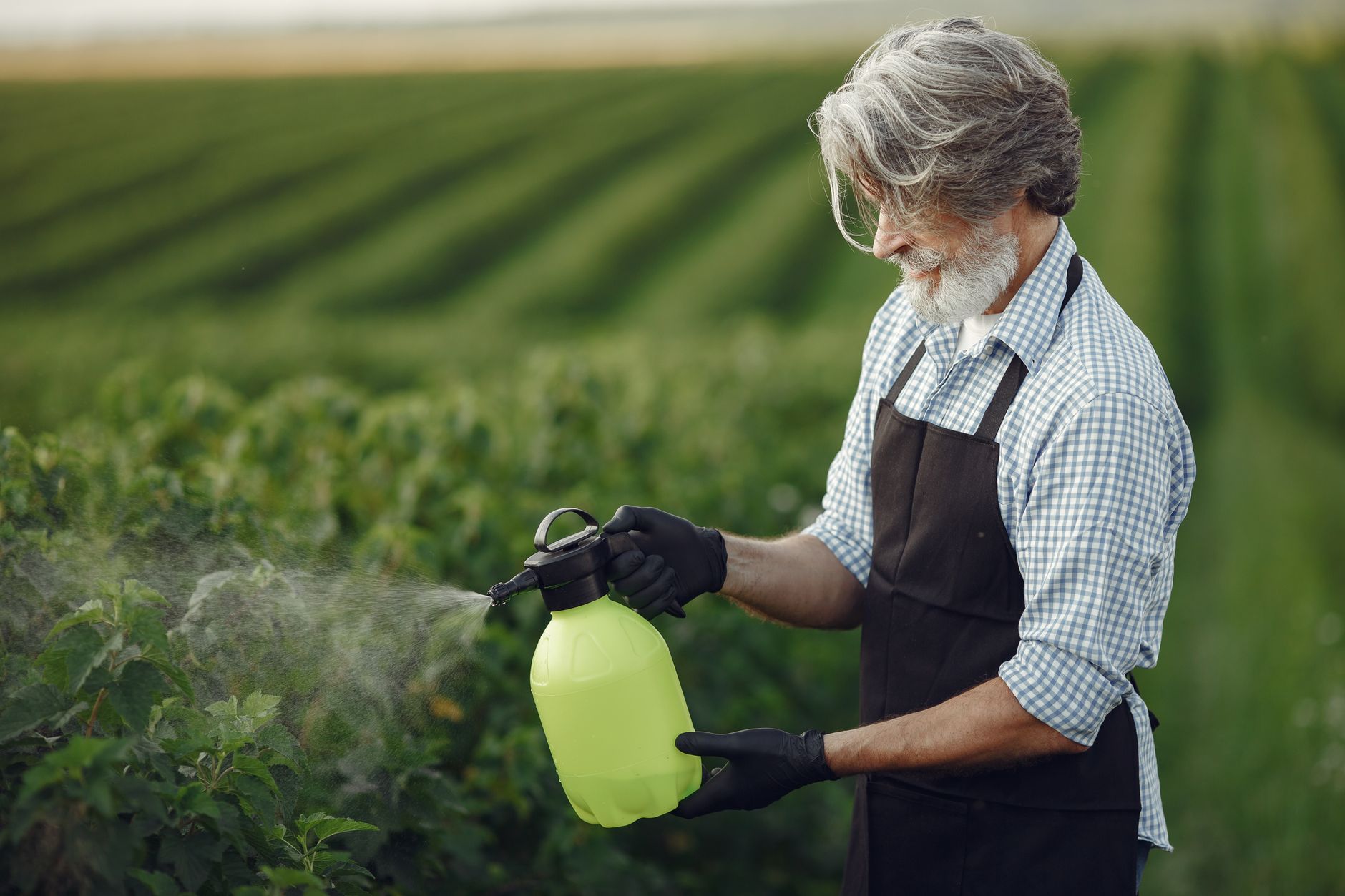
Paraquat is a restricted-use herbicide applied to crops including cotton, corn and soybeans. An association means Parkinson's disease appeared more often in exposed workers in a study, while legal causation means an admissible expert reliably shows paraquat can cause Parkinson's in people like the claimant. That gap controls whether a claim can move forward. A published odds ratio alone does not place a case before a jury.
Table of Contents
- What do the Parkinson's studies show?
- Why do courts require more than a study?
- What happened to expert proof in the federal cases?
- What does this mean for exposed workers?
What do the Parkinson's studies show?
A California Central Valley occupational study tracked people working near commercial paraquat applications every year. It reported Parkinson's odds ratio 2.15 (95% CI 1.46-3.19). Odds were stronger for diagnosis at age 60 or younger, according to the U.S. National Library of Medicine/PubMed record study record. UCLA researchers studied 368 Parkinson's patients and 341 controls, according to a Newswise/UCLA release.
Combined workplace-proximity exposure to ziram, maneb and paraquat tripled Parkinson's risk. Ziram plus paraquat alone raised risk about 80%. Association is only the starting point for causation work. Epidemiology bridges the two through Bradford Hill considerations such as strength, consistency, temporality, dose-response, plausibility, coherence and experiment, according to an IADC Defense Counsel Journal article. Statistical significance alone contributes nothing to proof of hypothesis.
Why do courts require more than a study?
Federal judges act as gatekeepers under Federal Rule of Evidence 702. Under the Daubert standard from Daubert v. Merrell Dow (1993), they weigh testability, peer review, error rate, controlling standards and general acceptance, according to Cornell Legal Information Institute. The U.S.
EPA reached a separate regulatory judgment in its July/August 2021 interim registration decision. It concluded there was insufficient evidence to link registered paraquat products to Parkinson's disease when used according to the label, while imposing mitigation to reduce exposure, according to the U.S. EPA safety measures notice. Both inquiries ask whether the method is reliable and whether exposure came before disease. A single strong number does not answer dose, consistency across studies, alternative explanations, or reliable application to one worker.
What happened to expert proof in the federal cases?
General causation asks whether paraquat can cause Parkinson's disease in people generally. Specific causation asks whether it caused disease in one claimant. On April 17, 2024, the MDL 3004 court excluded plaintiffs' sole general-causation expert Dr.
Martin Wells in a 97-page order. The court called his 7-of-36-study meta-analysis unscientific cherry-picking and methodological shape-shifting without objective criteria, according to Jones Day court order account. After excluding Wells, the court dismissed the four trial-ready bellwether cases for lack of admissible general-causation proof, according to Jones Day. Plaintiffs kept a chance to offer a replacement expert.
What does this mean for exposed workers?
Paraquat is usable only by certified applicators, with no direct one-to-one alternative, according to the U.S. EPA Paraquat Dichloride page. Farmworkers and applicators are therefore the principally exposed group.
Courts will look for work-specific facts tied to a reliable causation opinion, not only a diagnosis. Useful records include: Bring that work history and medical timeline to a qualified injury attorney for review of admissible causation proof. Ask how the firm would prove general and specific causation without relying on excluded methods.
- crops, counties, years, job duties, and time near commercial applications
- applicator status, employer names, product names, and safety equipment used
- first symptoms, diagnosis date, treating doctors, and other pesticide exposures
You Might Also Like
- Sexual Assault Litigation 2026 Guide: eligibility, proof, and deadlines; Key Facts and Questions to Ask
- Sexual Abuse Litigation 2026 Guide: eligibility, proof, and deadlines; Key Facts and Questions to Ask
- Personal Injury Litigation 2026 Guide: eligibility, proof, and deadlines; Key Facts and Questions to Ask