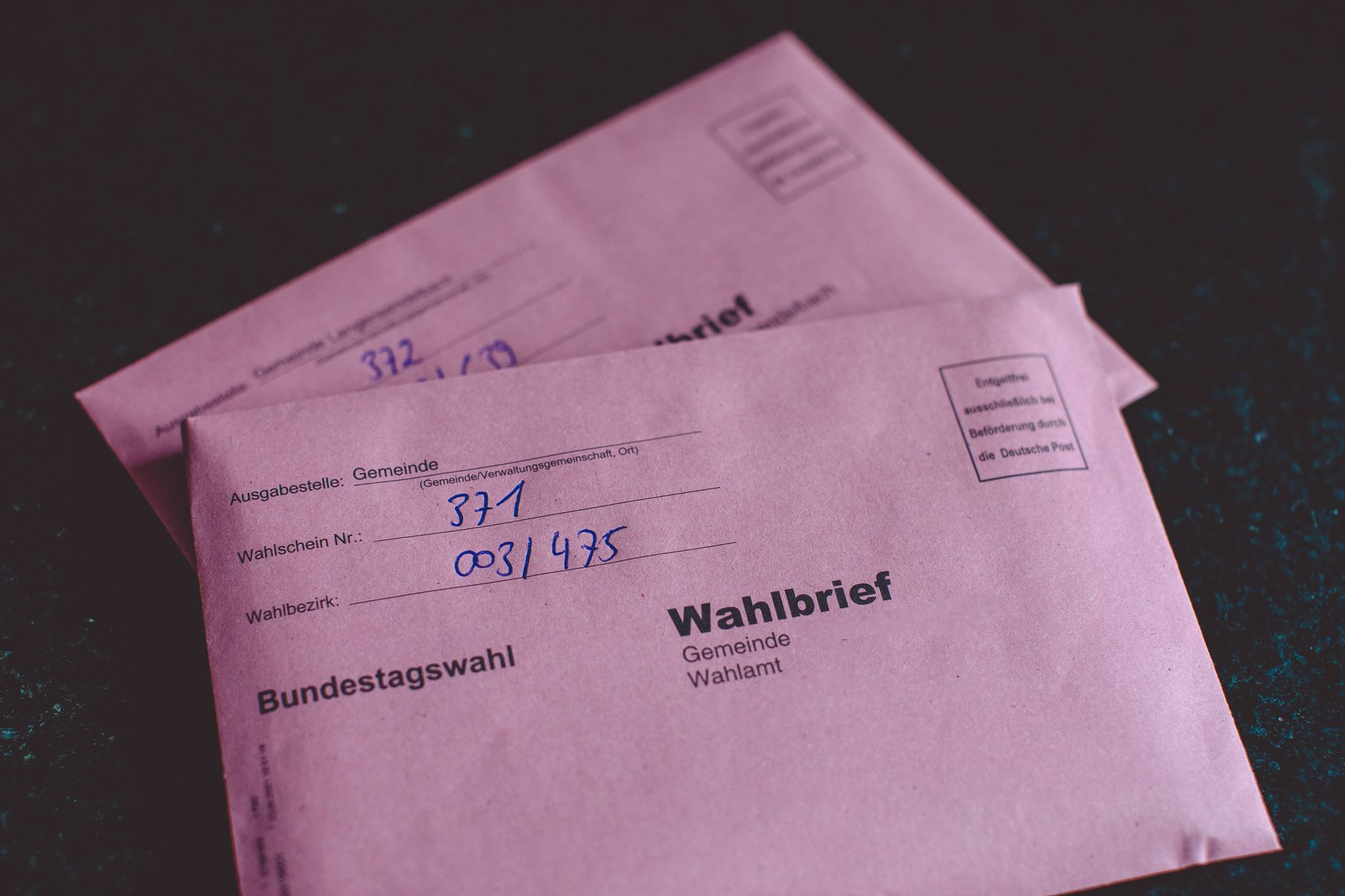
Mail ballots in the November 3, 2026 midterms will travel the way each state already sends them — no federal envelope standard, no federal voter portal and no Postal Service power to turn ballot mail away. On September 14, 2026 the Supreme Court refused the government’s emergency request to lift the injunction blocking the Postal Service’s Ballot Mail for Federal Elections rule. The order settles who wins for now; it does not decide whether the rule is lawful.
Status: Stay denied September 14, 2026 | Injunctions remain in effect | Appeals pending in the First Circuit | Nothing to claim or file
What Changes for a Mail Voter: Nothing
While the injunctions stand, the Postal Service cannot require states to enroll voters in the federal portal, cannot require the new envelope designs, and cannot refuse ballot mail that lacks them. Deadlines for requesting, returning and postmarking a mail ballot are set by state law and are untouched by the order. Voters should follow the instructions from their own state or local election office.
The stakes were large because the volume is large. The Postal Service reported delivering at least 54.4 million ballots to and from voters around the 2022 midterms, and the federal court in Washington expected more than 50 million pieces of federal ballot mail this cycle. Several states started mailing ballots in early September; as the government itself put it, once those envelopes enter the mailstream they cannot be retrieved.
Three Sentences From the Court
The order in United States Postal Service v. California, No. 26A305, is brief. It denies the application, states that “[t]he Government is unlikely to succeed on the merits of its challenge to the District Court’s preliminary injunction,” and says “the equitable factors applicable for obtaining emergency relief from this Court do not favor a stay.” The application had gone to Justice Ketanji Brown Jackson as Circuit Justice, who referred it to the full Court.
Justice Brett Kavanaugh concurred. Justice Samuel Alito dissented, joined by Justice Clarence Thomas. The order does not record how the other Justices voted, which is common for emergency applications. A stay ruling answers only which side carries the risk while the appeal proceeds; the appeals remain in the U.S. Court of Appeals for the First Circuit (Nos. 26-2029 and 26-2031), and no court has entered a final judgment on the Postal Service’s authority.
The Four Parts of the Blocked Rule
The rule, published at 91 Fed. Reg. 54,966 on August 26, 2026, would add a section to the Postal Service’s Domestic Mail Manual for mail carrying a federal ballot:
| Envelopes | Outbound and return envelopes carrying the official Election Mail logo, compatible with automated equipment, bearing a unique Intelligent Mail barcode; election officials would submit designs for Postal Service review. |
| Federal portal | Election officials would submit each mail voter’s name, address, envelope barcodes and state to a new Federal Ballot Mail Portal, generally at least 30 days before the election; the Postal Service would return a state-specific list of enrolled participants on or about Election Day. |
| Verification | Outbound ballot mail would be scanned at acceptance to confirm it matched the portal. |
| Rejection | Ballot mail that could not be verified “will not be accepted” and would go back to the sender to be corrected and resubmitted. |
The government calls this a modest regulation of the mail that leaves eligibility, ballot content, deadlines and counting with the states. Challengers call it a federal overlay on state election administration imposed weeks before ballots went out. No court has resolved that dispute on a final basis.
From Executive Order to Emergency Docket
| March 2026 | Executive Order 14,399 directs the Postal Service to open a rulemaking on absentee and mail-in ballot mail; states and voting groups sue in the District of Massachusetts. |
| June 2, 2026 | Proposed rule published; more than 200,000 comments follow. |
| August 21 and 26, 2026 | Final rule promulgated, then published in the Federal Register. |
| August 24, 2026 | In Trump v. California, No. 26A124, the Court stays an earlier injunction because a challenge to an unwritten rule was not ripe. |
| September 4, 2026 | District of Massachusetts enters preliminary injunctions against the actual rule in both consolidated cases. |
| September 6, 2026 | Replacement stay application docketed; Justice Jackson orders responses by September 9. |
| September 13, 2026 | A second court, in Washington, D.C., blocks the rule. |
| September 14, 2026 | Supreme Court denies the stay. |
The Massachusetts injunctions let states use envelope review and the portal voluntarily but bar the Postal Service from making the rule mandatory, from verifying compliance before accepting ballot mail, and from further preparatory steps for the November elections. The First Circuit did not act on the government’s stay request.
A Second Court, in Washington, Blocks the Rule
On September 13, 2026, Judge Carl J. Nichols of the U.S. District Court for the District of Columbia granted preliminary injunctions in three consolidated cases — DSCC v. Trump, League of United Latin American Citizens v. Trump and NAACP v. Trump. He found the plaintiffs likely to prove the rule was ultra vires, beyond the authority Congress gave the agency: nothing in the Postal Reorganization Act, he reasoned, lets the Postal Service impose election procedures on state officials, build a data system for mail voters, or refuse lawful mail over those data requirements. He called it “less clear” that the envelope-design requirements alone would exceed the agency’s power, and he declined to enjoin the executive order itself. The government told the Supreme Court the next day that the ruling was all the more reason for a stay; the Court denied it that day.
The Arguments on Each Side
The government says the Postal Service has long had authority to adopt rules needed to carry out its functions, including envelope design and addressee information, pointing to existing mandatory rules for mailing cremated remains and replica explosives. It argues states that use the federal mails cannot exempt that mail from postal regulation, and that because Congress exempted the Postal Service from ordinary Administrative Procedure Act review, challengers must show a violation of a specific statutory prohibition.
The challengers — two dozen states and the District of Columbia, plus a coalition of voting organizations — say it is an election regulation dressed as a mail regulation, and that the Constitution gives the time, place and manner of federal elections to the states and Congress. The lower courts credited evidence that local offices could not redesign and reprint envelopes weeks before a general election, and one official described already owning envelopes the rule would make noncompliant. The Washington court noted the government pointed to no record evidence of significant fraud without the rule; the government answers that preventing fraud and shoring up confidence in the mails is legitimate regardless.
For November, the government’s own filings stressed that the preparatory steps need time the calendar no longer allows. Whether the Postal Service can regulate election mail this way remains open for later elections. The OpenClassActions.com report on the stay denial will follow the appeals.
Frequently Asked Questions
Did the Supreme Court strike down the USPS ballot mail rule?
No. It denied an emergency request to pause a lower court’s injunction while the appeal proceeds. It said the government is unlikely to succeed on its challenge to that injunction, but it did not issue a final ruling on whether the rule is lawful.
Does this change how I vote by mail in November 2026?
No. Mail voting proceeds under your state’s existing rules. While the injunctions are in place, the Postal Service cannot require the new envelopes or portal enrollment, or refuse ballot mail that does not comply. Follow your state or local election office’s instructions.
How did the Justices vote?
The order does not give a vote count. It notes a concurrence by Justice Kavanaugh and a dissent by Justice Alito joined by Justice Thomas.
How many courts have blocked the rule?
Two. The U.S. District Court for the District of Massachusetts entered preliminary injunctions on September 4, 2026, and the U.S. District Court for the District of Columbia granted preliminary injunctions on September 13, 2026.
Is there anything to claim or file?
No. This is litigation between governments and advocacy organizations over a federal regulation. There is no class action, settlement fund, claim form or deadline for the public.
Sources
- Supreme Court of the United States — docket for United States Postal Service v. California, No. 26A305, and the order of September 14, 2026.
- Application for a stay of the District of Massachusetts injunction, No. 26A305.
- Supplemental brief in support of the stay application (September 14, 2026), with the D.D.C. opinion and order in the appendix.
- Memorandum opinion and order, DSCC v. Trump, No. 26-cv-01114 (D.D.C. September 13, 2026), consolidated with Nos. 26-cv-01132 and 26-cv-01151.
- U.S. Postal Service, Ballot Mail for Federal Elections, 91 Fed. Reg. 54,966 (August 26, 2026); proposed rule, 91 Fed. Reg. 32,915 (June 2, 2026).
- Executive Order 14,399, 91 Fed. Reg. 17,125 (April 3, 2026); Trump v. California, No. 26A124 (U.S. August 24, 2026).
- OpenClassActions.com — Supreme Court Won’t Revive the USPS Ballot Mail Rule.
Source and credit: this report builds on our sister site’s coverage — OpenClassActions.com: Supreme Court Won’t Revive the USPS Ballot Mail Rule — Mail Voting Stays Under State Rules — which follows the case and is updated as new filings, orders and payment news come in.
Legal Disclaimer
This article is for informational purposes only and is not legal advice. OpenClassActions.org is a consumer news site, not a law firm, and is not affiliated with any party to the matters described. Allegations are allegations until a court rules on them, and court schedules and outcomes can change.