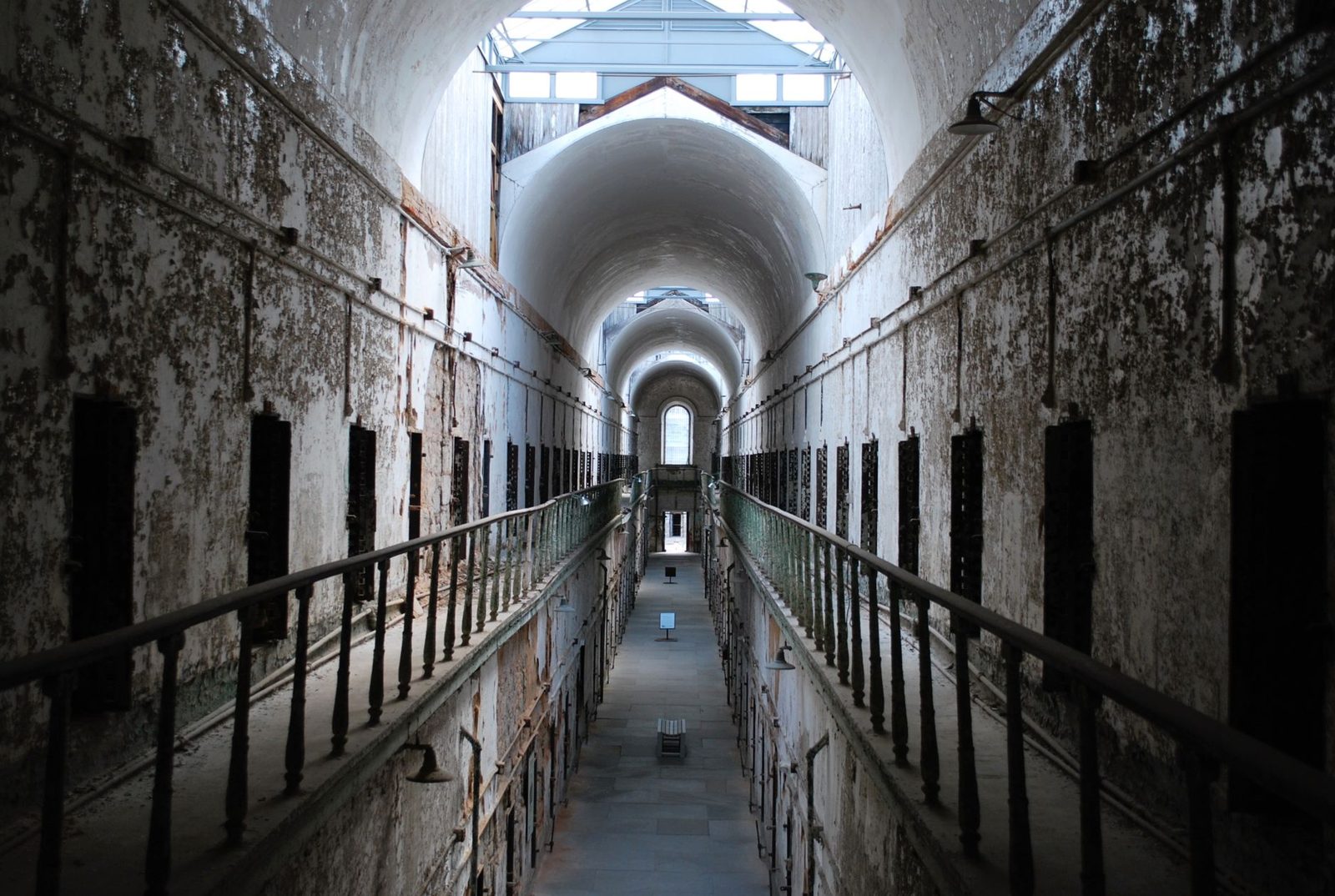
People who were locked in their cells because an Ontario jail was short of staff do not have to remember where they were held, on which dates, or their offender number to file in the Ontario jail lockdowns settlement. The province’s own custody records do that work. What decides whether anything is paid is a count: a claimant needs at least 16 staffing-related lockdowns, and claims close December 1, 2026.
Status: Settlement approved October 22, 2025; approval final November 24, 2025 | Claim deadline December 1, 2026 | $2,000 to $68,000 CAD, subject to pro rata reduction
The 16-Lockdown Threshold
A staffing-related lockdown is one in which people held at an institution were confined to their cells because there were not enough staff on shift. The settlement resolves two certified class actions over those lockdowns at Ontario provincial correctional institutions: one brought for inmates and one for people held under the federal Immigration and Refugee Protection Act.
Membership in a class does not by itself lead to a payment. Compensation goes only to people who experienced 16 or more staffing-related lockdowns, counted the way the Settlement Agreement counts them. The administrator applies that count from Ontario’s records, and a claim the records do not support is not paid.
Most of the money is for recent lockdowns: those between August 15, 2014 and November 27, 2017 for inmates, and between August 11, 2014 and November 27, 2017 for immigration detainees. Lockdowns going back to May 30, 2009 count only through two narrower routes described below.
Who Is in the Classes
| Inmates | Current and former inmates of Ontario correctional institutions between May 30, 2009 and November 27, 2017 — remanded, serving a sentence or held for a parole violation, including people still incarcerated. |
| Immigration detainees | People detained under Division 6 of the Immigration and Refugee Protection Act at Ontario correctional institutions in the same period, for that detention only. |
Three institutions are carved out: time at the Elgin-Middlesex Detention Centre, the Ontario Correctional Institute and the St. Lawrence Valley Correctional and Treatment Centre does not count. Elgin-Middlesex was the subject of separate class actions. The notice lists 30 covered institutions, including Maplehurst, the Toronto South and Toronto East detention centres, the Central East and Central North correctional centres, the Vanier Centre for Women and the Ottawa-Carleton Detention Centre, as well as since-closed jails such as the old Toronto Jail and the Windsor and Chatham jails. Anyone who validly opted out of either lawsuit is not eligible.
What the Lawsuits Alleged
The plaintiffs alleged that Ontario and Canada subjected inmates and immigration detainees to chronic staffing-related lockdowns, that this was negligent, and that it breached sections 7 and 12 of the Canadian Charter of Rights and Freedoms. The defendants deny the allegations. The Ontario Superior Court of Justice approved the settlement without deciding who was right, and the settlement is not an admission of wrongdoing.
How the Awards Stack
The defendants are paying $59 million CAD. That total also covers class counsel fees, set by the court at $17.7 million CAD plus HST and disbursements, together with the Class Proceedings Fund levy, administration costs and honoraria. What remains pays four kinds of award:
| Basic Recovery Award | $2,000 to $28,000 CAD for every eligible claimant, on a grid scaled to the number of staffing-related lockdowns. |
| Differential Impact Award | $3,000 to $15,000 CAD, also scaled by lockdown count, for claimants whose Ontario offender (OTIS) record shows at least one mental health alert or suicide alert dated no later than their last qualifying lockdown. |
| Serious Harm, Level One | $20,000 CAD for specified harms, such as a new or substantially worsened diagnosed mental disorder or self-injury within 120 days of a lockdown, or violence during a lockdown that caused serious physical injury needing medical attention. |
| Serious Harm, Level Two | $40,000 CAD for a documented suicide attempt during or within 120 days of a lockdown, or violence during a lockdown that caused permanent impairment. |
Every eligible claimant starts with the Basic Recovery Award. On top of it, a claimant can receive either a Differential Impact Award or one Serious Harm Award — not both. That is how the top figure of $68,000 CAD is reached. All awards can be reduced pro rata if approved claims exceed the money available, so these are grid values and ceilings, not promised amounts.
Lockdowns Before August 2014
Because of Ontario’s two-year limitation period, older lockdowns are treated differently. There are two ways they can still be compensated:
- The Statute-Barred Claim Form. Claimants who were legally incapable of starting a lawsuit during the earlier period file this separate form with medical or psychological evidence of that incapacity. A diagnosis on its own does not meet the test. Some of these claims are decided by the adjudicator, Crawford & Company (Canada) Inc.
- The Exceptional Circumstances Fund. A separate $2 million CAD fund, carved out of the $59 million CAD total, pays limited compensation for certain lockdowns between 2009 and August 2014, and additional compensation to some people held at the Toronto South Detention Centre for at least six months after August 2014. The claim form has check boxes for immigration detainees with lockdowns before August 11, 2014 and inmates with more than 100 lockdowns before August 15, 2014.
On October 8, 2025, class counsel amended the Exceptional Circumstances Protocol so that money left in that fund, including uncashed payments, goes to a further distribution for certain limitation-affected class members instead of to charity. The administrator says the change does not reduce any individual award.
What a Claimant Has to Provide
No notice ID, claim number or PIN is needed. The claim form asks for a name, date of birth and contact details, plus a signed declaration that the information is true. The administrator’s FAQ says claimants do not need to list the dates or places they were held or their OTIS number, because Ontario already holds that information and checks it when the claim is reviewed.
Basic Recovery and Differential Impact claims need nothing attached beyond that records check. A Serious Harm claim needs a written description of the harm, and the notice asks claimants to include any supporting records they have — hospital or medical records, or a letter from a doctor, psychologist, nurse practitioner, social worker, counsellor, therapist or registered nurse. Anyone filing for another person, including an estate trustee for someone who has died, attaches proof of that authority.
Filing From Inside an Institution
According to the notice, people currently held in an Ontario institution, a federal penitentiary or an immigration holding centre can pick up a claim form and a postage-paid return envelope in the institution’s common areas. Ontario probation and parole offices also carry copies. Everyone else can file through the online claims portal or download the Claim Form and the Statute-Barred Claim Form from the Deloitte settlement page, then return a paper form by email or by mail using the contact details posted there.
The form asks claimants to pick Basic Recovery only, a Differential Impact Award or a Serious Harm Award, and to say whether they want to be considered for the Exceptional Circumstances Fund. Payment is by cheque unless the claimant asks for direct deposit or another arrangement.
Deadline and Late Claims
| December 1, 2026 | Claim deadline. The notice gives no time of day or time zone. For paper claims sent by Canada Post, the postmark date counts. |
| 45 days after the deadline | The administrator may consider a late claim received in this window if the claimant gives written reasons; whether it is assessed is the administrator’s decision. |
| January 15, 2027 | No claim is considered after this date. |
Deloitte LLP reviews claims under the Compensation Protocol and the Exceptional Circumstances Protocol, and the claim form says each claimant will hear the result once all claims have been processed. No payment date had been announced as of October 3, 2026. Class members who do not file receive nothing but are still bound by the release covering staffing-related lockdowns at the covered institutions from May 30, 2009 to November 27, 2017. Having contacted class counsel in the past does not count as a claim. The full case summary is on the Ontario jail lockdowns settlement page at OpenClassActions.com.
Frequently Asked Questions
Do I need my OTIS number or the dates I was in jail?
No. The administrator’s FAQ says the dates and locations of incarceration and the OTIS number are already on record with the Province of Ontario and are checked when a claim is reviewed, so a claim can be filed without them.
How many lockdowns do I need to qualify?
At least 16 staffing-related lockdowns, counted the way the Settlement Agreement counts them. Most compensation is for lockdowns between August 2014 and November 27, 2017.
What is the most one person can receive?
Up to $68,000 CAD: the Basic Recovery Award of up to $28,000 CAD plus a Level Two Serious Harm Award of $40,000 CAD. All awards are subject to pro rata reduction if approved claims exceed the available money.
Which jails are not covered?
Time at the Elgin-Middlesex Detention Centre, the Ontario Correctional Institute and the St. Lawrence Valley Correctional and Treatment Centre is excluded. Elgin-Middlesex was the subject of separate class actions.
Can I file for a family member who has died?
Yes, if you have legal authority, such as an estate trustee. The claim form asks you to explain that authority and attach a copy of the document that establishes it.
When is the deadline?
December 1, 2026. Late claims received within 45 days may be considered with written reasons, at the administrator’s discretion, and nothing is considered after January 15, 2027.
Sources
- Official administrator page, notice, claim forms and FAQ — Ontario Corrections Staffing-Related Lockdowns Class Actions Settlement (Deloitte LLP).
- Online claims portal — portal.ontjailstafflockdowns.ca.
- Settlement approval orders in Lapple et al. v. His Majesty the King in right of the Province of Ontario and Dadzie et al. v. His Majesty the King in right of Ontario et al., Nos. CV-16-558633-00CP and CV-16-558376-00CP, Ontario Superior Court of Justice.
- OpenClassActions.com — Ontario Corrections Staffing Lockdowns Settlement.
Source and credit: the settlement terms, deadlines and benefit details described above are drawn from our sister site’s reporting — OpenClassActions.com: Ontario Corrections Staffing Lockdowns Settlement — $2,000 to $68,000 CAD — which tracks this case against the court-approved notice and the official settlement website and is updated as the court rules.
Legal Disclaimer
This article is for informational purposes only and is not legal advice. OpenClassActions.org is a consumer news site, not a law firm and not the settlement administrator, and is not affiliated with any party to the case described. The allegations are allegations; unless a court has ruled, the defendants deny wrongdoing and no court has decided the merits. Deadlines, benefit amounts and payment timing can change as the court and the administrator act, so confirm current status on the official settlement website. You never need to pay anyone to file a claim or to receive a settlement payment.