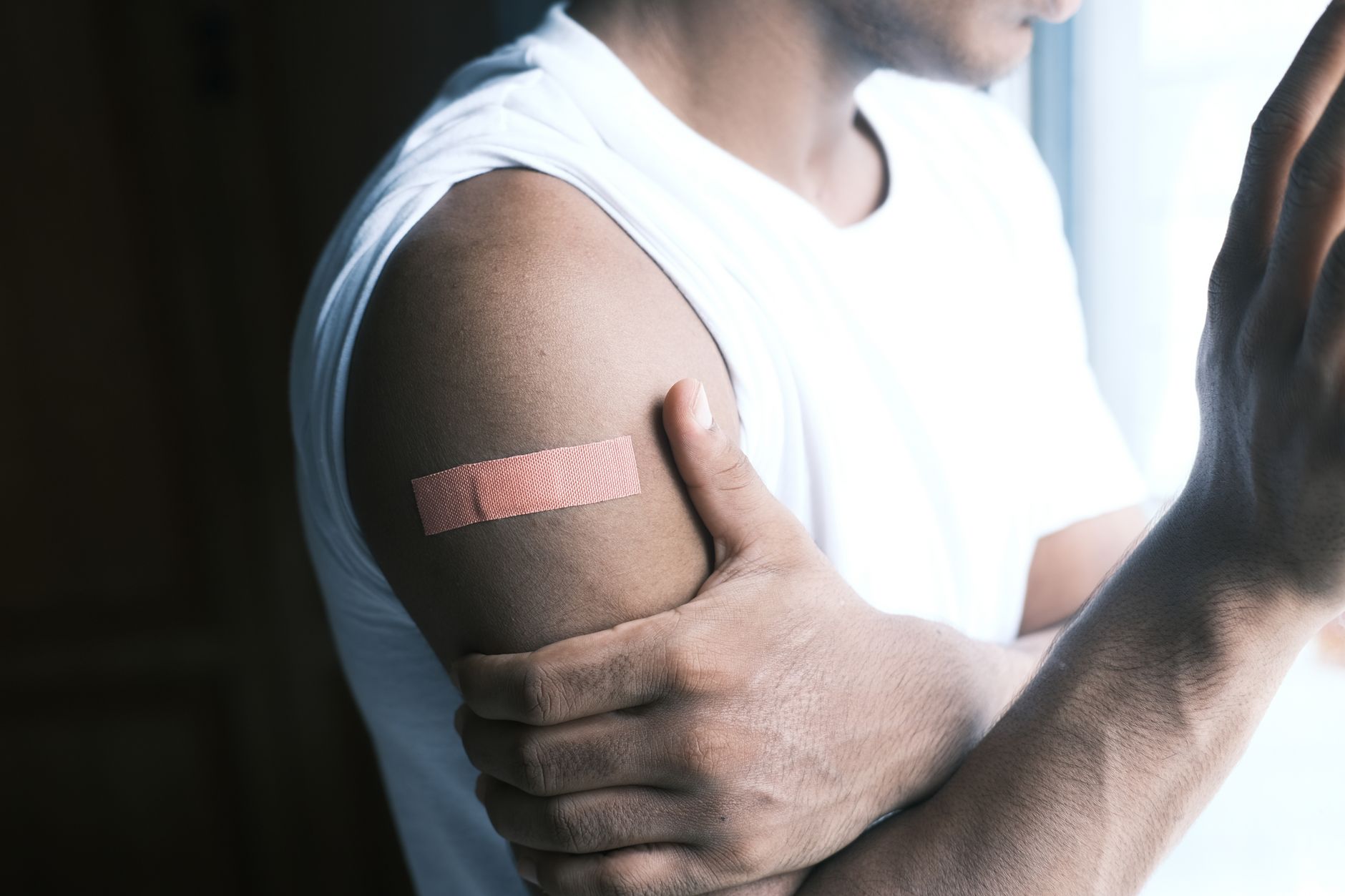
A vaccine injury claim cannot go straight to civil court the way a standard personal injury case can. Federal law requires most claims against a covered vaccine's manufacturer or administrator to start in the Vaccine Injury Compensation Program (VICP), a no-fault system created by the National Childhood Vaccine Injury Act of 1986 and run through the U.S.
Court of Federal Claims rather than state court, according to HRSA. That structural difference shapes everything downstream: who decides the case, what the claimant has to prove, how much they can recover, and who ultimately pays. The sections below walk through each of those differences and what they mean for someone considering a claim.
Table of Contents
- Why a Vaccine Claim Can't Go Straight to Civil Court
- Who Decides the Case, and Under What Standard
- Deadlines, Payouts, and Legal Fees Work Differently
- Where the Money Comes From, and Who Can Be Sued
- Frequently Asked Questions
Why a Vaccine Claim Can't Go Straight to Civil Court
For a vaccine covered by the program, federal law bars a person from filing a civil damages suit over $1,000 against the vaccine's manufacturer or the provider who administered it unless a VICP petition has already been filed and resolved, or formally withdrawn. A court is required to dismiss a lawsuit filed without that step, under 42 U.S.C.
§300aa-11. This "VICP-first" requirement has no equivalent in an ordinary personal injury claim, such as a car accident or a slip-and-fall, where a plaintiff can file directly in state civil court. A vaccine claimant who disagrees with the outcome of their VICP petition can, in some circumstances, reject the program's judgment and pursue a civil suit afterward — but they still have to clear the VICP step first.
Who Decides the Case, and Under What Standard
Standard personal injury claims that go to trial are typically decided by a jury in state court. VICP petitions are decided differently: a special master at the U.S. Court of Federal Claims rules on the case, with no jury, applying a preponderance-of-the-evidence standard, per 42 U.S.C. §300aa-12.
The claimant also doesn't have to prove the same things. A standard personal injury plaintiff must show the defendant was at fault — negligent, or that a product was defectively designed or made. A VICP petitioner instead shows that their injury matches a condition already presumed to be linked to the vaccine on the program's Vaccine Injury Table, or proves "causation-in-fact" without relying on that presumption, according to HRSA. That lower bar cuts both ways. HRSA notes that roughly 60% of VICP compensation awards come from negotiated settlements rather than a ruling on the merits, and that receiving an award is not a legal finding that the vaccine actually caused the injury — a distinction that doesn't carry over cleanly into a standard settlement, where payment is more directly tied to an admission or finding of fault (HRSA data).
Deadlines, Payouts, and Legal Fees Work Differently
The filing clock runs differently too. A VICP petition must be filed within 36 months of the first symptom of the injury, or within 24 months of a death and no later than 48 months after the injury that led to it began — timelines set by 42 U.S.C. §300aa-16. Most states give a standard personal injury plaintiff two to three years from the date of injury, so a vaccine claimant is working against a different, federally fixed schedule rather than their state's ordinary statute of limitations. Compensation is capped in ways a typical personal injury verdict is not: the VICP limits pain-and-suffering awards to $250,000 and pays a fixed $250,000 death benefit, under 42 U.S.C.
§300aa-15. A standard injury claim carries no comparable statutory ceiling. Legal fees follow a different rule as well. In an ordinary personal injury case, a losing plaintiff's attorney is typically paid nothing under the usual contingency arrangement. In the VICP, attorneys' fees and costs are paid from the program's trust fund even for a denied petition, as long as it was filed in good faith with a reasonable basis — a rule the Supreme Court upheld even for an untimely petition in Sebelius v. Cloer.
Where the Money Comes From, and Who Can Be Sued
In a standard personal injury case, the defendant or their insurer pays any judgment or settlement. The VICP works from a separate pool of money: a federal excise tax on every dose of a CDC-recommended covered vaccine funds the Vaccine Injury Compensation Trust Fund, and that fund — not the manufacturer directly — pays approved claims, according to HRSA. Vaccine manufacturers also have protection from a type of lawsuit that's common in other personal injury and product liability cases.
In Bruesewitz v. Wyeth, the Supreme Court ruled 6-2 that the Act preempts state-law design-defect claims against vaccine makers, so that theory — arguing the vaccine itself was designed unsafely — isn't available even for a claimant who exits the VICP and pursues a civil suit afterward (Supreme Court opinion). A claimant who leaves the VICP can still pursue other theories in civil court, such as a manufacturing defect or a failure to warn, but the design-defect route specifically is closed off by federal preemption — a limitation a standard product liability plaintiff suing over a non-vaccine product would not face.
Frequently Asked Questions
Can someone sue a vaccine manufacturer directly in civil court?
Only after filing a VICP petition that is resolved or withdrawn; a suit filed without that step must be dismissed under 42 U.S.C. §300aa-11.
Does a VICP award mean the vaccine was proven to cause the injury?
No. HRSA states that an award is not a legal finding that the vaccine caused the injury, and most awards come from settlements rather than a ruling on the merits (HRSA data).
What's the deadline to file a vaccine injury claim?
Generally within 36 months of the first symptom, or for a death claim within 24 months of death and no more than 48 months after the injury began, per 42 U.S.C. §300aa-16.