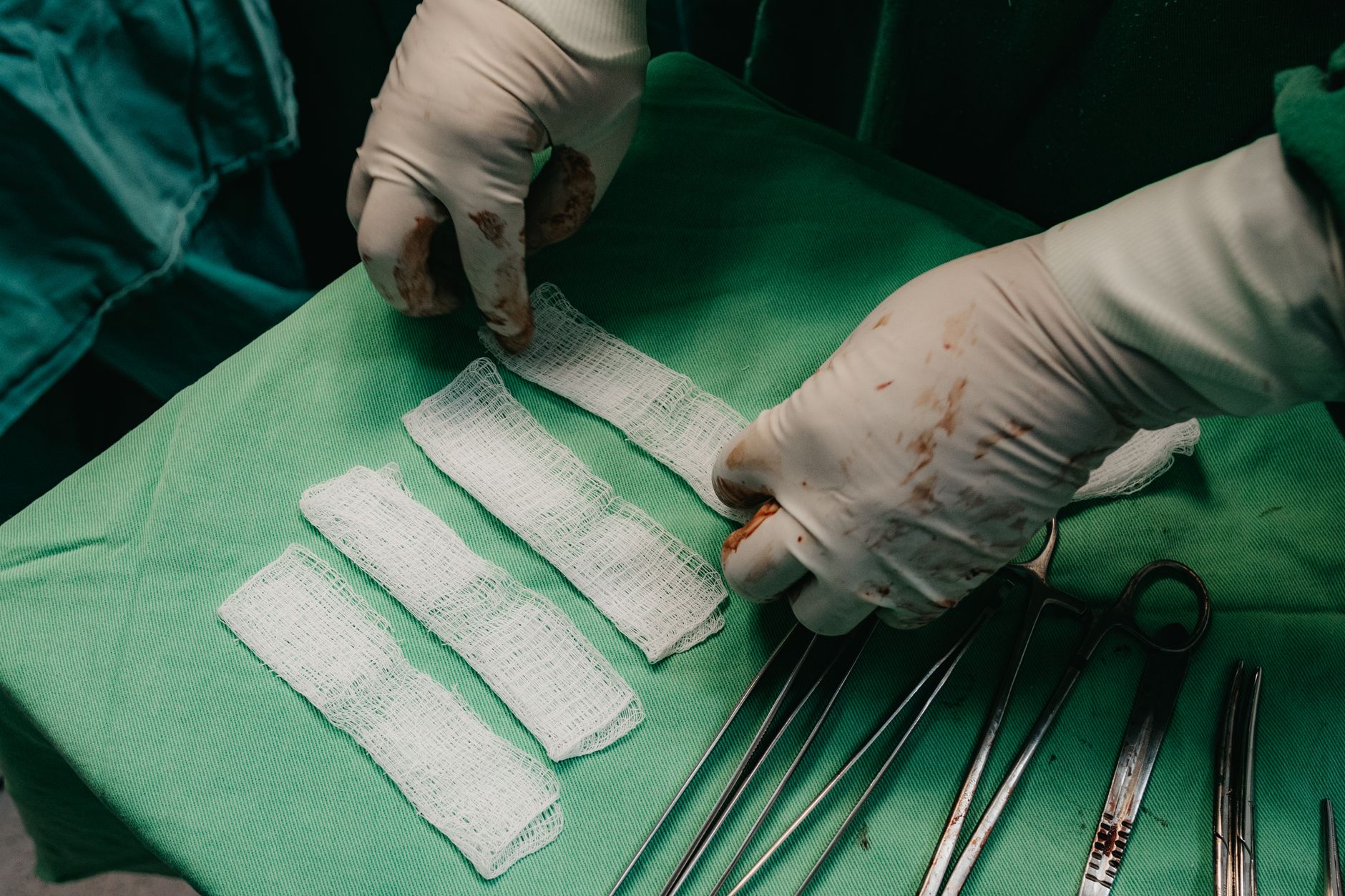
Hernia mesh claims currently carry higher realized settlement value than knee implant claims. Hernia mesh, a surgical patch that reinforces weakened tissue, has produced a funded mass payout, while knee implants, artificial joints that replace damaged knees, have not yet paid injured patients. Consumer Notice reports that Becton Dickinson agreed in October 2024 to resolve most of about 38,000 Bard/Davol suits for over $1 billion, described in Consumer Notice's Bard settlement update. KFF Health News reports that Exactech entered Chapter 11 in October 2024 facing about 2,600 suits and patients had received no compensation as of September 2025, described in KFF Health News on the Exactech bankruptcy.
Official resources:
- Read the official guidance from FDA — Use this primary source to verify the official guidance.
- Read the official guidance from Justice — Use this primary source to verify the official guidance.
Table of Contents
- What are hernia mesh claims paying?
- Why are knee implant payments stalled?
- Do the $8 million and $38.5 million knee deals pay patients?
- Which claim type could be worth more per person?
- What should potential claimants do next?
What are hernia mesh claims paying?
DrugWatch estimates typical Bard payouts at about $65,000 to $80,000, with undocumented quick-pay claims near $2,500 and severe-injury cases over $1 million, detailed in DrugWatch's hernia-mesh settlement figures. Documentation level drives the spread. Quick-pay claims trade proof for speed and a small check. Bellwether trials help explain the range. Juries awarded $4.8 million in a Rhode Island Ventralex trial in August 2022 and $500,000 in an Ohio PerFix Plug trial in November 2023 after an earlier defense win.
Those verdicts do not set individual settlement amounts. They show how pain, revision surgery, infection, organ damage, and lost income can move value up or down. About 25,900 hernia-mesh cases remained pending across federal MDLs in fall 2026, mostly Bard cases moving through settlement administration. That backlog means many claimants wait for tier review and payment processing. It does not mean new injuries qualify for the same deal.
Why are knee implant payments stalled?
The FDA warned in March 2023 that Exactech knee, ankle, and hip devices made from 2004 through August 2021 used defective bags without an oxygen barrier. Oxidation degraded the plastic insert and forced revision surgery. Revision means a second operation to replace a failed implant.
Bankruptcy then froze patient recovery. Exactech filed for Chapter 11 in October 2024 while facing about 2,600 implant suits. Injured patients had received no compensation as of September 2025. A bankruptcy court controls how much money remains for patients after lenders and other creditors.
Do the $8 million and $38.5 million knee deals pay patients?
No. The Justice Department said Exactech agreed to pay $8 million to resolve False Claims Act claims over defective knee devices, with $1.33 million for whistleblowers. That money reimburses the government, not patients. A separate Aesculap deal for $38.5 million over Vega knee systems works the same way.
These cases matter for a different reason. They document government claims that companies sold knee systems they knew failed early. Exactech covered devices billed to federal health programs. Aesculap covered Vega systems sold from 2010 through 2023. Patients need an injury lawsuit or bankruptcy claim for personal compensation, not a share of these federal recoveries.
Which claim type could be worth more per person?
On paper, individual Exactech injury cases carry higher projections than average Bard payments. Attorney projections place Exactech patient cases at $50,000 to $300,000, above the $65,000 to $80,000 Bard average. TorHoerman Law cautions that those projections are speculative and bankruptcy-constrained, while Bard's payment schedule stays confidential.
In practice, Bard offers more certainty today. The Bard program is funded and sorting claimants by injury tier. Exactech recovery depends on bankruptcy funds, proof of a defective-bag implant, and proof of revision or serious harm. A severe hernia injury with multiple surgeries can exceed $1 million, while an Exactech claim without revision may struggle.
- Hernia mesh value rises with documented infection, recurrence, mesh removal, and repeat surgery.
- Knee implant value turns on proof of a covered Exactech device and a revision linked to insert wear.
- Federal False Claims Act payments do not add to either patient payout.
- Confidential tiers and bankruptcy limits make online calculators unreliable.
What should potential claimants do next?
Pull surgical records, implant stickers, revision notes, and out-of-pocket costs now. Hernia claimants should keep proof of mesh brand, infection treatment, and time off work. Knee patients should keep the operative report showing the Exactech model and the reason for revision.
Ask a handling attorney where your claim sits and what tier rules apply. Bard claimants face settlement administration rather than new trials in most cases. Exactech claimants face bankruptcy deadlines and limited funds, so delay can cost options.