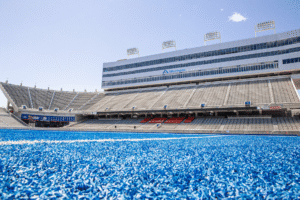

The EA Sports College Football NIL class action represents a significant legal battle over whether college athletes are properly compensated when their likenesses appear in the wildly popular video game franchise. Multiple lawsuits filed against Electronic Arts, Inc. and the Collegiate Licensing Company allege that these companies violated student-athletes’ rights by licensing, using, and selling their names, images, and likenesses without adequate compensation—or sometimes without any compensation at all.
The lawsuits are still pending, with no ruling on the merits yet, but they’re part of a broader movement that has already resulted in billions of dollars in athlete compensation through other settlements. The case gained traction shortly after EA Sports released College Football 25 in 2024, the first official college football video game in 11 years, featuring over 11,000 players from 134 FBS teams. While EA Sports has since increased payments to $1,500 per athlete for College Football 26 (up from a $600 base rate), the litigation continues to challenge whether the company properly obtained consent from all players and whether the compensation adequately reflects the value these athletes bring to the game through their star power and likeness rights.
Table of Contents
- What Is the EA Sports College Football NIL Class Action About?
- How Much Are College Athletes Being Paid by EA Sports?
- Who Is Behind the Class Action Lawsuits?
- What Could the Settlement Mean for College Athletes?
- What Are the Key Limitations and Risks in This Litigation?
- How Does This Compare to the Broader NCAA Settlement?
- What’s Next for the EA Sports NIL Class Action?
- Conclusion
- Frequently Asked Questions
What Is the EA Sports College Football NIL Class Action About?
The class action lawsuits center on one core question: should college athletes be paid when their names, images, and likenesses are sold and licensed in a multimillion-dollar commercial product? According to the claims, Electronic Arts and the collegiate Licensing Company failed to properly compensate athletes—or failed to obtain proper consent altogether—when they included players’ likenesses in the College Football game series. This isn’t hypothetical harm: the College Football video game is one of EA Sports’ most successful franchises, generating millions in revenue annually. The litigation is being overseen by Judge Claudia Wilken in federal court, with Hagens Berman Sobol Shapiro appointed as co-lead class counsel.
The case draws from a well-established legal principle dating back to the 2014 O’Bannon v. NCAA settlement, which established that college athletes have a right to compensation for the commercial use of their likenesses. In that landmark case, approximately 29,000 athletes received settlements totaling up to $7,200 each (averaging around $1,200 per player), setting a precedent that athlete likeness rights have real monetary value.

How Much Are College Athletes Being Paid by EA Sports?
Current payments to athletes in the EA sports College Football games have been increasing. For College Football 26, the company announced it would pay $1,500 per athlete—a significant jump from the previous $600 base rate—to appear in the game. However, compensation varies depending on an athlete’s status: brand ambassadors and cover athletes receive additional payments beyond these base rates, meaning star players may earn considerably more than bench players or reserve athletes.
One critical limitation of these payments is that they apply only to players who explicitly agree to have their likeness included. Players who decline to participate are simply replaced with generic avatars, meaning they receive no compensation at all for their likeness being absent. This creates an uneven situation where some players receive money while others don’t, depending on their visibility and the timing of their consent. Additionally, the current payments of $1,500 per athlete remain relatively modest considering the franchise’s revenue and the years of unpaid use that preceded this arrangement—the litigation argues that this compensation falls far short of what athletes deserve.
Who Is Behind the Class Action Lawsuits?
Hagens Berman Sobol Shapiro, a prominent law firm specializing in consumer litigation and class actions, was appointed as co-lead class counsel overseeing the case against Electronic Arts and the Collegiate Licensing Company. The firm has significant experience in athlete rights cases and has previously represented injured consumers and workers in high-stakes settlements. Judge Claudia Wilken, who also oversees broader NCAA litigation, is handling the case.
The broader context matters here: Judge Wilken has already presided over the house v. NCAA settlement, a massive $2.8 billion settlement approved in 2025 that provides back damages to athletes who competed from 2016 to the present. This settlement establishes revenue-sharing arrangements starting at approximately $20.5 million per school in the 2025-26 season, with 310 schools opting into these terms. The fact that the same judge is overseeing multiple athlete compensation cases suggests she views these rights seriously and may bring that perspective to the EA Sports litigation.
What Could the Settlement Mean for College Athletes?
If the class action succeeds, affected college athletes could receive compensation retroactively for years when their likenesses were used without adequate payment or consent. While the court hasn’t ruled on the merits yet, the O’Bannon precedent provides a roadmap: those athletes received between $1,200 and $7,200 per person on average. Depending on how many games a player appeared in and how far back the class period extends, athletes could potentially receive similar or larger amounts. The practical challenge is identifying who qualifies.
The class likely includes athletes whose likenesses appeared in the game without their explicit consent or without receiving full market-rate compensation. Some athletes may have signed vague licensing agreements years ago without understanding how their likeness would be commercially exploited. Documentation will matter—players who can show they were included in the game but never consented, or never received promised payments, will have stronger claims. Brand athletes and cover athletes may have negotiated special compensation, which could complicate the settlement calculation.
What Are the Key Limitations and Risks in This Litigation?
One major limitation is the current status of the case: the court has not yet ruled on the merits of the claims against EA Sports and the Collegiate Licensing Company. This means the litigation could take years to resolve, or settlement negotiations could stall. Athletes waiting for compensation shouldn’t assume a payout is guaranteed. The company may argue that it obtained proper licensing through the Collegiate Licensing Company, that athletes benefited indirectly through increased exposure, or that the compensation it now offers reflects fair market value.
Another risk is determining the class period and damages calculation. The longer the class period extends into the past, the more former athletes who may be eligible—but the harder it becomes to track them down and distribute payments. Additionally, if athletes signed away their likeness rights in exchange for scholarships or other university benefits, EA Sports may argue those prior agreements limited the athlete’s later claims. The current $1,500 per athlete payment also creates a moving target: if the company continues raising payments voluntarily, it might argue that it’s already addressing the class’s concerns, potentially reducing future damages.

How Does This Compare to the Broader NCAA Settlement?
The EA Sports litigation is distinct from but related to the House v. NCAA settlement, which addresses revenue-sharing and back damages across all college sports. The House settlement provides $2.8 billion to athletes who competed from 2016 onward, funded through ongoing revenue-sharing agreements and state antitrust damages. That settlement focuses on the NCAA’s restrictions on athlete compensation generally.
By contrast, the EA Sports case focuses specifically on whether one company properly compensated athletes for a specific product—the video game. An athlete could potentially benefit from both settlements. Someone who competed from 2016 onward and had their likeness in the College Football game could claim damages under House for the general NIL restrictions and separately claim damages in the EA Sports case for improper game compensation. However, courts typically prevent double recovery, so any final EA Sports settlement would likely account for payments already received under the House settlement to avoid paying the same damage twice.
What’s Next for the EA Sports NIL Class Action?
As of now, the litigation is ongoing with no final ruling or settlement announced. The court is still evaluating the merits of the claims, meaning discovery (the process where both sides exchange evidence) may still be occurring, or the case could be headed toward trial. Recent developments show EA Sports has increased its athlete payments, which may indicate the company is acknowledging pressure from the litigation, but this doesn’t necessarily resolve the core claims about past underpayment.
Looking forward, college athletes should monitor this case for updates. If a settlement is reached, eligible athletes may need to submit claims forms proving they appeared in the game during the class period. The precedent set here could also influence how other game developers and companies handle college athlete likenesses, particularly as NIL rights become increasingly valuable. The outcome may shape whether future compensation for athlete likenesses reaches fair market rates or remains significantly below what major commercial products generate in revenue.
Conclusion
The EA Sports College Football NIL class action is a critical test case for whether major corporations properly compensate college athletes when they profit from their likenesses. Current payments of $1,500 per athlete represent progress, but the litigation challenges whether these amounts are adequate compensation for years of use without proper consent or payment, drawing on the O’Bannon precedent that valued similar rights at $1,200 to $7,200 per athlete. The case is ongoing with no ruling yet, but it sits at the intersection of college sports, video gaming, and athlete rights—three rapidly evolving areas.
If you believe you were a college athlete whose likeness appeared in an EA Sports College Football game without adequate compensation or consent, monitoring this litigation is important. Keep any documentation of your participation in the game, communications about licensing agreements, and records of payments received. Once a settlement or ruling is announced, eligible athletes will likely have a claims period to submit documentation and potentially recover compensation for past harm.
Frequently Asked Questions
How much money might I receive if the class action settles?
While no ruling has been made yet, the O’Bannon settlement provides historical context: athletes received between $1,200 and $7,200 on average. Final amounts in the EA Sports case would depend on factors like how many years your likeness was used, whether you consented, and how the court calculates damages.
Does being paid $1,500 by EA Sports now mean I can’t join the class action?
Not necessarily. The class action likely covers athletes whose likenesses were used without adequate compensation or proper consent in past years. Current payments may not offset the underpayment claim for prior use. However, any settlement would likely account for payments you’ve already received.
What counts as my “likeness” in the game?
Your likeness includes your name, image (digital avatar), voice, and any distinctive characteristics that make you identifiable in the game. Simply being one of thousands of generic unnamed players would likely not qualify—but being included as a named, recognized athlete would.
What if I signed a licensing agreement with EA Sports or the Collegiate Licensing Company?
The existence of an agreement doesn’t automatically eliminate your claim, especially if the agreement was vague, you didn’t fully understand it, or the compensation was inadequate. These details would be evaluated as part of the litigation, but early consent is not a total bar to recovery.
When will I know the outcome of the case?
The court has not yet ruled on the merits. These cases often take 2-5 years to resolve through settlement or trial. Monitor news from court filings or the law firm’s website (Hagens Berman Sobol Shapiro) for updates on settlement announcements or trial dates.
Do I need to hire my own lawyer to join the class action?
No. If a settlement is reached, eligible athletes can typically submit a claim directly without a lawyer, though consulting an attorney about your specific situation may help determine whether you qualify and how much you might recover.
You Might Also Like
- FanDuel Sports Betting Addiction Class Action
- doTerra Essential Oils Pyramid Scheme Class Action
- Young Living Essential Oils Health Claims Class Action
Open Settlements You Can Claim Now
Browse current class action settlements accepting claims — several require no proof of purchase: