

Yes, war policies can be directly blamed for fuel inflation, and the evidence in 2026 is difficult to ignore. When US-Israeli airstrikes on Iran began on February 28, 2026, Brent crude surged from roughly $70 per barrel to $119.50 per barrel in under two weeks — a staggering 70 percent spike that immediately translated into a 7.5 percent jump in US gasoline prices, pushing the national average to $3.20 per gallon. This was not a slow, debatable market trend.
It was a direct, measurable consequence of military policy decisions that disrupted one of the most critical oil transit chokepoints on the planet. The connection between armed conflict and fuel costs is not new, but the scale and speed of the 2026 price shock has revived a familiar debate: who bears the cost when governments choose war? Consumers filling their tanks, farmers buying fertilizer, airlines pricing tickets — all of them absorb the financial shockwaves of geopolitical decisions made thousands of miles away. The lingering effects of Russia’s 2022 invasion of Ukraine had already demonstrated how war reshapes energy markets for years, not months.
Table of Contents
- How Do War Policies Directly Cause Fuel Price Inflation?
- The Inflation Multiplier Effect Beyond the Gas Pump
- What the Russia-Ukraine War Taught Us About Long-Term Energy Costs
- How Central Banks Are Trapped Between Inflation and Recession
- Europe’s Energy Vulnerability Remains a Structural Weakness
- Agriculture and Food Prices Face the Steepest Risk
- What Comes Next for Fuel Prices and Consumer Costs
- Frequently Asked Questions
How Do War Policies Directly Cause Fuel Price Inflation?
The single most consequential policy-driven event for fuel markets in 2026 was Iran’s closure of the Strait of Hormuz in response to the US-Israeli military campaign. Roughly 20 percent of the world’s oil supply — about 20 million barrels per day as of 2025 — moves through that narrow waterway. When Iran shut it down, the effect was immediate and brutal. Oil prices eclipsed $100 per barrel for the first time since Russia’s invasion of Ukraine in 2022, briefly trading near $120 before settling just below the $100 mark. This is not a case where markets overreacted to vague geopolitical tension. The supply disruption was real and physical. QatarEnergy, which operates the Ras Laffan LNG plant responsible for 20 percent of global liquefied natural gas production, declared force majeure — a legal acknowledgment that it could not fulfill its supply contracts due to circumstances beyond its control.
LNG spot prices in Asia more than doubled to $25.40 per MMBtu as a direct result. When a government decides to launch airstrikes on a country that controls a critical energy chokepoint, the inflationary consequences are not speculative. They are mechanical. What makes this different from, say, a hurricane disrupting Gulf of Mexico production is the element of policy choice. Natural disasters are unavoidable. Military campaigns are decisions made by elected officials and military leaders. The fuel inflation that follows is, in a very real sense, a policy outcome — one that governments rarely account for in their public justifications for military action.

The Inflation Multiplier Effect Beyond the Gas Pump
fuel price spikes do not stay contained at the gas station. According to analysis from the World Economic Forum, every 10 percent sustained increase in oil prices pushes global inflation up by 0.4 percentage points and reduces economic output by up to 0.2 percent. With oil prices having surged roughly 70 percent in early March 2026, the math is sobering. Analysts forecast that if disruptions persist and oil holds above $100 per barrel, the conflict could add 0.8 percent to global inflation — a significant figure when central banks have spent years trying to wrestle inflation down by fractions of a point. The transmission channels are wide. Airline fares, which had been running at a relatively modest 2.2 percent CPI increase, could spike as high as 20 percent due to jet fuel cost surges.
Agriculture prices are considered the sector most at risk, because oil and natural gas are essential inputs for fertilizer production. When fertilizer costs rise, food prices follow — a chain reaction that hits lower-income households hardest, since they spend a larger share of their income on food and transportation. However, it is worth noting a limitation in these projections: they assume sustained high prices. If the Strait of Hormuz reopens quickly and Iranian oil production resumes, the inflationary impact could be significantly less severe than the worst-case scenarios suggest. Short-lived price spikes, while painful, do not embed themselves into the broader economy the way prolonged disruptions do. The critical variable is duration, not just magnitude. If history is any guide, though, energy disruptions caused by military conflict rarely resolve on convenient timelines.
What the Russia-Ukraine War Taught Us About Long-Term Energy Costs
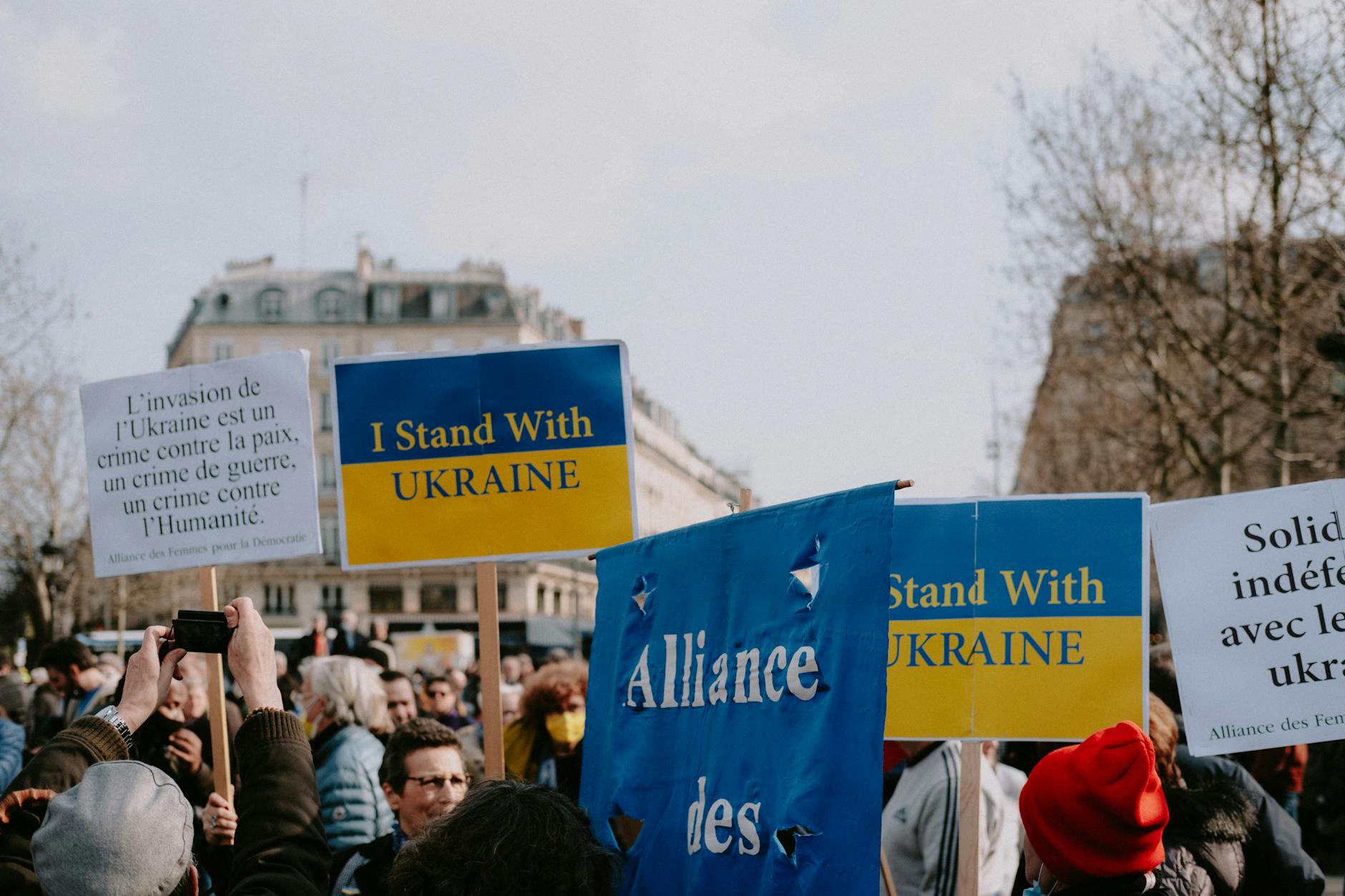
The 2022 Russian invasion of Ukraine provides a sobering case study in how war-driven energy disruptions outlast the headlines. Four years later, the effects are still measurable across European household budgets. Russia’s share of EU pipeline gas imports collapsed from approximately 40 percent in 2021 to just 6 percent in 2025, a dramatic restructuring of an entire continent’s energy supply chain driven by sanctions and deliberate diversification policies. The cost of that transition has been steep. EU household electricity prices rose 30 percent and natural gas prices rose 79 percent between the first half of 2021 and the first half of 2025.
While prices have stabilized over the past two years, they remain well above pre-invasion levels. European consumers are still paying a war premium on their energy bills, years after the initial shock. In Ukraine itself, consumer prices rose 7.6 percent year-over-year in February 2026, with fuel costs surging on rising European energy benchmarks — compounding the hardship for a population already enduring direct conflict. The Russia-Ukraine precedent is important because it demonstrates that war-driven energy inflation is not a temporary inconvenience. Policy decisions to sanction a major energy producer, while arguably justified on geopolitical grounds, imposed costs that consumers absorbed for years. The 2026 Iran conflict now threatens to layer a second, potentially overlapping energy shock on top of a global economy that had not fully recovered from the first one.
How Central Banks Are Trapped Between Inflation and Recession
The renewed energy price surge has put central banks in an uncomfortable position. After spending much of 2024 and 2025 cautiously moving toward interest rate cuts as inflation eased, the Iran conflict has made further near-term rate reductions highly unlikely. Central bankers now face the classic energy shock dilemma: raise rates to fight inflation and risk tipping economies into recession, or hold rates steady and hope the supply disruption resolves before inflation expectations become entrenched. This is a meaningful tradeoff for ordinary consumers. Higher interest rates mean more expensive mortgages, car loans, and credit card debt.
For homeowners with variable-rate mortgages, the difference between a rate cut cycle and a rate hold can amount to hundreds of dollars per month. For businesses, higher borrowing costs translate into slower hiring and reduced investment. The fuel inflation caused by war policies does not just show up at the pump — it shapes the entire financial environment that consumers and businesses operate in. The comparison to the post-2022 rate hike cycle is instructive. After Russia’s invasion of Ukraine, central banks raised rates aggressively to combat energy-driven inflation, contributing to a global slowdown that took years to work through. If the 2026 Iran conflict produces a similar inflationary impulse, consumers could face a painful repeat: higher prices at the store and the gas station, combined with higher borrowing costs, simultaneously.
Europe’s Energy Vulnerability Remains a Structural Weakness
One of the more revealing moments of the 2026 crisis came on March 9, when Vladimir Putin offered to supply oil and gas to Europe amid the global energy crunch. The offer was widely viewed as opportunistic, but it highlighted a genuine structural problem: despite years of effort to diversify away from Russian energy, Europe remains vulnerable to supply shocks. The continent replaced Russian pipeline gas with LNG imports, much of it from Qatar — the same Qatar whose Ras Laffan facility declared force majeure when the Iran conflict disrupted the Strait of Hormuz. This is a warning about the limits of energy diversification when the alternative suppliers are themselves located in conflict-prone regions. Europe reduced its dependence on one geopolitically risky supplier only to increase its exposure to another.
When multiple conflicts overlap — Russia-Ukraine and Iran simultaneously — the supposed diversification provides less protection than policymakers had promised. Consumers who were told that the painful transition away from Russian gas would insulate them from future shocks are now discovering that the new supply chains carry their own risks. The broader lesson is that war policies anywhere in the energy-producing world can trigger fuel inflation everywhere. Global energy markets are interconnected enough that a conflict in the Persian Gulf immediately affects prices in Berlin, Tokyo, and Des Moines. Consumers have limited ability to insulate themselves from these shocks, which is precisely why the policy decisions that trigger them deserve more scrutiny than they typically receive.

Agriculture and Food Prices Face the Steepest Risk
Among all the downstream effects of war-driven fuel inflation, agriculture stands out as particularly exposed. Oil and natural gas are not just transportation fuels for the farming sector — they are fundamental inputs for fertilizer production. When energy prices spike, fertilizer costs follow, and those costs flow directly into the price of food on grocery store shelves.
The Center for American Progress identified agriculture prices as the sector most at risk from the 2026 Iran conflict’s energy disruption. This matters because food price inflation is regressive. A family spending $800 per month on groceries feels a 10 percent increase far more acutely than a household spending $2,000 per month on dining out. War policies that drive up energy costs impose a disproportionate burden on the people least equipped to absorb it — a dynamic that rarely features in the policy debates that precede military action.
What Comes Next for Fuel Prices and Consumer Costs
The trajectory of fuel inflation in 2026 depends almost entirely on the duration and resolution of the Iran conflict. If diplomatic efforts succeed in reopening the Strait of Hormuz and restoring normal oil and LNG flows, prices could retreat toward pre-conflict levels relatively quickly. If the conflict escalates or becomes protracted, some analysts have raised the possibility of oil reaching $200 per barrel — a scenario that would produce economic consequences far exceeding anything seen in the post-2022 period.
What is clear is that the pattern of war policies driving fuel inflation is not going away. As long as a significant share of global energy supply moves through geopolitically unstable regions, military decisions will continue to function as de facto energy policy. Consumers, policymakers, and courts alike will need to grapple with the question of who should bear the cost when government actions predictably drive up the price of essential commodities. The answer to that question will shape not just energy markets, but the broader relationship between military policy and economic accountability.
Frequently Asked Questions
How much have gas prices risen because of the 2026 Iran conflict?
US gasoline prices rose 7.5 percent to $3.20 per gallon in the immediate aftermath of the US-Israeli airstrikes on Iran. The underlying crude oil price surged roughly 70 percent, from about $70 per barrel to $119.50 per barrel in under two weeks.
Why did the Iran conflict affect oil prices so dramatically?
Iran closed the Strait of Hormuz, through which approximately 20 percent of global oil supplies — about 20 million barrels per day — are transported. This physical disruption to supply, combined with QatarEnergy’s force majeure declaration at its major LNG facility, created an immediate global shortage.
Are energy prices from the Russia-Ukraine war still elevated?
Yes. As of early 2026, EU household electricity prices remain 30 percent higher and natural gas prices remain 79 percent higher than they were in the first half of 2021, before the Russian invasion. Prices have stabilized but have not returned to pre-war levels.
Will interest rates go down in 2026?
The renewed energy price surge has made further near-term interest rate cuts highly unlikely. Central banks are balancing inflation risk against slowing economic growth, and the Iran conflict has complicated any plans for rate reductions.
How does fuel inflation affect food prices?
Oil and natural gas are key inputs for fertilizer production. When energy prices rise, fertilizer costs increase, which drives up the cost of agricultural goods. Agriculture prices are considered the sector most at risk from the current energy disruption.