

The short answer is that Americans have very limited direct legal recourse to challenge war decisions that have driven gas prices higher. Courts have for decades refused to rule on the legality of presidential military action, treating it as a political question between Congress and the executive branch. The congressional route has also stalled — bipartisan War Powers resolutions in both the Senate and House failed in early March 2026, leaving no formal legislative check on the U.S.-Israeli military strikes against Iran that began February 28, 2026. Since those strikes began, gas prices have surged from $2.98 per gallon to $3.54 per gallon by mid-March, a 21 percent increase that has hit every American household.
That does not mean there is nothing happening on the legal front. The most promising avenues are indirect: state-level challenges to federal emergency powers and price gouging investigations targeting oil companies that appear to be profiting far beyond what crude oil cost increases would justify. California Governor Gavin Newsom announced legal action on March 13, 2026 to enforce binding court orders against what he called the Trump Administration’s “unlawful reliance on emergency powers.” Meanwhile, California’s Division of Petroleum Market Oversight has found that every recent price spike also constituted a profit spike for refiners.
Table of Contents
- What Legal Options Do Americans Have to Challenge War Decisions That Raised Gas Prices?
- Why Federal Courts Are Unlikely to Intervene in War Authorization Disputes
- California’s State-Level Legal Challenge Sets a New Precedent
- How Price Gouging and Profiteering Claims Offer a More Practical Path for Consumers
- The Limits of Government Action to Lower Gas Prices
- Public Opinion and Political Pressure as a Check on War Policy
- What Comes Next for Consumers Facing Higher Gas Prices
- Frequently Asked Questions
What Legal Options Do Americans Have to Challenge War Decisions That Raised Gas Prices?
There are essentially four channels through which americans or their elected representatives have tried to push back against military decisions that triggered the current gas price crisis. The first is the War Powers Resolution process in Congress, which requires the president to obtain explicit authorization for sustained hostilities. Senator Tim Kaine and Senator Rand Paul led a bipartisan resolution in the Senate that failed 47 to 53. A parallel effort in the House, championed by Representative Thomas Massie and Representative Ro Khanna, failed even more narrowly at 219 to 212. These votes effectively ended the most direct democratic mechanism for halting the military action driving prices upward.
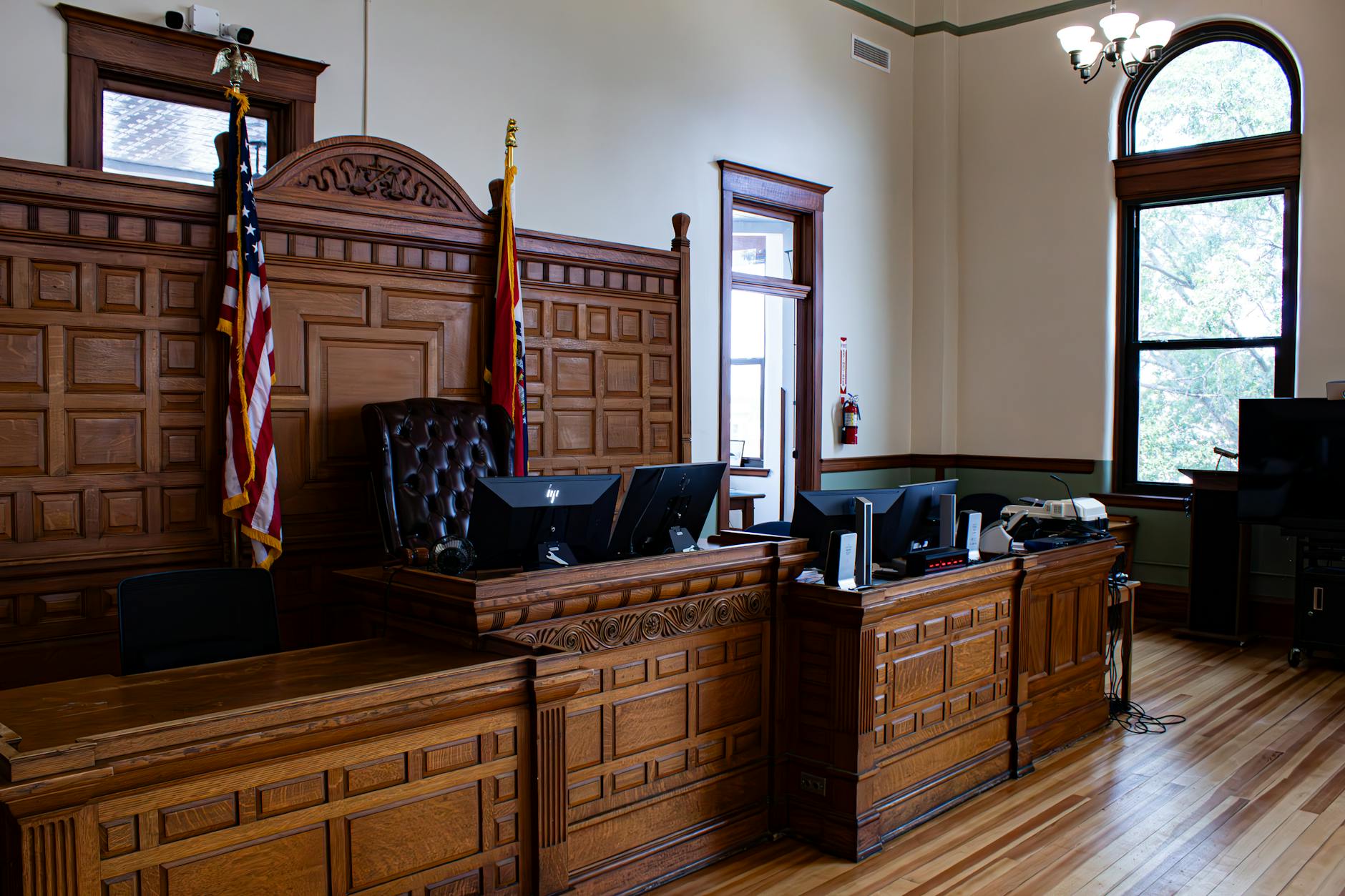
The second channel is the federal courts. Historically, federal judges have sidestepped challenges to a president’s authority to initiate military force, categorizing the matter as a “political question” that the judiciary should not resolve. The ACLU has noted that while the constitutional argument that Congress alone holds the power to declare war is strong on paper, courts have been unwilling to enforce that boundary for decades. This means that a lawsuit filed by individual citizens or even members of Congress arguing that the Iran strikes are unconstitutional would almost certainly be dismissed before reaching the merits. The third and fourth channels — state-level legal action and price gouging enforcement — have shown more traction, though they target the economic consequences of war rather than the war decision itself. For consumers who care most about what is happening at the pump, these indirect approaches may prove more relevant than any constitutional challenge to presidential war-making authority.

Why Federal Courts Are Unlikely to Intervene in War Authorization Disputes
The legal doctrine that has shielded presidential war-making from judicial review is known as the political question doctrine, and it has deep roots. Federal courts have consistently held that disputes between Congress and the president over the use of military force are for those two branches to resolve between themselves. Even during the Vietnam War, when members of Congress filed suit to stop the conflict, courts declined to issue orders. The reasoning is that the Constitution gives both branches overlapping roles in national security, and judges are poorly positioned to second-guess battlefield decisions. This does not mean the legal arguments against unilateral presidential war-making are weak.
Constitutional scholars and organizations like the ACLU have argued forcefully that the strikes on Iran lack proper congressional authorization and violate both the Constitution and the War Powers Act. The problem is not the quality of the legal argument but the willingness of courts to hear it. As TIME reported in its analysis of the Iran conflict, the judiciary has created a de facto zone of unreviewability around presidential military decisions, regardless of which party controls the White House. However, there is one narrow scenario where courts might engage. If the administration invokes specific emergency powers — such as those related to energy policy or economic controls — that fall outside traditional military authority, those claims could be challenged on administrative law grounds rather than war powers grounds. This is essentially the approach California is pursuing, and it represents the most legally viable path through the federal court system.
California’s State-Level Legal Challenge Sets a New Precedent
Governor Newsom’s March 13, 2026 announcement that California would pursue legal action against the federal government marked a significant escalation. Rather than challenging the war itself, California is targeting the administration’s use of emergency powers that the state argues are harming California’s coastline and energy policy. This framing is deliberate — it transforms what would be an unwinnable war powers case into an administrative law challenge where courts have a long history of intervening. California has more use than most states on energy issues because of its existing regulatory infrastructure. The state’s Division of Petroleum Market Oversight has been studying the relationship between crude oil prices and retail gas prices, and its findings are striking.
Every price spike the division examined also constituted a profit spike, meaning retail gas prices surged well beyond what the underlying increase in crude oil costs would explain. With California gas prices topping $5.30 per gallon statewide, the gap between crude costs and pump prices has become politically impossible to ignore. The state also passed laws giving regulators the power to cap refinery profits and penalize price gouging. But in a decision that now looks poorly timed, the California Energy Commission voted to delay implementation of those rules for five years. That delay is under renewed scrutiny, and consumer advocates are pressing for immediate enforcement. Whether California’s legal strategy succeeds may depend less on the courts than on whether the political pressure from $5-plus gas prices forces faster regulatory action.
How Price Gouging and Profiteering Claims Offer a More Practical Path for Consumers
For most Americans, the practical question is not whether the war is legal but whether the companies selling them gasoline are exploiting the crisis. The evidence suggests they are. Energy firm shares in the S&P 500 are up 26 percent in 2026, while the broader index is down 1.5 percent. That divergence is difficult to explain purely through supply and demand — it points to companies capturing windfall profits during a period of consumer distress. The distinction matters because price gouging is an area where state attorneys general and federal regulators have clear legal authority to act. Unlike war powers challenges, which run into the political question doctrine, price gouging cases are bread-and-butter consumer protection enforcement.
Several states have price gouging statutes that are triggered during declared emergencies, and the Federal Trade Commission has authority to investigate unfair or deceptive trade practices in energy markets. The tradeoff is that these investigations take time — often months or years — and any penalties or refunds come long after consumers have already paid inflated prices. The comparison between challenging the war decision and challenging oil company profiteering illustrates a broader reality about consumer legal rights. Direct challenges to government policy decisions are extraordinarily difficult under American law. But challenges to private companies that exploit those policy decisions often have well-established legal frameworks. Consumers looking for actual financial relief are far more likely to find it through class action lawsuits against oil companies or state attorney general enforcement actions than through any challenge to the president’s war-making authority.
The Limits of Government Action to Lower Gas Prices
The federal government has taken several steps to address rising prices, but each comes with significant limitations. President Trump authorized the release of 172 million barrels from the Strategic Petroleum Reserve over 120 days, part of a coordinated 400-million-barrel release by the International Energy Agency — the largest emergency release in IEA history. While this sounds massive, the global oil market consumes roughly 100 million barrels per day, meaning even this historic release covers only a few days of global demand. The administration is also considering 30-day waivers of the Jones Act, which normally requires goods shipped between U.S. ports to travel on American-built, American-flagged vessels.
Waiving this requirement for oil tankers would allow foreign vessels to supply East Coast refiners, which JPMorgan estimates could save motorists roughly 10 cents per gallon. That is meaningful but modest against a backdrop where prices have risen by 56 cents per gallon in less than three weeks. The warning for consumers is that none of these measures address the underlying cause of the price increase: the disruption to the Strait of Hormuz, through which a significant share of global oil flows. Brent crude spiked from approximately $70 per barrel to $119.50 before settling around $90. If the conflict is prolonged, analysts at CNBC project that national gas prices could approach $5 per gallon in the second quarter of 2026. Government interventions can shave pennies off the price, but they cannot substitute for the resolution of the conflict itself.

Public Opinion and Political Pressure as a Check on War Policy
Only 29 percent of Americans approve of the war in Iran, with a majority expecting gas prices to continue climbing. That level of disapproval is politically significant, particularly with midterm dynamics already shaping legislative behavior. Gas prices have historically been one of the most potent pocketbook issues in American politics — they are visible, unavoidable, and updated on giant signs at every street corner.
While public opinion does not provide a legal mechanism to challenge war decisions, it creates the political conditions under which other mechanisms become more viable. The bipartisan nature of the War Powers resolutions — with libertarian-leaning Republicans like Rand Paul and Thomas Massie joining progressive Democrats — reflects genuine cross-partisan frustration. If prices continue rising toward the projected $5 per gallon mark, the political calculus for wavering members of Congress could shift, making a future War Powers vote or funding restriction more likely to succeed.
What Comes Next for Consumers Facing Higher Gas Prices
The trajectory of gas prices depends almost entirely on the trajectory of the conflict. The Strait of Hormuz disruption represents the biggest oil supply shock in history, and the market has not yet fully priced in a prolonged engagement. Consumers should expect continued volatility and should be skeptical of any short-term price relief being presented as a permanent fix.
On the legal front, the cases to watch are California’s challenge to federal emergency powers and any state or federal investigations into oil company profiteering. These proceedings will unfold over months, not weeks, but they represent the most realistic paths to accountability and potential consumer compensation. Class action attorneys are almost certainly evaluating price gouging claims against major refiners, and if California’s data on profit spikes holds up under scrutiny, those cases could gain significant momentum. For now, the most honest answer remains that Americans have limited ability to challenge the war decisions themselves — but growing ability to challenge the companies profiting from them.
Frequently Asked Questions
Can I personally sue the government for raising gas prices through war decisions?
No. Federal courts have consistently held that challenges to presidential military action are political questions that the judiciary will not resolve. Individual lawsuits seeking damages from gas price increases caused by war policy would almost certainly be dismissed.
Are oil companies legally allowed to raise prices this much during a crisis?
It depends on the state. Some states have price gouging laws triggered during emergencies, and California’s Division of Petroleum Market Oversight has found that recent price spikes also constituted profit spikes beyond what crude oil costs would explain. Federal investigations through the FTC are also possible, though enforcement is slow.
What is the War Powers Resolution and why did it fail?
The War Powers Resolution is a federal law requiring the president to obtain congressional authorization for sustained military hostilities. Bipartisan resolutions were introduced in both chambers — the Senate version failed 47 to 53 and the House version failed 219 to 212 — meaning Congress did not formally challenge the president’s authority to continue strikes on Iran.
How much could gas prices rise if the Iran conflict continues?
CNBC projects that national gas prices could approach $5 per gallon in the second quarter of 2026 if the conflict is prolonged. California has already exceeded $5.30 per gallon statewide.
Will the Strategic Petroleum Reserve release bring prices down significantly?
The 172-million-barrel release over 120 days is part of the largest coordinated emergency release in IEA history at 400 million barrels. However, global oil consumption is roughly 100 million barrels per day, so even this historic release provides only modest and temporary relief.
Is there any class action lawsuit I can join related to gas price increases?
As of mid-March 2026, no major class action has been formally filed, but consumer attorneys are likely evaluating claims against oil companies for price gouging. Any such litigation would focus on whether refiners and retailers inflated prices beyond what supply disruptions justified, rather than challenging the war decision itself.