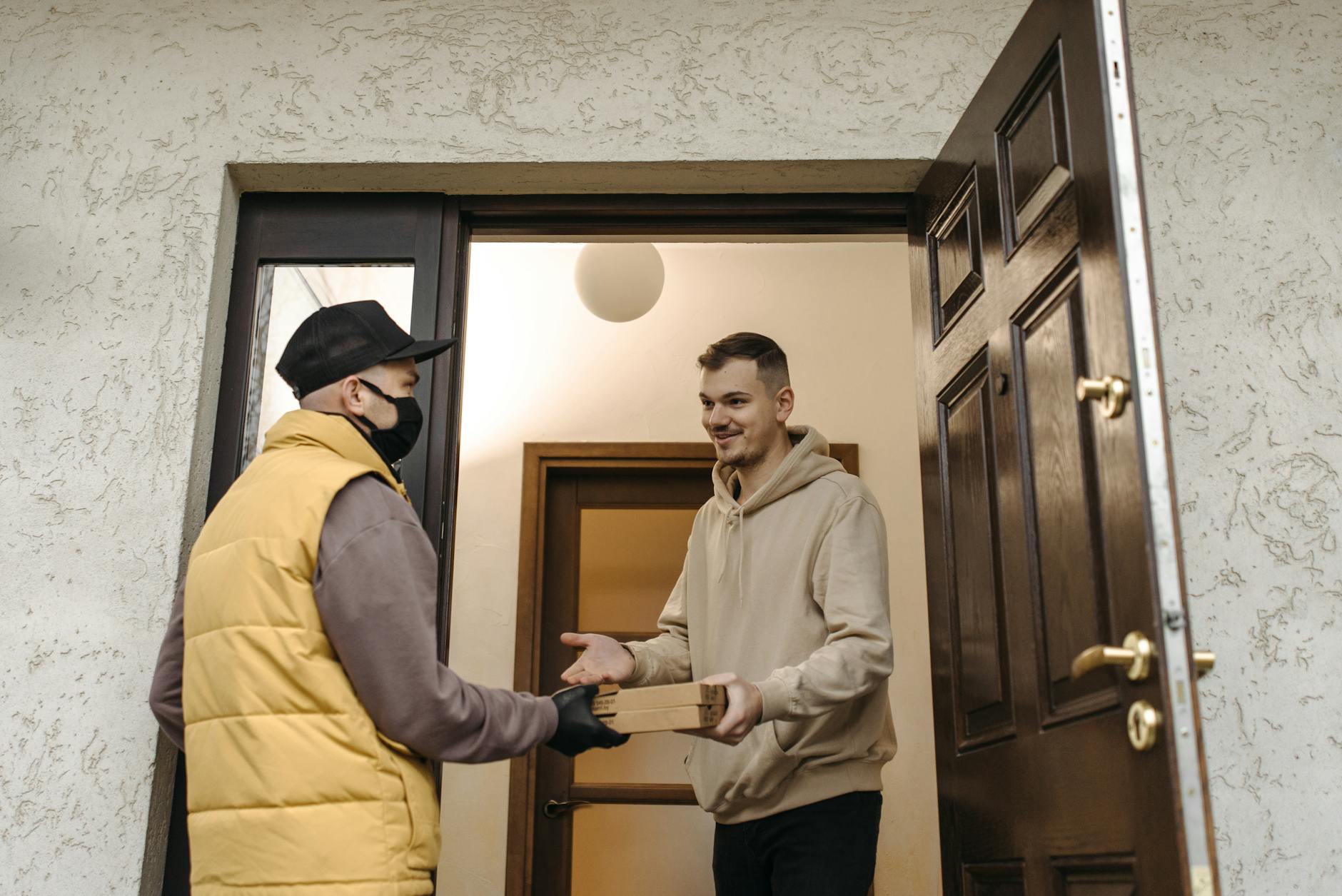
DoorDash settlement payments are being distributed on different timelines depending on which case you fall under, and the short answer is that most claimants should not expect a single lump-sum check on one magic date. For the New York $16.75 million settlement over unpaid tips, payments are already going out on a bi-monthly rolling basis through the settlement administrator Atticus Administration. If you filed a valid claim before the February 13, 2026 deadline, your payment may arrive by check, Venmo, Zelle, eMastercard, or ACH — but the exact timing depends on when your individual claim was verified.
For the Chicago $18 million settlement, consumer credits began appearing automatically on January 28, 2026, while restaurant payments are not expected until the end of June 2026. The reason these payments take time is straightforward but frustrating: settlement administrators must individually verify eligibility for tens of thousands of people against DoorDash’s own records, process each claim, and then distribute funds in waves rather than all at once. The New York settlement alone involves approximately 63,000 eligible Dashers.
Table of Contents
- When Will DoorDash Settlement Payments Be Sent to Eligible Claimants?
- Why DoorDash Settlement Payments Take Months to Arrive
- The New York DoorDash Settlement and What $16.75 Million Means for Dashers
- How to Check Your DoorDash Settlement Payment Status and Choose the Right Method
- Common Problems That Delay DoorDash Settlement Payments
- The Chicago Settlement’s Unique Structure for Consumers and Restaurants
- What These Settlements Mean for DoorDash Going Forward
- Frequently Asked Questions
When Will DoorDash Settlement Payments Be Sent to Eligible Claimants?
The timeline for receiving a doordash settlement payment depends entirely on which settlement applies to you. There are currently three major DoorDash settlements moving through various stages of distribution: the $16.75 million New York settlement for unpaid tips, the $18 million Chicago settlement for deceptive business practices, and the $11.25 million Illinois settlement for tip subsidization. Each one has its own administrator, its own deadlines, and its own payment schedule. For the New York settlement, Atticus Administration began notifying qualifying Dashers in April 2025 and has been processing claims on a rolling basis since then.
The claim deadline passed on February 13, 2026, meaning no new claims are being accepted. Payments are going out bi-monthly, so if your claim was recently verified, you could see funds within the next payment cycle. By contrast, Chicago’s settlement operates on a split timeline — consumers who used DoorDash in Chicago already received automatic credits starting January 28, 2026, but restaurants that were listed on the platform without consent between August 27, 2019 and November 14, 2025 must submit attestation forms by March 30, 2026, with payments expected by the end of June 2026. The Illinois settlement, secured by Attorney General Kwame Raoul, covers over 79,000 delivery workers whose tips were used to subsidize DoorDash’s guaranteed minimum pay between July 2017 and September 2019. While payment specifics for the Illinois case are still developing, the settlement also imposed an ongoing requirement that DoorDash maintain a pay model that does not use consumer tips to offset its own pay contributions — a structural change that affects current and future drivers regardless of whether they receive a direct payment.

Why DoorDash Settlement Payments Take Months to Arrive
The gap between a settlement announcement and actual money in your hand can feel unreasonable, but the process involves several bottlenecks that are largely unavoidable. First, the settlement administrator must obtain DoorDash’s employment and transaction records for the relevant time period, then cross-reference those records against every claim that was submitted. For the New York case, that means checking roughly 63,000 individual claims against years of delivery data from May 2017 through September 2019. Any discrepancies — a name change, an old address, a disputed delivery period — require additional review. Second, funds are distributed in rolling waves rather than a single mass payment.
This is standard practice in large class action settlements because it allows the administrator to begin paying verified claimants immediately rather than making everyone wait until the very last claim is processed. However, this also means that if your claim required additional verification or was submitted close to the deadline, you will be in a later payment wave. There is no way to jump the queue, and contacting the administrator repeatedly will not accelerate the process. Third, different categories of claimants within the same settlement can face entirely separate timelines. The Chicago settlement is a clear example: consumers received automatic credits within two months of the settlement announcement, but restaurants face a claims process that stretches into mid-2026. If you are a restaurant owner who was listed on DoorDash without your consent, your timeline is fundamentally different from a consumer who simply ordered food through the app — even though both are part of the same $18 million settlement.
The New York DoorDash Settlement and What $16.75 Million Means for Dashers
The New York settlement, secured by Attorney General Letitia James, targeted a specific and well-documented practice: between May 2017 and September 2019, DoorDash used a pay model that effectively allowed customer tips to count toward the company’s guaranteed minimum payment to drivers. In practice, this meant that a customer who tipped generously was subsidizing DoorDash rather than rewarding their delivery worker. A Dasher guaranteed $7 per delivery who received a $5 tip would only get $2 from DoorDash, rather than $7 plus the $5 tip. The $16.75 million fund is being divided among approximately 63,000 eligible Dashers who worked in New York State during that period.
Simple math suggests an average payout of roughly $266 per claimant, though actual amounts will vary based on how many deliveries each worker completed and how much tip income was affected. Workers who delivered full-time during the entire two-year window will receive significantly more than someone who dashed occasionally for a few months. If you filed a claim and have not yet received payment, the first step is to contact Atticus Administration at 1-800-270-1039. They can confirm whether your claim is in the system, what verification stage it is in, and which payment wave you are expected to fall into. Keep in mind that the claim deadline has already passed as of February 13, 2026, so if you never submitted a claim, you are unfortunately not eligible for payment regardless of whether you worked as a Dasher in New York during the covered period.

How to Check Your DoorDash Settlement Payment Status and Choose the Right Method
One practical decision that affects how quickly you receive your money is the payment method you selected when filing your claim. The New York settlement offers five options: check, Venmo, Zelle, eMastercard, or ACH direct deposit. Electronic methods like Venmo, Zelle, and ACH are generally faster because they eliminate mail delivery time and the risk of a check getting lost or sent to an old address. If you selected a paper check and have moved since filing your claim, you should contact Atticus Administration immediately to update your mailing address. There is a tradeoff worth noting, however. Paper checks provide a clear physical record and do not require you to have an active account with any particular payment service.
If your Venmo account is deactivated or your bank account has changed since you filed, an electronic payment could fail and require reprocessing, which adds more delay. The safest approach is to verify that whichever payment method you selected is still active and accessible. For the Chicago settlement, the process is different — consumer credits were applied automatically to DoorDash accounts, so there was no payment method selection involved. Restaurant claimants in Chicago will need to follow the instructions on their attestation forms, which must be submitted by March 30, 2026. If you are uncertain about your claim status for any of the active settlements, the official settlement websites are your most reliable source of information. The New York settlement site at nydoordashsettlement.com has a detailed FAQ section, and the Illinois settlement has a corresponding page at ildoordashsettlement.com. Avoid third-party sites claiming to check your status or file claims on your behalf — the legitimate process goes directly through the settlement administrator.
Common Problems That Delay DoorDash Settlement Payments
Several issues can cause individual payment delays even after the settlement administrator has begun distributing funds. The most common is outdated contact information. If you changed your phone number, email address, or physical address after filing your claim, the administrator may not be able to reach you or deliver your payment. This is especially relevant for gig workers, who tend to move more frequently than the general population. A failed electronic payment or a returned check does not mean your claim was denied — it means the administrator needs updated information from you. Another common issue is eligibility disputes.
If DoorDash’s records show you worked outside the covered time period, or in a state not covered by the settlement you applied for, your claim may be flagged for additional review. The New York settlement covers only Dashers who worked in New York State between May 2017 and September 2019. If you dashed in New Jersey during that period and applied to the New York settlement, your claim will be rejected — even if you also did some deliveries across the state line. The Illinois settlement has a similar geographic and temporal limitation, covering deliveries made in Illinois between July 2017 and September 2019. One warning that applies broadly: if you receive an email, text, or phone call asking you to pay a fee to release your settlement funds, it is a scam. Legitimate settlement administrators never charge claimants to receive their payments. Atticus Administration will contact you through official channels, and you can always verify by calling their line directly at 1-800-270-1039.

The Chicago Settlement’s Unique Structure for Consumers and Restaurants
The $18 million Chicago settlement, announced in November 2025, stands apart from the New York and Illinois cases because it addresses deceptive practices affecting two distinct groups: consumers and restaurants. Consumers who used DoorDash in Chicago began receiving credits automatically on January 28, 2026, with no claim form required. This is relatively unusual in class action settlements, where claimants almost always have to take affirmative steps to receive compensation. The automatic credit approach was likely chosen because DoorDash already had account information for its Chicago users, making individual identification straightforward.
Restaurants face a different process entirely. Those that were listed on DoorDash’s platform without their consent between August 27, 2019 and November 14, 2025 must submit an attestation form by March 30, 2026. Payments for restaurant claims are expected to be issued by the end of June 2026. If you own a restaurant in Chicago and believe you were listed without authorization, the clock is ticking — missing the March 30 deadline means forfeiting your share of the settlement fund.
What These Settlements Mean for DoorDash Going Forward
The combined weight of these three settlements — totaling over $46 million — has already forced structural changes to how DoorDash compensates its delivery workers. The Illinois settlement explicitly requires DoorDash to maintain a pay model that does not use consumer tips to offset the company’s own pay contributions.
This is not just a financial penalty but a binding operational change that affects every current and future Dasher in the state. Whether additional states will pursue similar enforcement actions remains to be seen, but the New York and Illinois cases established a clear legal precedent: using customer tips to reduce a company’s own labor costs is a deceptive practice that state attorneys general are willing to prosecute. For delivery workers and consumers using gig economy platforms, these settlements serve as a reminder to pay close attention to how pay structures and fees are described — and to report suspected violations to your state attorney general’s office if something does not add up.
Frequently Asked Questions
Has the deadline passed to file a claim for the New York DoorDash settlement?
Yes. The claim deadline was February 13, 2026, and no new claims are being accepted. If you already filed, payments are being distributed on a bi-monthly rolling basis.
How will I receive my DoorDash settlement payment from the New York case?
Payment options include check, Venmo, Zelle, eMastercard, or ACH direct deposit. The method depends on what you selected when you filed your claim. Contact Atticus Administration at 1-800-270-1039 if you need to update your payment method.
Do I need to file a claim for the Chicago DoorDash settlement as a consumer?
No. Consumer credits were automatically applied to eligible Chicago DoorDash accounts starting January 28, 2026. No claim form was required for consumers.
I own a restaurant in Chicago that was listed on DoorDash without my permission. What do I do?
You must submit an attestation form by March 30, 2026. Payments for restaurant claims are expected by the end of June 2026. If you miss the deadline, you will not receive compensation.
How much will each person receive from the New York DoorDash settlement?
The $16.75 million fund is being divided among approximately 63,000 eligible Dashers, suggesting a rough average of around $266 per claimant. However, actual amounts vary based on the number of deliveries completed and the amount of tip income affected during May 2017 through September 2019.
What was DoorDash actually doing wrong with tips?
Between 2017 and 2019, DoorDash used a pay model where customer tips counted toward the guaranteed minimum payment to drivers. For example, if a driver was guaranteed $7 and received a $5 tip, DoorDash would only pay $2 from its own funds instead of paying $7 plus the $5 tip on top. Both New York and Illinois found this practice to be deceptive.
You Might Also Like
- ZOA Energy Settlement: When Payments Could Be Sent And Why It Takes Time
- Western Electrical Contractors Association Settlement: When Payments Could Be Sent And Why It Takes Time
- American National Bank & Trust Settlement: When Payments Could Be Sent And Why It Takes Time