
If you are weighing whether to submit the ZOA Energy settlement claim by mail or online, the short answer is that both methods are treated equally for eligibility and payment purposes, but online submission through www.ZOASettlement.com is faster, allows you to upload proof of purchase digitally, and gives you the option to receive payment electronically rather than waiting for a paper check. For someone who purchased ZOA Energy drinks regularly and has receipts to prove it, filing online means you could claim up to $150 per household and get paid without waiting on the postal service twice — once to send your form and once to receive your check. That said, the claim filing deadline of February 20, 2026 has already passed as of today. The $3 million settlement in *Mikhail Gershzon v.
ZOA Energy, LLC* (Case No. 3:23-cv-5444-JD, Northern District of California) is now awaiting a Final Approval Hearing scheduled for March 26, 2026. Even though the window has closed, understanding these details matters if you filed a claim or want to be prepared for similar settlements in the future.
Table of Contents
- What Was the Best Way to Submit the ZOA Energy Settlement Claim — Mail or Online?
- How Much Could You Get From the ZOA Energy Drink Settlement?
- What Was the ZOA Energy Lawsuit Actually About?
- Online Claim Filing — Step-by-Step Process and Tradeoffs
- Common Pitfalls That Could Have Disqualified Your ZOA Energy Claim
- What Happens After the Claim Deadline Passes?
- Lessons From the ZOA Energy Settlement for Future Claims
- Frequently Asked Questions
What Was the Best Way to Submit the ZOA Energy Settlement Claim — Mail or Online?
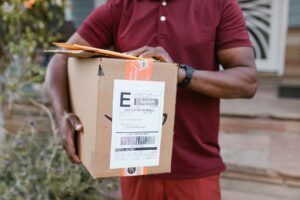
Both methods carried equal legal weight. A claim submitted by mail to Gershzon v. zoa Energy, LLC, c/o Kroll Settlement Administration LLC, P.O. Box 225391, New York, NY 10150-5391 was no more or less valid than one submitted through the settlement website. The claim form required a signature under penalty of perjury regardless of which route you chose, and both methods applied the same payout rates: $1 per can with proof of purchase up to $150 per household, or $1 per can without proof up to $10 per household. Where the two methods actually diverged was in convenience and speed.
filing online let claimants upload scanned receipts, photos of removed UPC codes, or other purchase documentation in digital format. Mail filers had to attach physical copies of that same proof, which meant printing, photocopying, and stuffing envelopes. For someone claiming the maximum $150 with a stack of grocery receipts spanning purchases from March 1, 2021 through November 21, 2025, the online option saved considerable effort. Online submission also opened the door to electronic payment, while mailed claims locked you into receiving a physical check. The practical difference came down to this: if you wanted your money faster and with less hassle, online was the better choice. If you did not have reliable internet access or preferred a paper trail you could physically hold, mail worked fine. Neither method gave you an advantage in how your claim was evaluated.
How Much Could You Get From the ZOA Energy Drink Settlement?
The settlement fund totaled $3 million, which covers all approved claims, attorney fees, administrative costs, and service awards. Individual payouts depended entirely on whether you could document your purchases. Claimants with proof of purchase — defined as receipts, purchase records, removed UPC codes, or other third-party documentation — could receive $1 per can purchased, up to a cap of $150 per household. That means you would need to show evidence of buying at least 150 cans over the class period to hit the maximum.
Without proof of purchase, the math changes dramatically. You could still claim $1 per can, but the household cap dropped to just $10. That is a significant gap and it highlights a recurring theme in consumer class actions: holding onto receipts, even for small everyday purchases, can be the difference between a token payout and a meaningful one. However, if you bought ZOA Energy only occasionally and never kept records, the $10 cap was still free money for filling out a short form. It is also worth noting that the settlement was limited to one claim per household, so multiple people living at the same address could not each file separately.
What Was the ZOA Energy Lawsuit Actually About?
The case centered on ZOA Energy drinks, the brand co-founded by Dwayne “The Rock” Johnson, and their prominent “0 Preservatives” labeling. The plaintiff, Mikhail Gershzon, alleged that ZOA Energy drinks contain citric acid and ascorbic acid, both of which can function as preservatives. The argument was straightforward: if a product contains ingredients that serve a preservative function, labeling it “0 Preservatives” is misleading to consumers who rely on that claim when making purchasing decisions. ZOA Energy denied any wrongdoing, which is standard in class action settlements.
The company agreed to the $3 million fund without admitting that its labeling was false or deceptive. For consumers, the legal merits of the underlying claim mattered less than the practical outcome: anyone in the United States who purchased a ZOA Energy drink labeled “0 Preservatives” for personal consumption between March 1, 2021 and November 21, 2025 was eligible to file. Purchases made for resale did not qualify. The class period spanned nearly five years, giving a wide window that covered the brand’s growth from niche product to mainstream energy drink competitor.
Online Claim Filing — Step-by-Step Process and Tradeoffs
Filing online at www.ZOASettlement.com required claimants to enter personal information, specify the number of ZOA Energy cans purchased during the class period, and indicate whether they had proof of purchase to upload. The digital form walked filers through each field, reducing the chance of errors that could delay processing. Claimants who wanted electronic payment had to use the online method — there was no way to request digital payment through a mailed form. The tradeoff with online filing was that it required trust in digital systems.
You needed to upload images of your receipts or UPC codes, which meant those documents had to be legible in digital format. A faded grocery store receipt photographed in poor lighting might not serve as adequate proof, whereas mailing a clean photocopy could be more reliable in some cases. The deadline for online submission was 11:59 p.m. Pacific Time on February 20, 2026, a hard cutoff with no grace period. Mail claims, by contrast, only needed to be postmarked by that same date, giving last-minute filers a small buffer if they dropped their envelope at the post office before midnight.
Common Pitfalls That Could Have Disqualified Your ZOA Energy Claim
The most frequent issue in settlements like this one is filing more than one claim per household. The ZOA Energy settlement explicitly limited eligibility to one claim per household, and duplicate filings from the same address could result in both claims being rejected or reduced. Roommates or family members who each purchased ZOA Energy independently were still bound by this restriction, which caught some people off guard. Another pitfall involved the proof of purchase requirement. Some claimants assumed that a bank or credit card statement showing a charge at a convenience store would suffice, but the settlement specified receipts, purchase records, removed UPC codes, or other third-party documentation.
A generic charge at a gas station that also sells energy drinks may not clearly establish that you bought ZOA specifically. Claimants who submitted vague or insufficient documentation risked having their claim downgraded to the no-proof tier, cutting their maximum from $150 to $10. The signature requirement also tripped people up. Every claim form, whether submitted online or by mail, had to be signed under penalty of perjury. This means that intentionally overstating the number of cans purchased was not just a moral issue but a legal one. Settlement administrators at Kroll Settlement Administration LLC review claims for inconsistencies, and inflated numbers without corresponding proof can flag a claim for rejection.

What Happens After the Claim Deadline Passes?
With the February 20, 2026 deadline now behind us, the settlement moves into its next phase. The Final Approval Hearing is scheduled for March 26, 2026 at 11:00 a.m. Pacific Time in the Northern District of California, where the court will decide whether to grant final approval to the settlement terms. If approved, Kroll Settlement Administration will begin processing payments to approved claimants.
Online filers who selected electronic payment should receive their funds first, while those who filed by mail or chose check payment will wait for physical checks to be mailed. The opt-out deadline was February 13, 2026, a full week before the claims deadline. Anyone who opted out retained the right to pursue their own legal action against ZOA Energy but forfeited any payment from this settlement. For the vast majority of consumers, the per-can payout made individual litigation impractical, so staying in the class made more financial sense.
Lessons From the ZOA Energy Settlement for Future Claims
This settlement reinforced a pattern seen across consumer class actions involving food and beverage labeling: companies that make bold front-of-package claims — “0 Preservatives,” “All Natural,” “No Artificial Ingredients” — face increasing legal scrutiny when those claims do not hold up under technical analysis. Citric acid and ascorbic acid are common ingredients that serve multiple functions, and the line between “ingredient” and “preservative” is exactly the kind of gray area that fuels litigation. For consumers, the takeaway is practical.
Keep receipts for products that make health or ingredient claims, even if you have no immediate plans to file a lawsuit. Settlement class periods often stretch back years, and a folder of grocery receipts can turn a $10 claim into a $150 one. When the next settlement notice arrives — and in the food and beverage space, there will always be a next one — having documentation on hand puts you in the strongest position to collect what you are owed.
Frequently Asked Questions
Is the ZOA Energy settlement claim deadline still open?
No. The claim filing deadline was February 20, 2026, which has already passed. The Final Approval Hearing is scheduled for March 26, 2026.
How much money will I receive from the ZOA Energy settlement?
With proof of purchase, you can receive $1 per can up to $150 per household. Without proof, the cap is $10 per household. Final amounts depend on the total number of approved claims against the $3 million fund.
What counts as proof of purchase for the ZOA Energy claim?
Acceptable proof includes receipts, purchase records, removed UPC codes from ZOA Energy cans, or other third-party documentation showing you bought the product during the class period of March 1, 2021 through November 21, 2025.
Can multiple people in the same household file separate claims?
No. The settlement is limited to one claim per household, regardless of how many individuals at that address purchased ZOA Energy drinks.
Will I get paid by check or electronically?
If you filed online and selected electronic payment, you should receive a digital payment. If you filed by mail, you will receive a physical check. Mail filers did not have the option to request electronic payment.
Who is the claims administrator for the ZOA Energy settlement?
Kroll Settlement Administration LLC is handling claims. They can be reached at (833) 890-6436 or through the official settlement website at www.ZOASettlement.com.