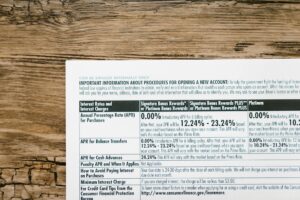

CompuCredit engaged in a classic bait-and-switch scheme that deceived thousands of cardholders seeking subprime credit cards, promising “$300 in available credit” and “no deposit required” while immediately charging $29 opening fees, $6.50 monthly maintenance fees, and $150 annual fees—consuming most or all of the promised credit before cardholders could use it. This deceptive practice resulted in a landmark $114 million settlement with the Federal Trade Commission and FDIC in 2008, one of the largest consumer redress awards for credit card fraud at the time. The CompuCredit case remains a textbook example of how credit card companies with predatory business models target vulnerable consumers with false advertising, and
Table of Contents
- What Was the CompuCredit Bait-and-Switch Settlement?
- How CompuCredit’s Deceptive Practices Misled Consumers
- The $114 Million Settlement and Consumer Redress
- Who Was Affected and How to Claim Compensation
- Common Pitfalls in Fee-Harvester Card Schemes
- Other Credit Card Fraud Settlements and Patterns
- Protecting Yourself From Modern Credit Card Deception Today
What Was the CompuCredit Bait-and-Switch Settlement?
CompuCredit Corporation marketed subprime Aspire Visa cards throughout the 2000s as an entry point for consumers with poor or no credit history. The company’s advertising promised applicants “$300 in available credit” and emphasized “no deposit required”—claims designed to appeal to desperate consumers locked out of the traditional credit system. However, the moment an account was opened, CompuCredit systematically deducted approximately $185 in fees (the opening fee plus first year’s fees) from that $300 limit, leaving cardholders with roughly $115 in usable credit—a dramatic gap between the advertised benefit and the actual product.
By the mid-2000s, CompuCredit had collected over $400 million in fees from these fee-harvester cards, with the bulk of consumer payments going toward charges rather than credit building. The scheme was so lucrative and so systematic that it became CompuCredit’s core business model. Rather than generating revenue through interest on borrowed amounts, the company front-loaded fees at account opening and charged monthly maintenance fees that ensured most transactions would exceed available credit or deplete it rapidly. This meant that many cardholders found themselves unable to use the card for its stated purpose: building credit—because there was insufficient credit available after fees were deducted.

How CompuCredit’s Deceptive Practices Misled Consumers
CompuCredit’s marketing materials deliberately obscured the fee structure, presenting the advertised credit limit ($300) as the amount available to spend while burying disclosure of fees in fine print or separate documents. The company’s collection agency worked alongside the credit card division to maximize fee collection, sometimes pursuing cardholders aggressively for payment despite the fees constituting the primary mechanism of harm. Consumers who read the terms carefully still faced confusion because the fee structure was presented in a way that made it difficult to calculate what usable credit would actually remain.
However, the Federal Trade Commission determined that CompuCredit’s conduct crossed the line from “aggressive marketing” into outright fraud because the company made affirmative false claims about credit availability without adequately disclosing that fees would consume that credit. The ftc found that CompuCredit deliberately structured its disclosure practices to hide the deception rather than merely failing to emphasize the fees prominently. This distinction—between aggressive business practices and fraudulent deception—was the legal basis for the $114 million settlement.
The $114 Million Settlement and Consumer Redress
In December 2008, CompuCredit and its affiliated collection agency settled charges with the FTC and the Federal Deposit Insurance Corporation by agreeing to provide $114 million in direct consumer redress. At the time, this was one of the largest settlements ever imposed on a credit card company for deceptive marketing practices. The settlement required CompuCredit to identify all consumers who had opened Aspire Visa accounts and been charged fees, then provide cash refunds or account credits to eligible claimants.
The settlement process involved establishing a claims administration system where affected consumers could either file claims documenting their card ownership and fee history, or CompuCredit could proactively send checks to identified cardholders. The $114 million pool was divided among claimants based on fee amounts paid and account tenure, though the exact methodology varied depending on what records the company could verify. For many consumers, this represented recovery of 50-100% of fees paid, making CompuCredit one of the few fee-harvester card programs to result in substantial consumer restitution.

Who Was Affected and How to Claim Compensation
Any consumer who opened a CompuCredit Aspire Visa card account between the early 2000s and 2008 and paid any of the associated fees (account opening, maintenance, or annual fees) was potentially eligible for compensation under the settlement. The company targeted subprime consumers with credit scores below 620, making the typical claimant someone who was already financially vulnerable and seeking legitimate credit-building opportunities. Eligibility was based purely on having been charged fees—there was no requirement to prove financial harm beyond the fee charges themselves.
The claims process, which opened in 2009 and continued for several years, required consumers to either provide proof of card ownership or submit a claim form attesting to their account. CompuCredit made efforts to locate and pay non-claiming consumers using address records, sending checks directly rather than requiring active claim filing. However, many claims went unclaimed due to consumers moving, name changes, or lack of awareness of the settlement, which resulted in some of the $114 million pool reverting to the company or being distributed to state attorneys general.
Common Pitfalls in Fee-Harvester Card Schemes
Fee-harvester cards—credit products where the primary revenue model is charging consumers upfront and recurring fees rather than interest on borrowing—have existed for decades and continue to appear in new forms today. The CompuCredit case is instructive because it shows how seemingly legal fee disclosure can actually constitute fraud when the fees are presented in a way that misrepresents the product’s core value. Many consumers did not realize until after opening the account that their “$300 credit limit” was actually a “$115 credit limit” after mandatory fees.
A critical warning: if you see a credit card offer that advertises a specific credit limit and also mentions “approval guaranteed” or “no credit check required,” carefully review whether fees will be automatically deducted before you can access that credit. Some legitimate credit-building cards do charge annual fees (typically $25-$50), but reputable issuers disclose this clearly and ensure the credit limit available is what is actually advertised—the advertised amount minus the fee. CompuCredit failed this test because it advertised the pre-fee amount as available credit, which was deceptive.

Other Credit Card Fraud Settlements and Patterns
The CompuCredit settlement was part of a broader FTC crackdown on predatory credit card marketing in the 2000s. The agency pursued similar cases against other fee-harvester card programs and subprime credit card issuers making false claims about credit availability, annual percentage rates (APRs), and approval likelihood. While not all resulted in settlements as large as CompuCredit’s, these cases established that credit card companies cannot make material false statements about credit limits, fees, or borrowing costs—even to subprime consumers.
The legacy of CompuCredit and similar settlements was stricter regulatory oversight of credit card marketing, leading to the creation of the Consumer Financial Protection Bureau (CFPB) under the Dodd-Frank Act in 2010. The CFPB has continued to pursue credit card companies for deceptive practices, including recent settlements with major issuers over misleading credit limit increase offers and concealed fees. The CompuCredit case remains cited in regulatory guidance as an example of how affirmative false advertising, rather than mere non-disclosure, constitutes fraud.
Protecting Yourself From Modern Credit Card Deception Today
While fee-harvester cards like CompuCredit’s Aspire Visa have largely disappeared from the mainstream market due to regulatory pressure, predatory credit card products still exist, often marketed through online platforms or to consumers with poor credit who have limited options. The most important protection is to verify that any advertised credit limit will actually be available after all mandatory fees are deducted. Legitimate credit-building cards from major banks or credit unions typically have transparent fee structures and do not deduct significant portions of the advertised credit limit for account maintenance.
Before applying for any credit card—especially one marketed as “guaranteed approval” or for “bad credit”—check whether the card issuer is FDIC-regulated, verify independent reviews of the card on financial websites, and contact the card issuer directly to ask whether the advertised credit limit is the amount available after all mandatory fees. If a card issuer cannot give you a clear answer about usable credit available after fees, do not apply. The CompuCredit settlement demonstrated that consumer protection agencies take credit card fraud seriously, but the strongest protection is avoiding deceptive products in the first place rather than relying on settlements to recover losses years later.