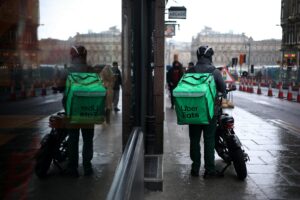

Multiple class action lawsuits and regulatory investigations have targeted Uber’s surge pricing algorithm, alleging that the system facilitates price-fixing and enables artificial scarcity that hits consumers hardest during emergencies. The most prominent case, Meyer v. Kalanick, accused former Uber CEO Travis Kalanick of orchestrating an illegal price-fixing conspiracy through the app’s dynamic pricing mechanism, violating the Sherman Antitrust Act. While that case ended in Uber’s favor through arbitration in 2020, it opened a broader legal and regulatory reckoning over whether algorithmic pricing constitutes coordinated price manipulation — a question that remains unresolved as new lawsuits and state laws continue to reshape the landscape. The pattern of emergency price spikes is well documented.
During Hurricane Sandy in 2012, Uber prices doubled. During the Sydney hostage crisis in 2014, surge pricing kicked in as people fled a deadly cafe siege. After the Chelsea bombing in New York City in September 2016, riders trying to escape the blast area faced surge fares. These incidents have fueled public outrage and legal action, prompting at least 34 states and the District of Columbia to enact price gouging laws that forbid price hikes during declared emergencies.
Table of Contents
- How Did Class Action Lawsuits Challenge Uber’s Surge Pricing Algorithm for Creating Artificial Scarcity?
- What Does Research Reveal About Artificial Scarcity in Ride-Hailing Algorithms?
- Emergency Surge Pricing — When Algorithmic Pricing Becomes Price Gouging
- How Consumers and Drivers Can Protect Themselves from Surge Pricing Manipulation
- The Regulatory Push Against Opaque Algorithmic Pricing
- Uber’s Global Legal Exposure and the Australian Settlement
- What Comes Next for Surge Pricing Regulation and Litigation
- Frequently Asked Questions
How Did Class Action Lawsuits Challenge Uber’s Surge Pricing Algorithm for Creating Artificial Scarcity?
The legal challenge to uber‘s surge pricing began in earnest in December 2015, when rider Spencer Meyer filed a class action against Travis Kalanick in the Southern District of New York. Meyer’s core argument was straightforward: Uber’s pricing model was not simply a neutral supply-and-demand tool, but a mechanism through which Kalanick “orchestrated and facilitated an illegal price-fixing conspiracy.” Under Section 1 of the Sherman Antitrust Act, competitors cannot agree to fix prices — and Meyer argued that Uber’s algorithm effectively coordinated pricing among drivers who would otherwise be independent competitors. Judge Jed Rakoff found the argument plausible enough to deny Kalanick’s motion to dismiss in March 2016, allowing the case to proceed. The case took a turn in 2017 when the Second Circuit sent it to arbitration based on Uber’s terms of service — a clause most riders click through without reading. On February 22, 2020, arbitrator Les J.
Weinstein ruled in Uber’s favor, finding that “Meyer shall take nothing from the arbitration.” Meyer tried to vacate the award, claiming arbitrator bias, but Judge Rakoff denied that motion on August 3, 2020. The outcome frustrated consumer advocates who saw it as a case study in how mandatory arbitration clauses can shield companies from antitrust accountability, regardless of the underlying merits. The fight did not end there. In June 2022, drivers themselves filed suit against both Uber and Lyft through the legal nonprofit Towards Justice, alleging that the companies fix the prices drivers must charge using hidden algorithms, effectively preventing drivers from competing on price. This lawsuit sought class certification for all drivers who had opted out of arbitration — a critical distinction that kept the case out of the private arbitration system that derailed Meyer’s claim.
What Does Research Reveal About Artificial Scarcity in Ride-Hailing Algorithms?
The claim that Uber’s system enables artificial scarcity is not just a legal theory — it is backed by peer-reviewed research. A 2017 study by researchers at Warwick Business School and NYU documented how Uber drivers coordinated to log out of the app simultaneously, creating artificial supply shortages designed to trigger surge pricing. The researchers found this behavior was not isolated or accidental but a deliberate strategy drivers used to game the algorithm for higher fares. One of the most striking documented cases occurred at Reagan National Airport outside Washington, D.C. Approximately 50 Uber and lyft drivers simultaneously turned off their apps about five minutes before flights landed, watched fares spike roughly $13 above normal levels, then turned the apps back on. The entire operation took less than two minutes.
This was not a failure of the algorithm — it was the algorithm working exactly as designed, responding to a perceived drop in supply by raising prices, with no mechanism to distinguish genuine scarcity from manufactured scarcity. A 2020 study published in Nature Communications went further, finding that incentives for artificial supply shortages are “generic to dynamic pricing schemes” and emerge independent of location. In other words, the problem is not limited to a few airports or a handful of opportunistic drivers. It is a structural feature of any system that raises prices when supply drops. However, this research also means that simply punishing individual drivers will not fix the problem — the algorithm itself creates the incentive structure that makes manipulation rational. Until the underlying pricing mechanism changes, artificial scarcity will remain a predictable outcome.
Emergency Surge Pricing — When Algorithmic Pricing Becomes Price Gouging
The most politically charged surge pricing incidents have occurred during emergencies, when consumers have the least ability to choose alternatives. Hurricane Sandy in 2012 was the first major flashpoint. As the storm battered the East Coast, Uber prices doubled, drawing accusations of profiteering during a natural disaster. The company initially defended the practice as necessary to incentivize drivers to work in dangerous conditions, but the public backlash was severe. The pattern repeated during the Sydney hostage crisis in December 2014, when a gunman held people captive in a cafe in Martin Place. As workers and residents fled the central business district, Uber’s algorithm detected the spike in demand and raised fares — during a terrorism event. The optics were devastating.
Uber eventually offered free rides and refunds, but the damage to its reputation was significant. That same year, New York Attorney General Eric Schneiderman intervened directly, negotiating an agreement under which Uber would cap surge prices during emergencies at a level no higher than the area’s fourth-highest price over the preceding two months. When a major blizzard hit New York City in January 2015, Uber capped surge at 2.8 times normal rates after the AG warned against gouging. The Chelsea bombing in September 2016 tested whether these reforms held. As passengers fled the explosion area in Manhattan, Uber was again accused of price gouging. The incident underscored a fundamental limitation of Uber’s voluntary commitments: even with caps, prices during emergencies could still be multiples of normal fares. And in jurisdictions without specific agreements, there was nothing to prevent the algorithm from surging unchecked. Today, 34 states and the District of Columbia have price gouging laws on the books, but their applicability to algorithmic pricing remains inconsistent and largely untested in court.
How Consumers and Drivers Can Protect Themselves from Surge Pricing Manipulation
For consumers caught in a surge pricing event, the practical options are limited but worth understanding. Waiting even 10 to 15 minutes can sometimes cause surge multipliers to drop, since the algorithm recalculates pricing in real time at what Uber describes as a “hyperlocal level.” Checking competing services — Lyft, local taxi apps, or public transit — can also reveal whether the surge reflects genuine market conditions or is specific to one platform. During declared emergencies, riders in states with price gouging laws may have grounds to file complaints with their state attorney general if fares appear unreasonable. Drivers face a different set of tradeoffs.
The 2022 lawsuit filed through Towards Justice highlights a core grievance: drivers cannot set their own prices, meaning they are locked into whatever the algorithm determines, even as the spread between what riders pay and what drivers earn continues to widen. AI-powered opaque pricing algorithms increasingly control both sides of the transaction, and neither riders nor drivers have visibility into the supply-and-demand inputs the system uses. The Massachusetts attorney general’s settlement with Uber and Lyft offers one model for reform — as of January 15, 2026, minimum driver pay in Massachusetts rose to $34.48 per hour of engaged time, up from $32.50. But that addresses driver compensation, not the surge pricing mechanism itself.
The Regulatory Push Against Opaque Algorithmic Pricing
Regulators are increasingly skeptical of the “black box” defense — the argument that algorithmic pricing is simply a neutral reflection of supply and demand. In May 2025, New York enacted the first algorithmic pricing disclosure law in the country, effective November 10, 2025, requiring companies to provide transparency about how their pricing algorithms work. This law could become a model for other states, though its enforcement mechanisms and practical impact remain to be seen. At the federal level, the FTC sued Uber on April 21, 2025, over deceptive Uber One subscription billing and cancellation practices.
While the suit is not specifically about surge pricing, it reflects a broader regulatory posture toward Uber’s pricing transparency. By December 15, 2025, 21 states and the District of Columbia had joined the FTC’s amended complaint, adding civil penalty requests. The compounding pressure from state attorneys general, federal regulators, and private lawsuits suggests that the era of largely unregulated algorithmic pricing may be closing. However, companies with Uber’s legal resources have demonstrated a consistent ability to delay and redirect litigation — the Meyer case took five years before reaching a final resolution, and it ended in arbitration rather than a public trial.

Uber’s Global Legal Exposure and the Australian Settlement
The legal challenges to Uber’s pricing and business practices extend well beyond the United States. In Australia, Uber settled a taxi industry class action for $272 million AUD, compensating taxi operators and license holders who argued that Uber’s entry into the market — including its pricing practices — had destroyed the value of their businesses. While this case focused more on market disruption than surge pricing specifically, it demonstrates the scale of financial liability Uber faces when courts or regulators find its practices harmful.
The Australian settlement is notable for its size and for the fact that it resulted in actual compensation to affected parties, unlike the Meyer case in the United States, which ended with the plaintiff receiving nothing. For consumers and workers watching the U.S. legal landscape, the contrast is instructive: mandatory arbitration clauses can effectively block class-wide relief in American courts, while jurisdictions without such barriers have produced meaningful settlements.
What Comes Next for Surge Pricing Regulation and Litigation
The trajectory points toward more regulation, not less. New York’s algorithmic pricing disclosure law, the FTC’s escalating enforcement actions, and the growing number of states joining federal complaints against Uber all signal that policymakers are moving past the debate over whether algorithmic pricing needs oversight and into the mechanics of how to implement it. The 2020 Nature Communications study finding that artificial scarcity incentives are built into dynamic pricing itself — not just exploited by bad actors — gives regulators a scientific basis for structural reform rather than case-by-case enforcement.
For consumers, the practical takeaway is that surge pricing during emergencies remains legal in many jurisdictions, voluntary caps are only as reliable as the company’s willingness to enforce them, and mandatory arbitration clauses continue to limit class action remedies. Filing complaints with state attorneys general during emergency surges, supporting legislative efforts for algorithmic pricing transparency, and opting out of arbitration clauses when given the opportunity are the most effective steps available today. The legal and regulatory infrastructure is catching up to the technology, but it has not arrived yet.
Frequently Asked Questions
Is Uber’s surge pricing illegal?
Surge pricing itself is not categorically illegal, but it may violate price gouging laws in 34 states and the District of Columbia during declared emergencies. The legality depends on your jurisdiction and whether an emergency declaration is in effect. The antitrust argument — that the algorithm constitutes price-fixing — was tested in Meyer v. Kalanick but resolved in Uber’s favor through arbitration in 2020.
Can I get a refund if I was charged surge pricing during an emergency?
Uber has historically offered refunds after high-profile emergency surge incidents, such as the Sydney hostage crisis, but this has been voluntary rather than legally required. Your strongest avenue is filing a complaint with your state attorney general if your state has price gouging protections and an emergency was declared at the time of your ride.
What was the outcome of the Meyer v. Kalanick lawsuit?
The case was filed in December 2015, survived a motion to dismiss in March 2016, but was sent to arbitration by the Second Circuit in 2017. Arbitrator Les J. Weinstein ruled in favor of Kalanick and Uber on February 22, 2020, and Judge Rakoff denied the plaintiff’s motion to vacate the arbitration award on August 3, 2020.
Do drivers benefit from surge pricing?
Not necessarily. A June 2022 lawsuit filed through Towards Justice alleges that Uber and Lyft use hidden algorithms to fix the prices drivers must charge, preventing them from competing on price. Critics note that AI-powered opaque pricing increasingly widens the gap between what riders pay and what drivers actually earn, meaning the platform captures a growing share of surge revenue.
Has Uber agreed to limit surge pricing during emergencies?
In 2014, after intervention by New York Attorney General Eric Schneiderman, Uber agreed to cap surge prices during emergencies at no higher than the area’s fourth-highest price over the preceding two months. During a January 2015 NYC blizzard, this resulted in a cap of 2.8 times normal rates. However, these commitments are jurisdiction-specific and voluntary, not a universal company policy enforceable by law.
What is New York’s algorithmic pricing disclosure law?
Enacted in May 2025 and effective November 10, 2025, it is the first state law requiring companies to disclose how their pricing algorithms work. Its full impact on surge pricing transparency is still developing, but it could serve as a model for similar legislation in other states.