

The short answer is no — most consumers cannot successfully sue over the roughly 60-cent gas price increase triggered by the United States joining Israel in attacking Iran on February 28, 2026. There is no federal price-gouging law on the books, and the legal doctrine of sovereign immunity largely shields the government from lawsuits over foreign policy decisions, even when those decisions hit wallets hard. A driver in California paying north of $5.30 a gallon right now has every reason to be furious, but fury and a viable lawsuit are two very different things.
That does not mean there is zero legal recourse. If oil companies or retailers are padding their margins beyond what the actual increase in crude costs justifies — and there is strong historical evidence they do exactly that — state attorneys general and, in limited cases, private plaintiffs may have claims under antitrust and consumer protection statutes. The gap between what crude oil actually costs and what you pay at the pump has been a source of litigation before, most notably in California’s $50 million settlement over gasoline price index manipulation.
Table of Contents
- Can Consumers Sue the Government Over a 60-Cent Gas Price Increase Linked to War Decisions?
- Why Gas Prices Rose 60 Cents and Who Actually Profits
- California’s Price-Gouging Law That Has Never Been Used
- What Legal Options Do Consumers Actually Have Right Now?
- Lessons from Past Gas Price Litigation and Their Limitations
- How to Report Suspected Price Gouging in Your State
- What Happens Next as the Conflict Continues
- Frequently Asked Questions
Can Consumers Sue the Government Over a 60-Cent Gas Price Increase Linked to War Decisions?
No, and the legal barriers are steep. The federal government enjoys broad immunity from lawsuits challenging policy decisions, particularly in matters of national security and foreign affairs. When the U.S. military engaged Iranian targets beginning February 28, 2026, that was a discretionary policy choice — the kind courts have historically refused to second-guess through civil litigation. Even if a plaintiff could prove a direct line between the military action and the price spike at their local gas station, no court is likely to award damages for a foreign policy outcome. State price-gouging laws do not help here either, at least not in the way most people imagine.
These statutes generally require a declared state of emergency as a trigger, and they impose criminal liability enforced by state attorneys general — not a private right of action for individual consumers. So even in states with aggressive price-gouging statutes, the mechanism is a government prosecution of sellers, not a class action filed by drivers. If your state attorney general has not declared an emergency or initiated an investigation, there is no door for a private lawsuit to walk through. The legal system directs gas price grievances at sellers and refiners, not at the government. Federal antitrust law and the FTC Act can reach companies that collude to fix prices or engage in deceptive trade practices. But these tools require evidence of illegal conduct by private actors — they cannot be turned against a sitting president’s war cabinet for making decisions that disrupt global oil markets.
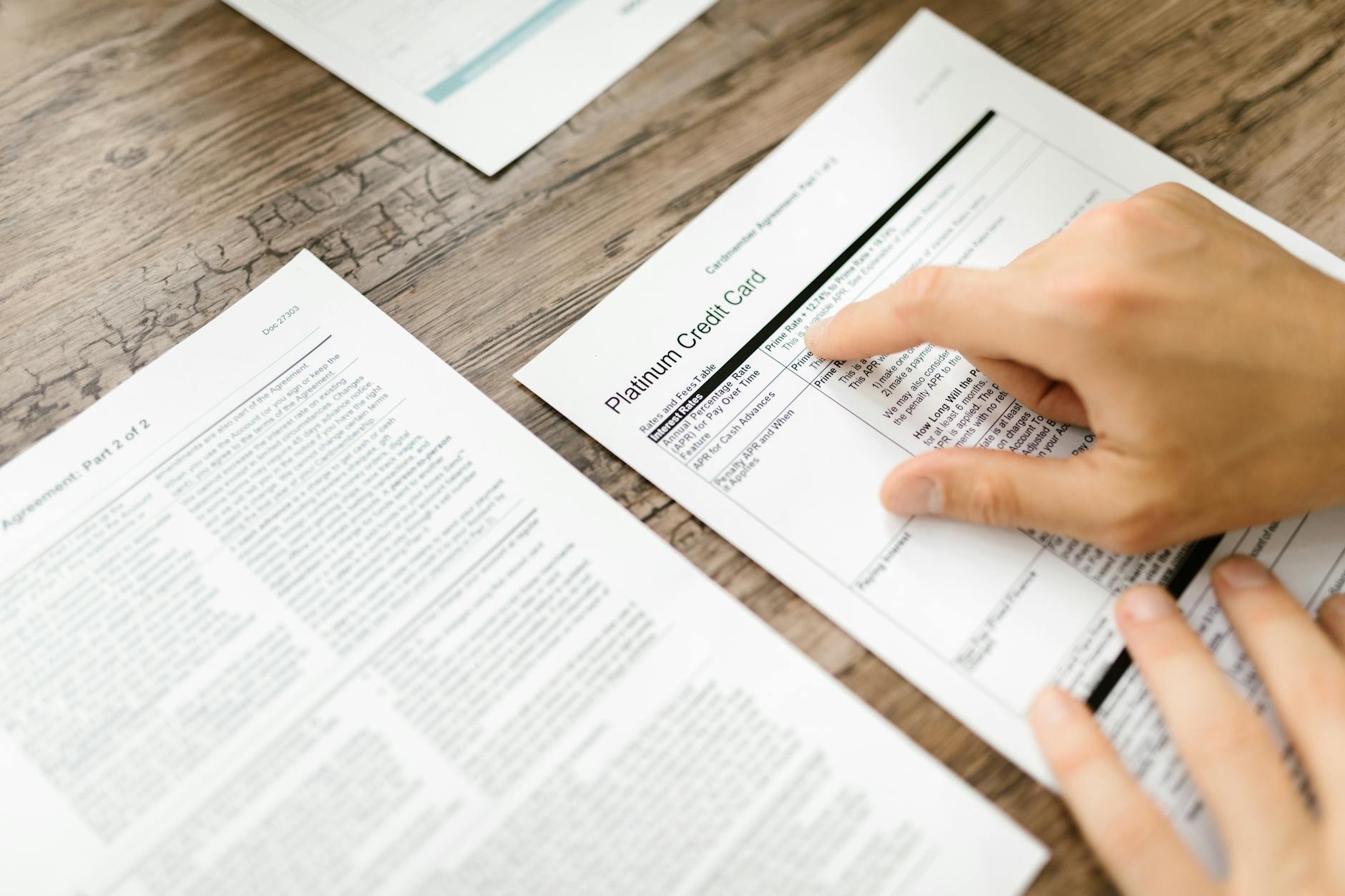
Why Gas Prices Rose 60 Cents and Who Actually Profits
U.S. average gas prices have climbed to between $3.48 and $3.60 per gallon nationally as of mid-March 2026, with nearly 35 cents of that increase arriving in a single week around March 12. The primary driver is disruption to oil exports flowing through the Strait of Hormuz, one of the world’s most critical chokepoints for petroleum. When military operations threaten that corridor, global crude prices react almost instantly, and those costs cascade down to refiners, distributors, and to the pump. But here is the part that should genuinely anger consumers: historically, the price you pay at the pump rises far more than the underlying increase in crude oil costs. During the 2022 Russia-Ukraine invasion, crude oil prices rose by roughly 71 cents per gallon.
Retail gas prices, however, jumped approximately $1.50 per gallon — a gap of about 79 cents that went straight to refiner and retailer profits. That is not a supply-and-demand story. That is margin expansion under the cover of a crisis. California’s Energy Commission has documented this pattern in granular detail, identifying an unexplained gasoline premium of roughly 41 cents per gallon between 2015 and 2024. Over that period, that premium cost California drivers an estimated $59 billion. The question is not whether profiteering happens during geopolitical disruptions — the evidence says it does. The question is whether the legal system is equipped to do anything about it in real time, and so far the answer has been disappointing.
California’s Price-Gouging Law That Has Never Been Used
California passed what was billed as a first-in-the-nation law giving state regulators the power to cap refinery profit margins and penalize oil companies caught gouging consumers. On paper, it was exactly the kind of tool that should be deployed right now, with California drivers paying over $5.30 a gallon. In practice, the law has never been activated. The California Energy Commission voted to delay implementation of the rules for five years, effectively shelving the most aggressive consumer protection measure any state has enacted against gas price manipulation. This matters beyond California because the state was supposed to serve as a test case for the rest of the country.
If California — with its enormous market, its political appetite for regulating oil companies, and its documented evidence of a multi-billion-dollar pricing premium — cannot bring itself to use the tools it created, it raises serious questions about whether any state will. The delay was driven in part by industry lobbying and in part by concerns about unintended consequences on fuel supply, but the result is the same: consumers are paying more, and the law designed to help them sits on a shelf. However, if California’s governor or Energy Commission reverses course and activates the profit-cap mechanism in response to the current crisis, it could create a meaningful precedent. Other states with price-gouging statutes might follow, and the regulatory pressure alone could force refiners to moderate their margins. Consumers should watch for any executive action from Sacramento in the coming weeks — that is the most realistic near-term path to relief outside of the market correcting on its own.
What Legal Options Do Consumers Actually Have Right Now?
The most realistic path to compensation runs through state attorneys general, not private lawsuits. If your state AG opens a price-gouging investigation — particularly in a state where an emergency has been declared — that office has subpoena power, access to pricing data, and the ability to impose penalties. Consumers can file complaints with their state AG’s office, and a critical mass of complaints can trigger investigations. This is not as satisfying as filing your own lawsuit, but it is far more likely to produce results. For consumers who want to pursue private legal action, the bar is high but not impossible.
Federal antitrust claims under the Sherman Act require proof that companies conspired to fix prices — evidence of parallel pricing alone is not enough. State unfair competition and consumer protection statutes sometimes have lower thresholds, but they still require showing that a specific seller engaged in deceptive or unconscionable conduct, not merely that prices went up because global crude went up. The tradeoff is clear: the easier the legal standard to meet, the smaller the potential recovery and the more limited the scope of the case. There is a meaningful distinction between a lawsuit that challenges the overall price increase and one that targets the spread between crude costs and retail prices. The first is almost certainly going nowhere. The second — focusing on the margin that cannot be explained by supply costs — is where past litigation has succeeded and where future cases are most likely to gain traction.
Lessons from Past Gas Price Litigation and Their Limitations
The most instructive recent case is California v. Vitol Inc., et al., which resulted in a $50 million settlement over gasoline price index manipulation that affected California gas prices around 2015. Of that total, $37.5 million was distributed to consumers and $12.5 million went to penalties under California’s Unfair Competition Law. Settlement payments began distribution on April 29, 2025, and the claim deadline passed on January 8, 2025 — meaning that ship has sailed for anyone who did not file in time. What made the Vitol case viable was specific, provable misconduct: traders manipulated a price index that directly influenced what Californians paid at the pump.
That is a very different theory of liability from “gas prices went up because of a war.” Consumers hoping for a similar class action over the current price spike should understand that without evidence of collusion, index manipulation, or some other discrete illegal act by identifiable defendants, the case does not come together. A general sense that prices are unfairly high, while understandable, is not a cause of action. The warning here is about timing and expectations. Even successful gas price litigation takes years to resolve. The Vitol case involved conduct from 2015, and payments did not reach consumers until a decade later. Anyone looking at the current 60-cent increase and thinking a class action will put money back in their pocket anytime soon should calibrate those expectations sharply downward.

How to Report Suspected Price Gouging in Your State
If you believe a gas station or fuel retailer in your area is charging prices that far exceed regional averages without a corresponding increase in their supply costs, the most effective step is filing a complaint with your state attorney general’s office. Most state AG websites have online complaint forms specifically for price gouging. In California, complaints can be filed through the Attorney General’s consumer protection portal, and Governor Newsom has publicly called for accountability, which signals political willingness to act if enough evidence accumulates.
Several other states — including New York, Florida, and Texas — have consumer hotlines and online systems for reporting price anomalies during periods of market disruption. Documentation strengthens complaints. Photograph pump prices with timestamps, note the station’s posted prices compared to the statewide average, and track how quickly prices rose compared to the actual change in wholesale fuel costs in your region. Individual complaints may seem small, but attorneys general look at patterns across hundreds or thousands of reports when deciding whether to launch formal investigations.
What Happens Next as the Conflict Continues
As long as military operations in and around Iran threaten oil transit through the Strait of Hormuz, gas prices are likely to remain elevated or climb further. The more relevant question for consumers is whether the political and legal environment shifts enough to create new avenues for accountability. Federal price-gouging legislation has been proposed multiple times — most recently in response to the 2022 energy crisis — but has never passed. The current price spike may renew that push, particularly if the conflict drags on through the summer driving season when prices typically peak anyway.
California’s dormant profit-cap law remains the wild card. If activated, it would represent the first real-time regulatory intervention in gas pricing by any state, and the effects would ripple nationally as other states evaluate similar measures. Meanwhile, the FTC continues to monitor fuel markets for anticompetitive behavior, and any evidence that refiners are once again pocketing margins far beyond their increased costs could trigger enforcement action. Consumers cannot sue their way out of a war-driven price spike, but the combination of regulatory pressure, AG investigations, and public scrutiny has historically been the mechanism that forces the industry to moderate its behavior — even if it works too slowly for anyone filling up their tank today.
Frequently Asked Questions
Can I join a class action lawsuit over the current gas price increase?
As of mid-March 2026, no class action has been filed specifically over the war-related gas price spike. Class actions require evidence of specific illegal conduct by identifiable companies — not just that prices went up due to geopolitical events. If evidence of price manipulation or collusion emerges, plaintiff firms may file cases, but none exist yet.
Is there a federal law against gas price gouging?
No. Despite multiple legislative attempts, no federal price-gouging statute currently exists. Price-gouging laws are state-level, vary significantly in their scope and triggers, and generally require a declared emergency to take effect.
Can I still file a claim in the California gas price manipulation settlement?
No. The claim deadline for California v. Vitol Inc., et al. — the $50 million settlement over gas price index manipulation — passed on January 8, 2025. Payments of the $37.5 million consumer share began distribution on April 29, 2025.
What is the difference between high gas prices and price gouging?
High prices driven by supply disruptions or increased crude oil costs are legal, even if painful. Price gouging occurs when sellers raise prices beyond what their own increased costs justify, typically during an emergency. The 2022 Russia-Ukraine crisis saw retail prices rise roughly 79 cents per gallon more than crude costs did — that unexplained margin is the territory where gouging claims become viable.
Who should I contact if I suspect price gouging at a gas station?
File a complaint with your state attorney general’s office. Most have online forms or consumer hotlines. Document the prices you observed, compare them to statewide averages, and note any rapid increases that seem disconnected from wholesale fuel cost changes in your area.
You Might Also Like
- Could Drivers Sue Over Gas Price Shock
- Could War Trigger Nationwide Gas Price Lawsuit
- Could War Decision Trigger Lawsuits Over Gas Prices