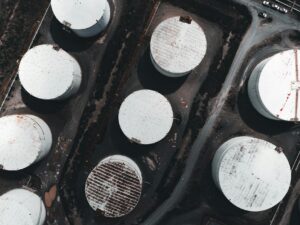

Americans are not just theoretically able to file a massive fuel cost class action — they already have. A historic, consolidated antitrust lawsuit is currently working its way through U.S. District Court for the District of New Mexico, targeting some of the biggest names in American oil production, including ExxonMobil, Pioneer Natural Resources, Occidental Petroleum, Diamondback Energy, Chesapeake Energy, Hess Corporation, EOG Resources, and Permian Resources. The plaintiffs allege these companies conspired with OPEC to artificially restrict domestic oil production between 2017 and 2023, inflating fuel prices and costing the average American family between $500 and $1,000 per year in direct and indirect costs.
This is not the first time fuel price manipulation has led to legal accountability, either. In California, Attorney General Rob Bonta secured a $50 million settlement against Vitol Inc., SK Energy Americas, and SK Trading International for manipulating gasoline spot market prices after a 2015 refinery explosion. That case resulted in real checks going out to real drivers — payments to eligible claimants began around April 29, 2025. The current shale producer litigation is far larger in scope and could dwarf previous settlements if the plaintiffs prevail.
Table of Contents
- What Is the Massive Fuel Cost Class Action Against American Oil Producers?
- How Wall Street Allegedly Helped Fix Fuel Prices
- The California Gas Price Manipulation Settlement — A Blueprint for Payouts
- What Fuel Surcharge Class Actions Reveal About Hidden Costs
- Why Current Gas Prices Make the Timing Significant
- How the Shale Producer Case Could Set Antitrust Precedent
- What Comes Next for American Fuel Cost Litigation
- Frequently Asked Questions
What Is the Massive Fuel Cost Class Action Against American Oil Producers?
The core allegation is straightforward, even if the mechanics are not. Plaintiffs claim that major U.S. shale producers coordinated with OPEC to keep domestic oil output artificially low, preventing the kind of price competition that would have brought fuel costs down for American consumers. A federal judicial panel consolidated multiple similar lawsuits filed by businesses and consumers on August 1, 2024, creating a single, massive proceeding. The City of Baltimore filed its own suit on August 24, 2024, in a case styled *Mayor and City Council of Baltimore v. Permian Resources Corp et al.* (No.
24-cv-842), seeking more than $5 million in damages on behalf of the city alone. The plaintiffs are pursuing claims under the Sherman Act, the federal government’s primary antitrust statute, as well as various state antitrust and consumer protection laws. Under the Sherman Act, successful plaintiffs can seek treble damages — meaning any proven losses would be tripled automatically. For context, if a court determined that the conspiracy cost American consumers even a fraction of the alleged $500 to $1,000 per family per year over the six-year period in question, the total damages could reach into the tens of billions of dollars before trebling. What makes this case different from a typical consumer complaint is its scale and the specificity of the allegations. This is not a vague accusation of greed. The plaintiffs point to concrete production decisions, public statements by oil executives about “capital discipline,” and coordinated output restrictions that tracked suspiciously closely with OPEC’s own production targets.

How Wall Street Allegedly Helped Fix Fuel Prices
One of the most striking claims in the litigation is that the conspiracy was not just between oil companies and OPEC — it allegedly involved some of the largest financial institutions in the world. The lawsuit alleges that Wall Street firms including BlackRock, Fidelity, and Vanguard pressured shale drillers to adopt “capital discipline,” a euphemism for restricting production growth in order to maximize short-term returns for shareholders rather than competing aggressively on price. The theory goes like this: these investment firms hold massive ownership stakes across multiple competing oil producers. Rather than encouraging those companies to drill more and compete with each other — which would benefit consumers through lower prices — they allegedly pressured management to hold production flat, effectively eliminating the competitive dynamic that normally keeps prices in check. The Baltimore lawsuit, drawing on reporting and research highlighted by DeSmog, frames this as a deliberate strategy where Wall Street’s concentrated ownership served as the enforcement mechanism for what amounted to a price-fixing cartel.
However, proving this in court will be difficult. Capital discipline, standing alone, is a legitimate business strategy. Plenty of companies across many industries choose profitability over growth. The plaintiffs will need to demonstrate that this was not a series of independent business decisions but rather a coordinated scheme — and that the financial firms actively facilitated it. courts have historically set a high bar for antitrust conspiracy claims, requiring evidence that goes beyond parallel behavior into actual agreement or coordination. If the defendants can show that each company independently chose to restrain production for its own financial reasons, the case becomes much harder to win.
The California Gas Price Manipulation Settlement — A Blueprint for Payouts
The California case offers a concrete example of what a successful fuel cost class action actually looks like in practice. After a February 2015 refinery explosion in Torrance, California caused a supply disruption, Vitol Inc. and the two SK entities allegedly exploited the situation by manipulating gasoline spot market prices. California Attorney General Rob Bonta’s office investigated and secured a $50 million settlement. Of that total, $37.5 million went to affected consumers and $12.5 million was designated as penalties under California’s Unfair Competition Law. The claims deadline was January 8, 2025, and payments to eligible California claimants began rolling out around April 29, 2025.
A separate federal class action addressed the interests of non-California residents who were also affected, awarding $13.93 million. The per-person payouts in the federal case were modest — averaging between $3.84 and $11.53 for individual claimants, and between $580 and $1,161 for businesses. That is a common pattern in consumer class actions: the total settlement sounds large, but when divided among millions of affected people, individual checks can be small. This is an important expectation-setter for anyone watching the current shale producer litigation. Even if the case results in a massive settlement or verdict, the per-person payout for individual consumers may be relatively modest. Businesses that purchase fuel in bulk, fleet operators, and municipalities like Baltimore tend to recover more meaningful amounts. That said, the California case also demonstrates that these lawsuits can produce real accountability and real money, even if no single check changes anyone’s life.
What Fuel Surcharge Class Actions Reveal About Hidden Costs
Fuel costs do not just hit consumers at the pump. A separate category of class actions has targeted companies that impose fuel surcharges on their customers — sometimes in ways that bear little relationship to actual fuel costs. US Foods settled a class action for $2,575,000 over allegations that it imposed excessive and unlawful fuel surcharges on customers in Georgia, Florida, North Carolina, Arkansas, and California. Airgas faced its own class action covering fuel surcharges charged between January 1, 2014 and December 20, 2020. These cases highlight a different dimension of the fuel cost problem. When oil prices spike, many businesses pass those costs through to customers via surcharges.
That is legitimate when the surcharges reflect genuine cost increases. But when companies maintain or increase surcharges even after fuel prices drop, or when the surcharges exceed the actual cost impact, those charges become a profit center disguised as a pass-through expense. Consumers and small businesses often have no way to verify whether a fuel surcharge is proportional to actual costs. The tradeoff here is between the convenience of not having to negotiate fuel costs on every transaction and the risk of being overcharged. For businesses that operate on thin margins — restaurants, small retailers, delivery services — inflated fuel surcharges can be genuinely harmful. If you have been paying fuel surcharges to a vendor, it is worth examining whether those charges track actual fuel price movements or whether they seem to ratchet up easily but never come back down.
Why Current Gas Prices Make the Timing Significant
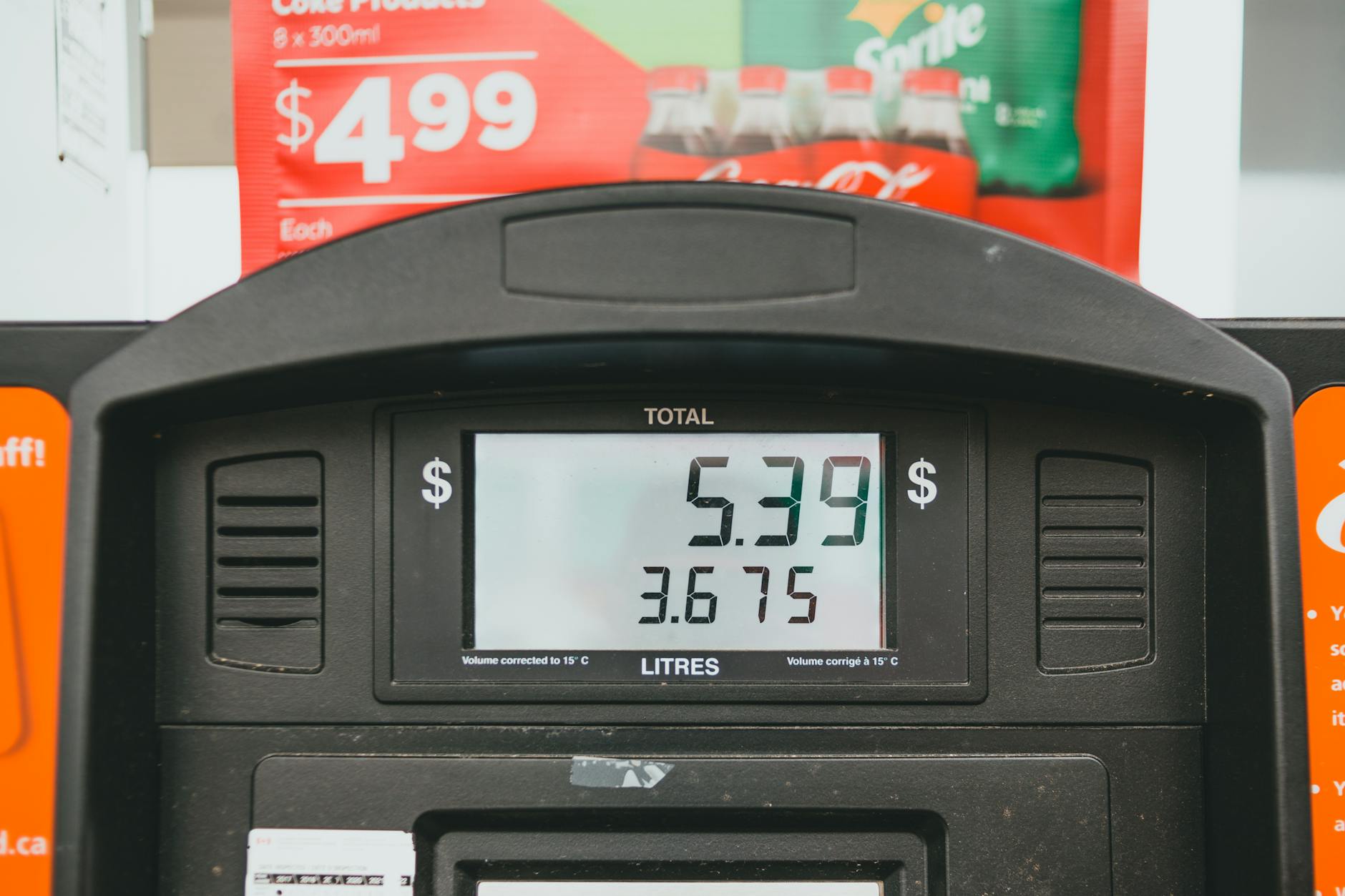
The ongoing litigation takes on added urgency against the backdrop of the current fuel price environment. As of March 14, 2026, the national average price for a gallon of gasoline sits at approximately $3.675, according to AAA. That figure represents a sharp spike from just days earlier — prices surged roughly 35 cents in a single week, climbing from $3.21 on March 5 to $3.53 on March 12, driven by Middle East conflict and broader oil market tensions. The February 2026 average, per Bureau of Transportation Statistics data, was $2.91 per gallon, which means consumers experienced an increase of more than 75 cents per gallon in a matter of weeks. The geographic disparity is also stark. California drivers are paying an average of $5.34 per gallon, while Kansas sits at the low end at $3.01.
These regional differences reflect a combination of state taxes, refining capacity, fuel blend requirements, and transportation costs — but they also mean that any class action recovery may need to account for the fact that some consumers have been hit much harder than others. A word of caution: rising gas prices alone do not prove illegal conduct. Oil markets are volatile and respond to geopolitical events, natural disasters, seasonal demand shifts, and refinery maintenance schedules. The shale producer lawsuit does not allege that every price increase was the result of a conspiracy. It alleges a specific, sustained scheme to restrict domestic production over a defined period. Consumers who are angry about current pump prices should be careful not to conflate legitimate market dynamics with the specific illegal conduct alleged in the litigation.

How the Shale Producer Case Could Set Antitrust Precedent
If the consolidated shale producer lawsuit succeeds, it could fundamentally reshape how antitrust law applies to the energy sector. The allegations that institutional investors with cross-ownership stakes in competing companies effectively facilitated collusion touches on a advanced area of antitrust theory known as “common ownership.” Legal scholars have debated for years whether the concentration of ownership by firms like BlackRock and Vanguard across entire industries creates anticompetitive incentives, even without explicit agreements to fix prices.
A ruling in the plaintiffs’ favor would not just mean payouts for consumers — it could open the door to similar litigation in other industries where a handful of institutional investors hold significant stakes in all major competitors. Airlines, telecommunications, banking, and pharmaceuticals are all sectors where common ownership arguments have been floated. Conversely, a defense verdict could set back antitrust enforcement efforts for years and signal to courts that parallel business conduct driven by shareholder pressure does not cross the line into illegal conspiracy.
What Comes Next for American Fuel Cost Litigation
The consolidated shale producer case is still in its relatively early stages, and antitrust litigation of this scale typically takes years to resolve. Discovery — the process by which both sides exchange documents and take depositions — will be critical. Internal communications between oil executives, board presentations about production strategy, and correspondence with investors could make or break the case. If plaintiffs can uncover emails or meeting notes showing explicit coordination, the case becomes far stronger.
If the evidence shows only independent, parallel decision-making, the defendants will argue there was no conspiracy at all. Consumers should also watch for new filings. The consolidation of existing cases does not prevent new plaintiffs from joining, and additional municipalities or state attorneys general may file their own actions. The Burns Charest firm, which brought the original antitrust case, along with firms like Lockridge Grindal Nauen that are involved in the shale oil antitrust litigation, are actively investigating additional claims. For Americans who feel they have been harmed by artificially inflated fuel prices, the window to participate may still be open — but it will not stay open indefinitely.
Frequently Asked Questions
Am I automatically part of the shale producer antitrust class action?
In most federal class actions, consumers within the defined class are automatically included unless they opt out. However, the class has not yet been formally certified in this case, and the specific definition of who qualifies has not been finalized. Watch for official court notices that will define the class and explain your options.
How much money could I receive if the shale producer case settles?
It is too early to say. For comparison, the California gas price manipulation settlement paid individual claimants between $3.84 and $11.53 in the federal portion, while businesses received between $580 and $1,161. The shale producer case covers a longer time period and a larger geographic area, but individual payouts in consumer class actions are often modest even when total settlements are large.
Can I file my own lawsuit over fuel prices instead of joining the class action?
You have the right to opt out of a class action and pursue individual claims, but this is rarely practical for individual consumers. The cost of litigating an antitrust case independently would far exceed any individual recovery. Class actions exist precisely because they allow large numbers of people with small individual losses to aggregate their claims into a case worth pursuing.
Does the California gas price settlement have anything to do with the shale producer case?
No, they are entirely separate cases. The California settlement involved manipulation of gasoline spot market prices following a specific refinery explosion in 2015. The shale producer case alleges a broader conspiracy to restrict oil production between 2017 and 2023. Different defendants, different theories, different courts.
Are current high gas prices in March 2026 related to the alleged conspiracy?
The lawsuit covers the period from 2017 to 2023. Current price spikes, including the roughly 35-cent surge in early March 2026, appear to be driven by Middle East conflict and oil market tensions rather than the specific conduct alleged in the litigation. However, some legal analysts argue that the structural dynamics created during the alleged conspiracy period continue to affect markets today.