
The short answer is that Americans can try to challenge war policy in court, but they will almost certainly lose — not because their arguments lack merit, but because federal courts have spent decades refusing to hear them. Under the political question doctrine, judges have consistently ruled that decisions about war and military action belong to Congress and the President, not the judiciary. Every major war powers lawsuit since Vietnam has been dismissed before reaching the merits, and the Supreme Court has never directly ruled on whether a president’s unilateral military action violates the Constitution. That does not mean the courthouse doors are completely shut.
A wrongful death lawsuit filed in January 2026, *Burnley v. United States*, is testing a different legal strategy — one that sidesteps the political question doctrine by targeting specific military strikes that killed civilians rather than challenging the broader authority to wage war. Meanwhile, the current conflicts involving Iran, Venezuela, and U.S. military strikes in the Caribbean have created political and legal pressure that some scholars believe could finally force courts to address war powers on the merits.
Table of Contents
- Why Have Courts Refused to Hear Challenges to American War Policy?
- What Legal Strategies Could Bypass the Political Question Doctrine?
- How Has Congress Tried — and Failed — to Restrain War Powers?
- What Happens When the President Declares the War Powers Resolution Unconstitutional?
- Could Courts Be Forced to Finally Rule on War Powers?
- The Alien Enemies Act Challenge — A Related Precedent
- What the Current Moment Means for the Future of War Powers Litigation
- Frequently Asked Questions
Why Have Courts Refused to Hear Challenges to American War Policy?
The primary obstacle is the political question doctrine, a legal framework rooted in the Supreme Court’s 1962 decision in *Baker v. Carr*. Under this doctrine, courts decline to rule on issues they consider constitutionally committed to the elected branches of government. war-making sits at the top of that list. When plaintiffs argue that a military action is unconstitutional because Congress never declared war, judges typically respond that the Constitution gives both Congress and the President roles in war-making, and that sorting out their competing authorities is a political dispute, not a legal one. This pattern is remarkably consistent. During the Vietnam War, dozens of lawsuits argued the conflict was unconstitutional without a formal congressional declaration. Every single one was dismissed by lower courts as a non-justiciable political question, and the Supreme Court never agreed to hear any of them.
The same fate met challenges to U.S. military involvement in El Salvador, Iraq, Kosovo, and Libya. In *Campbell v. Clinton*, a case brought by members of Congress over the Kosovo conflict, the D.C. Circuit dismissed the suit, reinforcing the idea that even legislators themselves lack standing to bring war powers claims. The other major barrier is standing — the legal requirement that a plaintiff demonstrate a concrete, personal injury caused by the government action they are challenging. A citizen who opposes a war on principle has not suffered the kind of individualized harm courts require. This combination of the political question doctrine and standing requirements has created what amounts to a legal fortress around presidential war-making, one that has held firm for over half a century.

What Legal Strategies Could Bypass the Political Question Doctrine?
The most promising approach is to avoid challenging war policy directly and instead target the specific consequences of military action. The lawsuit *Burnley v. United States*, filed in January 2026 by the ACLU, the Center for Constitutional Rights, the ACLU of Massachusetts, and Prof. Jonathan Hafetz of Seton Hall Law School, illustrates this strategy. Rather than asking a court to rule on whether the President had authority to order military strikes, the plaintiffs — family members of Chad Joseph, 26, and Rishi Samaroo, 41, two Trinidadian men killed on October 14, 2025, when a U.S. military missile struck their boat as they traveled from Venezuela to Trinidad — are suing for wrongful death and extrajudicial killing. The case was filed under the Death on the High Seas Act and the Alien Tort Statute, two laws that give courts clear jurisdiction over deaths caused at sea and human rights violations.
By framing the case around the killing of specific civilians rather than the legality of war itself, the plaintiffs may be able to survive a motion to dismiss. Courts have historically been more willing to adjudicate claims involving individual harm, even in a military context, than claims challenging broad war-making authority. However, the government will almost certainly argue that any judicial inquiry into the strikes would require second-guessing military and foreign policy decisions, pulling the case back into political question territory. The stakes of *Burnley* extend well beyond two deaths. According to NBC News and CNN reporting, at least 125 people have been killed in more than 36 U.S. military strikes on civilian boats in the Caribbean and Pacific since September 2025. If the case survives dismissal, it could open the door to additional wrongful death claims and, more importantly, force courts to examine the factual basis for these strikes — something that has never happened with any previous U.S. military operation.
How Has Congress Tried — and Failed — to Restrain War Powers?
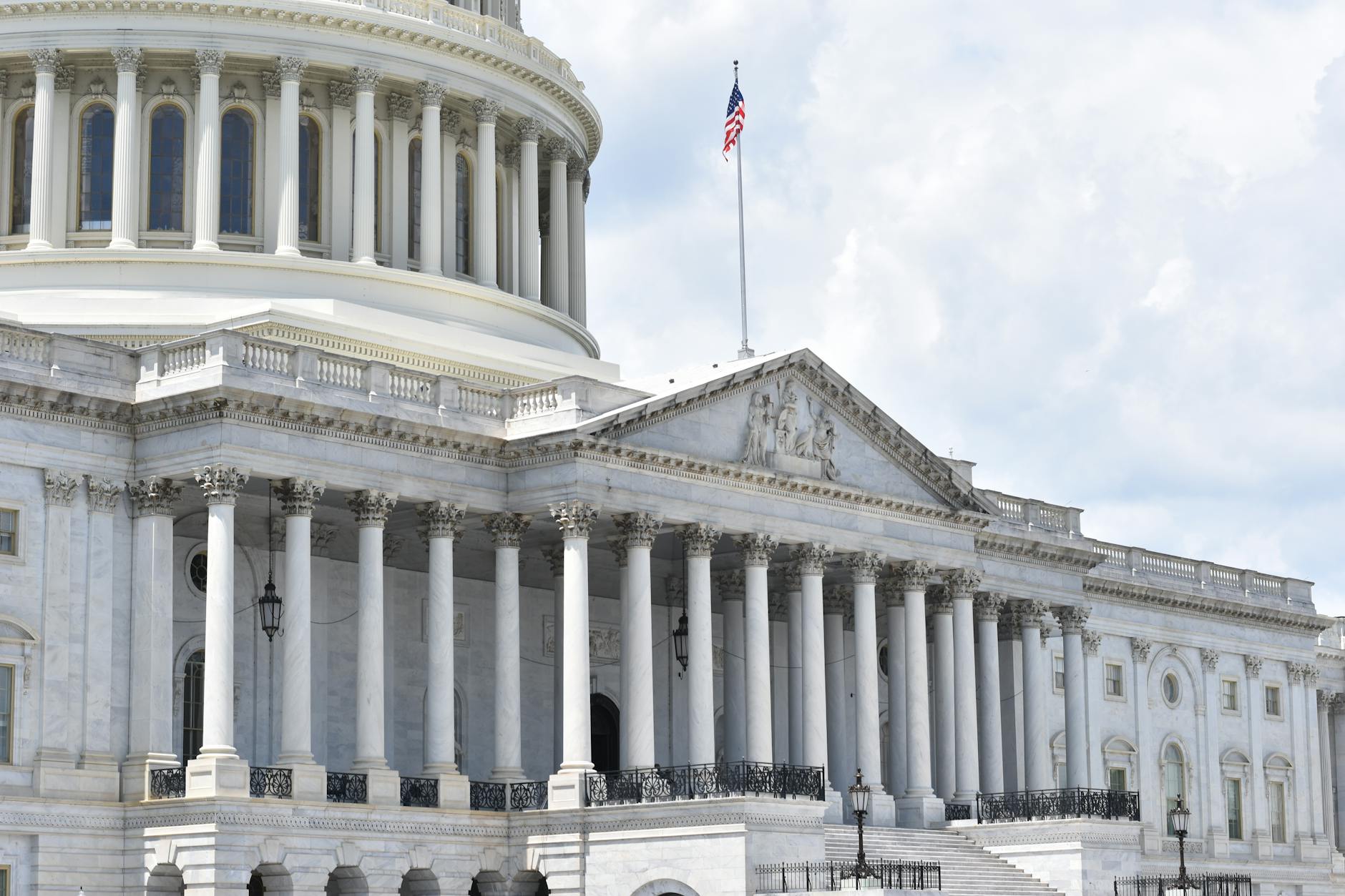
Congress has its own tool for checking presidential war-making: the War powers Resolution of 1973, which requires the President to notify Congress within 48 hours of committing armed forces and to withdraw them within 60 days unless Congress authorizes continued action. In theory, this gives Congress significant power. In practice, no president has ever fully complied with it, and recent congressional efforts to invoke it have failed on nearly party-line votes. In March 2026, Congress took up two War Powers resolutions aimed at the Iran conflict. On March 4, the Senate considered S.J.Res. 104, which would have directed the removal of U.S. forces from hostilities against Iran.
The vote was blocked on a mostly party-line basis, with Senator Rand Paul crossing over to vote in favor and Senator John Fetterman voting against. The next day, the House defeated H.Con.Res. 38, introduced by Representative Thomas Massie, by a vote of 212 to 219, again roughly along party lines. An earlier vote in January 2026 on Venezuela was even more dramatic: the Senate voted 52 to 47 to discharge S.J.Res. 98 directing removal of forces from Venezuela, but the Vice President broke a 50-50 tie to block the final resolution. These votes illustrate a fundamental problem. Even when a majority of the Senate supports invoking the War Powers Resolution, procedural mechanisms and party loyalty can prevent it from taking effect. After the Iran votes failed, the ACLU condemned the strikes as unconstitutional and urged Congress to block new war funding — an acknowledgment that the legislative route had, for the moment, been exhausted.
What Happens When the President Declares the War Powers Resolution Unconstitutional?
In January 2026, President Trump declared the War Powers Resolution unconstitutional, a position no court has ever endorsed. This is not the first time a president has questioned the resolution’s constitutionality — every administration since Nixon has chafed at its restrictions — but an outright declaration raises the stakes significantly. If the executive branch simply refuses to comply with the resolution and Congress cannot muster the votes to enforce it, the only remaining check is the judiciary. And as we have seen, courts have been unwilling to step in. This creates what legal scholars describe as a constitutional crisis in slow motion. The War Powers Resolution was passed over Nixon’s veto specifically to prevent unilateral presidential war-making.
If a president can declare it unconstitutional and face no consequence — no congressional override, no court ruling — the statute becomes a dead letter. Writing in Jacobin, analysts warned that a legal showdown over Iran could give the Supreme Court an opportunity to explicitly strike down the War Powers Resolution, ending Congress’s statutory power to limit presidential war-making altogether. SCOTUSblog raised similar concerns about the erosion of separation of powers in wartime. The tradeoff is sharp. If the courts continue to stay out, presidential war-making authority grows unchecked. But if the courts intervene, they risk a ruling that could either rein in the executive or, alternatively, formalize unlimited war powers by striking down the War Powers Resolution on constitutional grounds. Neither outcome is without serious risk.
Could Courts Be Forced to Finally Rule on War Powers?
A January 2026 article in the Harvard Journal on Legislation proposed an intriguing possibility: Congress could pass legislation limiting courts’ use of the political question doctrine in war powers cases. The argument is that much of the doctrine is judge-made prudential reasoning, not a constitutional mandate, and that Congress has the authority to instruct courts to reach the merits of war powers disputes rather than dismissing them outright. Such legislation would not eliminate the political question doctrine entirely — some applications are rooted in constitutional text — but it could narrow it enough to force courts to decide whether a given military action was lawfully authorized. The limitation is obvious: the same Congress that cannot muster the votes to invoke the War Powers Resolution is unlikely to pass legislation forcing courts to adjudicate war powers. And even if such a law were enacted, the Supreme Court could strike it down as an infringement on judicial independence.
The political question doctrine, whatever its flaws, is one that judges tend to defend because it keeps them out of disputes where any ruling would be difficult or impossible to enforce. A court order directing the President to withdraw troops from an active conflict would face enormous compliance questions. Still, the current convergence of crises — military strikes killing civilians in the Caribbean, an undeclared air campaign against Iran, the President openly calling the War Powers Resolution unconstitutional — has created unprecedented pressure. If courts continue to dismiss every case and Congress continues to fail in its votes, the political question doctrine may face its own legitimacy crisis. At some point, refusing to decide becomes its own decision.

The Alien Enemies Act Challenge — A Related Precedent
A related legal battle over the 1798 Alien Enemies Act offers a partial roadmap for how war-powers-adjacent disputes can reach the courts. Democracy Forward and the ACLU challenged the Trump administration’s invocation of this centuries-old wartime statute to bypass immigration law and conduct deportations. A federal district court granted a temporary restraining order blocking the deportations, and the D.C. Circuit upheld it on March 26, 2025, affirming that due process rights applied even under the Act.
The Supreme Court weighed in on April 7, 2025, voting 5 to 4 to lift the restraining order — but only on procedural grounds, ruling that the case had been filed in the wrong venue. The Court did not address the underlying merits. This outcome is telling: even in a case touching on wartime executive authority, the judiciary was willing to engage, and four justices would have left the restraining order in place. It suggests that while the political question doctrine remains a formidable barrier in pure war powers cases, challenges framed around individual rights — due process, wrongful death, extrajudicial killing — may find more receptive courts.
What the Current Moment Means for the Future of War Powers Litigation
The period from late 2025 through early 2026 has produced more simultaneous challenges to presidential war-making authority than any comparable stretch in American history. Military strikes on civilian boats in the Caribbean, the Iran campaign, the Venezuela deployment, congressional War Powers votes that failed by razor-thin margins, the President’s declaration that the War Powers Resolution is unconstitutional, and multiple active lawsuits — these are not isolated events. They are converging pressures on a legal framework that has avoided a reckoning for decades.
Whether that reckoning comes through the courts, Congress, or some combination remains unclear. The *Burnley* lawsuit may prove to be the vehicle that forces a federal judge to examine the legality of specific military strikes, even if it does not resolve the broader constitutional question. And the Harvard Journal on Legislation’s proposal for congressional action on the political question doctrine, while politically unlikely in the near term, represents the kind of structural reform that could change the landscape if the political will ever materializes. For now, ordinary Americans face enormous legal barriers to challenging war policy in court — but the barriers are under more strain than they have been in a generation.
Frequently Asked Questions
Can an ordinary citizen sue to stop a war?
In theory, yes — anyone can file a lawsuit. In practice, courts have dismissed every such challenge under the political question doctrine, ruling that war-making decisions belong to Congress and the President. Citizens also face standing requirements, meaning they must show a concrete personal injury rather than a general opposition to the war.
Have members of Congress had more success challenging war policy in court?
No. Lawsuits filed by legislators, including challenges to military action in Kosovo (*Campbell v. Clinton*) and other conflicts, have been dismissed on the same grounds as citizen suits. Courts have held that disputes between Congress and the President over war powers are political disagreements, not legal ones.
What is the War Powers Resolution, and does it actually work?
The War Powers Resolution, passed in 1973 over President Nixon’s veto, requires the President to notify Congress within 48 hours of deploying armed forces and to withdraw them within 60 days without congressional authorization. No president has fully complied with it, and in January 2026, President Trump declared it unconstitutional — a position no court has endorsed.
What is the *Burnley v. United States* lawsuit?
Filed in January 2026 by the ACLU and allied organizations, *Burnley* is a wrongful death case brought by the families of two Trinidadian men killed when a U.S. missile struck their boat in October 2025. It is filed under the Death on the High Seas Act and the Alien Tort Statute, avoiding a direct war powers challenge in favor of claims that may have better odds of surviving dismissal.
Could the Supreme Court strike down the War Powers Resolution?
Legal scholars have warned that a direct confrontation over Iran or another conflict could give the Supreme Court an opportunity to rule the War Powers Resolution unconstitutional, which would eliminate Congress’s main statutory tool for limiting presidential military action. This has not happened yet, but the risk is being taken seriously in legal academic circles.
What can citizens do if courts will not hear war powers cases?
The primary avenue is political rather than legal — contacting elected representatives, supporting War Powers Resolution votes, and backing organizations like the ACLU that pursue strategic litigation targeting specific military actions rather than broad constitutional challenges.
You Might Also Like
- Could Americans Claim Economic Harm From War Policy
- Could War Decisions Be Blamed For Rising Fuel Costs In Court
- Could Taxpayers Sue Trump If War Policy Benefited Russia While Gas Prices Soared