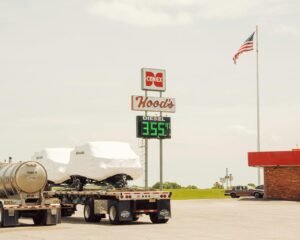

Yes, Americans can and have recovered fuel costs in court, though the path to doing so varies widely depending on the type of claim and the defendant involved. In California, a $50 million settlement with fuel trading companies Vitol Inc., SK Energy Americas, and SK Trading International resulted in $37.5 million going directly to consumers who were overcharged at the pump due to gasoline price-fixing between February and November 2015. Settlement payments began rolling out as of April 29, 2025. That case stands as one of the clearest examples of ordinary drivers getting money back for inflated fuel prices, but it is far from the only legal action targeting the cost of energy in the United States. Across the country, state attorneys general, private plaintiffs, and consumer advocacy groups have pursued a range of strategies to hold fuel companies, utilities, and vehicle manufacturers accountable for costs that were either illegal, deceptive, or artificially inflated.
Michigan’s attorney general filed a federal antitrust lawsuit against BP, Chevron, ExxonMobil, Shell, and the American Petroleum Institute in January 2026. GM settled claims over defective diesel fuel pumps. Duke Energy was found to have broken the law with a fuel rate hike in North Carolina, though customers there got no refunds. The legal landscape is active but uneven, and whether you can actually recover money depends on the specifics of your situation.
Table of Contents
- What Legal Grounds Allow Americans To Recover Fuel Costs In Court?
- The California Gas Price-Fixing Settlement and Who Qualifies
- When Courts Rule Against Fuel Companies But Consumers Still Lose
- How To File a Claim When a Fuel Settlement Is Available
- Defective Fuel Systems and Manufacturer Liability
- State Attorneys General as the Front Line for Fuel Cost Recovery
- What the Supreme Court’s Pending Decision Could Mean for Future Fuel Lawsuits
- Frequently Asked Questions
What Legal Grounds Allow Americans To Recover Fuel Costs In Court?
The most common legal theories behind fuel cost recovery fall into a few categories: antitrust violations, breach of contract, consumer protection statutes, and state unfair competition laws. The California gas price-fixing case illustrates the antitrust approach. The California Attorney General alleged that Vitol, SK Energy Americas, and SK Trading International manipulated gasoline price indices, which inflated what drivers paid at the pump across Southern California. The case was brought under the Cartwright Act and the Unfair Competition Law, both state-level statutes designed to prevent exactly this kind of market manipulation. The $50 million settlement included a $12.5 million penalty assessed specifically for enforcement of consumer protection laws. Breach of contract is another viable path, as demonstrated by the US Foods fuel surcharge settlement.
US Foods agreed to a $2,575,000 settlement fund after customers alleged the company charged excessive and unlawful fuel surcharges that went beyond what their contracts allowed. This is a narrower claim than antitrust, but it shows that businesses overcharging for fuel-related costs can be held accountable even outside the context of price-fixing conspiracies. At the federal level, Michigan’s 2026 lawsuit against major oil companies invokes the Sherman Antitrust Act, the Clayton Antitrust Act, and the Michigan Antitrust Reform Act. The suit alleges a coordinated conspiracy to suppress renewable energy competition and inflate energy prices. It seeks treble damages, disgorgement of profits, and injunctive relief. If successful, it could set a precedent for other states to pursue similar claims. However, antitrust cases at this scale take years to resolve, and there is no guarantee of direct consumer payments even if the state prevails.
The California Gas Price-Fixing Settlement and Who Qualifies
The California gas settlement is the most tangible example of fuel cost recovery for individual consumers in recent years. If you purchased gasoline in Southern California between February 20, 2015 and November 10, 2015, you may have been eligible for a payment from the $37.5 million consumer fund. The covered counties include Los Angeles, San Diego, Orange, Riverside, San Bernardino, Kern, Ventura, Santa Barbara, San Luis Obispo, and Imperial. Payments began going out in late April 2025. There is also a separate $13.93 million settlement covering non-California residents who purchased gas in California between February 18, 2015 and May 31, 2017.
This is an important detail that many people miss. If you were visiting California or driving through the state during that window and bought gas in the affected region, you may have had a valid claim. The official settlement site at calgaslitigation.com handled both tracks. However, if you did not file a claim before the deadline, these settlements are now closed to new participants. This is the harsh reality of class action settlements: the money is real, but the window to claim it is finite. Many eligible consumers never learn about settlements until after the filing period ends, which is why staying informed about active cases matters.
When Courts Rule Against Fuel Companies But Consumers Still Lose
Not every legal victory translates into money back in your pocket. The Duke Energy case in North Carolina is a cautionary example. In February 2026, the North Carolina Court of Appeals ruled that Duke Energy’s 2024 fuel rate hike violated state law. The utility had charged customers for fuel costs from two years prior, when the statute only permitted recovery of one year’s worth of expenses. The court found the rate approval was illegal. Despite that ruling, customers will not receive refunds.
The reason is a 2025 legislative amendment that effectively allows Duke to re-recover the same approximately $19.1 million through future rate proceedings. The court concluded that ordering refunds would be moot since Duke could simply charge the same amount again under the updated law. For ratepayers, this outcome is deeply frustrating. The company broke the law, a court confirmed it, and yet the financial impact on consumers remains unchanged. This pattern is not unique to Duke Energy. Utility regulation often operates in a way where even when companies are found to have overcharged, the regulatory framework provides mechanisms for them to recover those costs through other channels. Consumers pursuing fuel cost recovery through utility commissions or courts should understand that a legal win does not automatically mean a refund check.
How To File a Claim When a Fuel Settlement Is Available
When a fuel-related class action settlement is announced, the process for filing a claim typically follows a standard sequence. First, determine whether you fall within the class definition, which specifies who is eligible based on geography, time period, and the type of purchase involved. In the California gas case, for instance, eligibility was tied to specific counties and a specific date range. Second, gather any documentation you have. Gas receipts, credit card statements, or bank records showing fuel purchases during the relevant period strengthen your claim, though many settlements allow filing without proof of purchase for smaller payment tiers. The tradeoff between individual lawsuits and class actions is worth understanding.
In a class action, the settlement amount is divided among all claimants, which often means individual payouts are modest. The California settlement distributed $37.5 million across potentially millions of drivers. By contrast, filing an individual lawsuit against a fuel company could theoretically yield a larger recovery, but the legal costs and burden of proof make this impractical for most consumers. Class actions exist precisely because the per-person damages are too small to justify individual litigation, even though the aggregate harm is enormous. For active settlements, always go directly to the official settlement website rather than third-party claim-filing services. The official site for the California gas settlement, for example, was calgaslitigation.com. Third-party services sometimes charge fees for what is otherwise a free process, or worse, collect your personal information without actually filing a valid claim on your behalf.
Defective Fuel Systems and Manufacturer Liability
Fuel costs do not only come from the price at the pump. Defective vehicle components that damage fuel systems can impose massive repair bills on owners, and manufacturers can be held liable for those costs. General Motors settled claims alleging it knowingly equipped 2011 through 2016 Duramax diesel trucks with CP4 fuel pumps that were incompatible with American diesel fuel standards. The CP4 pump, designed for the cleaner diesel fuel common in Europe, is prone to catastrophic failure when used with the higher-sulfur diesel sold in the United States. When the pump fails, metal shavings contaminate the entire fuel system, and repairs can cost $8,000 to $12,000 or more.
Under the settlement’s Partial Repair Reimbursement Program, GM covers 50 percent of CP4 repair costs, but only until May 6, 2026 or 200,000 miles, whichever comes first. That deadline is approaching fast. If you own an affected Duramax diesel truck and have not yet filed for reimbursement, the window is narrowing. The limitation here is significant: covering only half the repair cost for a known defect that GM allegedly understood before selling these vehicles strikes many owners as inadequate, but it represents what the settlement negotiations produced. Owners of affected vehicles who have already exceeded 200,000 miles or who experience pump failure after the May 2026 deadline will have no recourse under this settlement. This underscores the importance of acting promptly when settlements have hard deadlines.
State Attorneys General as the Front Line for Fuel Cost Recovery
Individual consumers rarely have the resources to sue oil companies or utility monopolies on their own. State attorneys general have increasingly stepped into that role. Michigan AG Dana Nessel’s January 2026 federal antitrust lawsuit against BP, Chevron, ExxonMobil, Shell, and the American Petroleum Institute is among the most ambitious recent examples.
The suit alleges these companies conspired to suppress renewable energy competition and inflate energy prices for Michigan consumers, seeking treble damages and disgorgement of profits. The Michigan case gained additional momentum on January 27, 2026, when a federal judge dismissed a Trump Administration lawsuit that had attempted to block Michigan from pursuing state-law climate claims against the fossil fuel industry. That dismissal cleared a procedural hurdle and signaled that states retain the authority to bring these claims regardless of federal policy preferences. Whether the Michigan suit results in direct payments to consumers or systemic industry reform remains to be seen, but the legal groundwork is being laid for potential recovery on a statewide scale.
What the Supreme Court’s Pending Decision Could Mean for Future Fuel Lawsuits
The United States Supreme Court is currently hearing arguments from oil and gas companies seeking to block climate change lawsuits filed by states and municipalities across the country. The outcome of this case could reshape the entire legal landscape for fuel cost recovery. If the Court sides with the oil companies and limits the ability of state and local governments to bring these claims, it would significantly narrow the avenues available for Americans to recover energy-related damages in court.
On the other hand, if the Court affirms the right of states and cities to pursue these lawsuits, it could open the floodgates for additional litigation targeting fossil fuel companies for the costs their products impose on communities. The decision is expected sometime in 2026 and is worth watching closely. Regardless of the outcome, the existing settlement mechanisms for specific cases like the California gas price-fixing and GM fuel pump claims will continue to operate independently of the Supreme Court’s ruling. But the long-term trajectory of fuel cost litigation in America may hinge on what the justices decide.
Frequently Asked Questions
Can I sue a gas station directly for high fuel prices?
Generally, no. High prices alone are not illegal. You would need to prove that the station engaged in price-fixing, fraud, or violated a specific consumer protection statute. Most fuel cost recovery cases target the companies that manipulate wholesale prices or trading indices, not individual retail stations.
How much money did people actually get from the California gas settlement?
The consumer portion of the settlement was $37.5 million, distributed among all valid claimants. Individual payment amounts depend on how many people filed claims. In large consumer settlements like this, individual payments often range from modest sums to a few hundred dollars depending on participation rates.
Is the GM CP4 fuel pump settlement still open?
The Partial Repair Reimbursement Program covers 50 percent of CP4 repair costs for 2011 through 2016 Duramax diesel trucks, but only until May 6, 2026 or 200,000 miles, whichever comes first. If you have not yet filed, time is running short.
Do I need a lawyer to file a class action claim for fuel overcharges?
No. Class action settlements are designed so that individual class members can file claims on their own through the official settlement website at no cost. You do not need to hire an attorney to submit a claim form. The class attorneys have already handled the litigation.
What happened with the Duke Energy fuel charge ruling?
The North Carolina Court of Appeals ruled in February 2026 that Duke Energy’s 2024 fuel rate hike violated state law. However, due to a 2025 legislative amendment, the court found that refunds would be moot because Duke can re-recover the same approximately $19.1 million in future proceedings. Customers will not receive refunds.
Could the Michigan lawsuit against oil companies lead to consumer payments?
It is possible but uncertain. The lawsuit seeks treble damages and disgorgement of profits, which could theoretically benefit consumers. However, antitrust cases of this magnitude take years to resolve, and any recovery would depend on the specific terms of a settlement or judgment.
You Might Also Like
- Could War Decisions Be Blamed For Rising Fuel Costs In Court
- Could Americans Demand Compensation For War Caused Fuel Costs
- Could Citizens Sue Over War Impact On Fuel Costs