

No, Trump cannot realistically face a class action lawsuit over rising gas prices or his war policy with Iran — at least not directly. Presidential immunity generally shields a sitting president from civil lawsuits over official acts, and no direct consumer class action against Trump personally over gas prices exists in any current court filings. The legal system simply does not work that way. What consumers and states are doing instead is far more targeted and, arguably, more effective: they are suing retailers for tariff refund pass-throughs, challenging executive overreach on trade authority, and pressuring the administration through 233 active legal cases currently tracked by Lawfare’s litigation tracker.
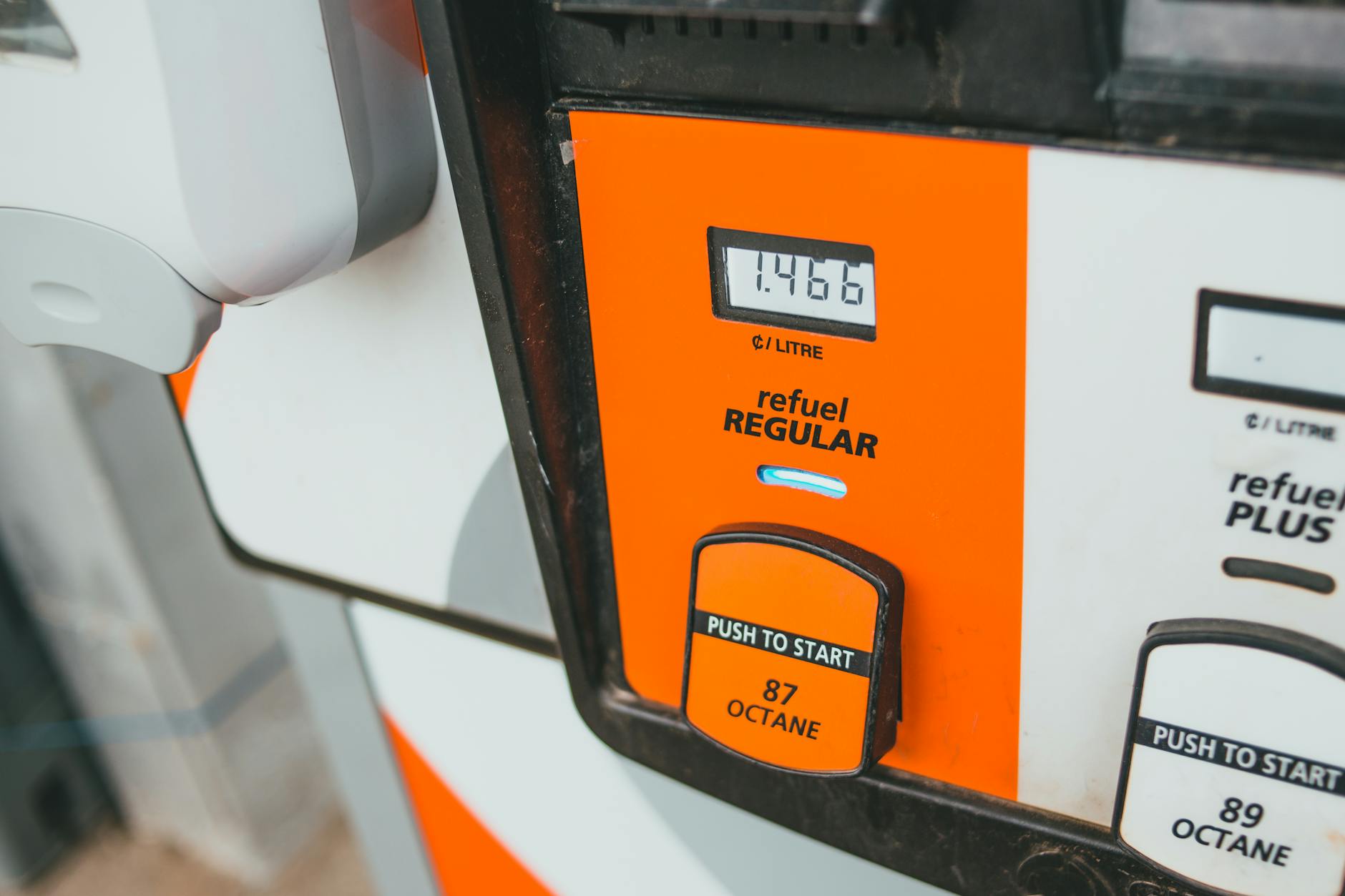
That said, the frustration behind the question is real. Gas prices have jumped 19% over the past month to a national average of $3.45 per gallon, according to AAA data, driven largely by the US-Iran conflict disrupting oil shipments through the Strait of Hormuz. Trump campaigned on lowering gas prices as a centerpiece of his affordability agenda, and the war with Iran is now directly undermining that promise. Meanwhile, tariffs imposed under the International Emergency Economic Powers Act — since struck down by the Supreme Court — have cost American households an average of $2,512 in 2026, up 44% from the prior year.
Table of Contents
- Why Can’t Consumers File a Class Action Against Trump Over Gas Prices and War Policy?
- Where the Real Class Action Lawsuits Are Happening Right Now
- How the Iran Conflict Is Driving Gas Prices Up Despite Campaign Promises
- What Consumers Can Actually Do About Rising Costs
- The Legal Limits of Challenging Presidential War and Trade Decisions
- State Attorneys General Are Leading the Fight Where Class Actions Cannot
- What Comes Next for Consumers, Courts, and Gas Prices
- Frequently Asked Questions
Why Can’t Consumers File a Class Action Against Trump Over Gas Prices and War Policy?
The short answer comes down to presidential immunity doctrine. Under longstanding legal precedent, sitting presidents are generally shielded from civil lawsuits arising from their official acts. Decisions about military engagement with Iran and energy policy fall squarely within the scope of executive authority, which means a federal court would almost certainly dismiss any class action attempting to hold Trump personally liable for the price you paid at the pump last Tuesday. This is not a loophole or a technicality — it is a structural feature of how the presidency operates under the Constitution. The more viable legal pathway, and the one already being aggressively pursued, is challenging the statutory authority behind the policies themselves. The Supreme Court did exactly this on February 20, 2026, ruling that Trump overstepped his authority by using the IEEPA to impose sweeping tariffs.
That decision did not sue Trump for damages. It struck down the legal mechanism he used, which then opened the door for consumers and companies to seek refunds through the courts. Twenty-one state attorneys general and two governors, led by New York AG Letitia James, have filed suit to block the administration’s latest tariff attempt in the wake of that ruling. Over 2,000 companies are separately suing to recover duties paid under the now-invalidated IEEPA tariffs. Compare this to what a hypothetical gas price class action would look like: plaintiffs would need to prove that a specific presidential action directly caused a quantifiable financial harm, that the action exceeded legal authority, and that the court could provide a remedy. Military decisions are among the most protected categories of executive action. Even in the tariff context, the lawsuits target the policy mechanism, not the president’s wallet.

Where the Real Class Action Lawsuits Are Happening Right Now
While a class action against Trump over gas prices is not on the table, consumers are not without legal recourse. The action has simply shifted to where the law actually allows it — against the companies positioned between government policy and consumer wallets. On March 11, Costco customers filed a class action in Illinois federal court seeking refunds for higher prices they paid as a result of IEEPA tariffs. The argument is straightforward: now that the Supreme Court has invalidated the tariff authority, Costco stands to receive refunds on duties it paid, and those savings should be passed through to the consumers who bore the cost. FedEx faces a similar consumer class action filed in Florida federal court back in February 2026.
These cases have a much stronger legal foundation than anything aimed at the president directly because they involve standard consumer protection claims — companies received money they arguably should not have kept, and consumers want it back. However, there is an important limitation here. These class actions only cover the tariff-related price increases, not gas prices driven by the Iran conflict. If your complaint is specifically about what you are paying at the gas station because of war-driven oil disruptions, there is currently no class action vehicle for that. The oil market responds to geopolitical risk in ways that do not create the kind of discrete, traceable harm that class action law requires. A refinery did not overcharge you — the global price of crude went up.
How the Iran Conflict Is Driving Gas Prices Up Despite Campaign Promises
Trump ran on a promise to bring down energy costs. It was not a minor talking point — it was a centerpiece of his affordability agenda, repeated at rally after rally. NPR reported on March 12 that the war with Iran is now directly challenging that promise in ways the administration did not anticipate. CNN reported on March 9 that senior aides had expected only a brief surge in oil prices during the initial days of the Iran conflict. Instead, the disruption to shipping through the Strait of Hormuz — through which roughly 20% of the world’s oil passes — has proven far more sustained.
The administration is scrambling for solutions. Bloomberg reported on March 12 that the White House is considering a 30-day Jones Act waiver that would allow non-American-flagged ships to transport oil, gasoline, diesel, LNG, and fertilizer between US ports. The Jones Act, a century-old maritime law, normally requires that goods shipped between American ports travel on American-built, American-crewed vessels. Waiving it could marginally reduce transportation costs and increase supply flexibility, but it is a band-aid on a wound created by a much larger geopolitical decision. Governor Newsom of California publicly blasted Trump on March 10 for “raising gasoline prices on Americans with no plan and no accountability.” Whether or not you agree with Newsom’s framing, the political reality is that the administration now owns a gas price problem it explicitly promised to solve. PBS has characterized 2026 as a rough start for Trump’s economic agenda, citing job losses, rising gas prices, and broad uncertainty.
What Consumers Can Actually Do About Rising Costs
If you are feeling the squeeze from both higher gas prices and tariff-inflated goods, you have a few practical options, though none of them are as satisfying as a single lawsuit that fixes everything. First, check whether you are eligible for any of the existing class action settlements related to tariff overcharges. The Costco and FedEx cases are still in early stages, but if you purchased goods from retailers that passed along IEEPA tariff costs, you may eventually be part of a settlement class. Keep receipts and watch for official settlement notices. These cases could take months or years to resolve, but the potential for refunds is real given the Supreme Court’s clear ruling that the tariffs exceeded presidential authority.
Second, understand the tradeoff between waiting for legal remedies and adjusting your spending now. Class action settlements, when they do pay out, often return pennies on the dollar compared to actual losses. The Tax Foundation estimates tariffs cost the average US household $2,512 in 2026 — but a class action recovery might return a fraction of that after legal fees and administrative costs. In the meantime, the 90% of tariff costs borne by American consumers and companies, as confirmed by New York Fed economists, are hitting your budget today. Adjusting purchasing patterns, seeking domestic alternatives where they exist, and reducing discretionary driving during peak gas prices may do more for your household finances in the near term than any lawsuit.
The Legal Limits of Challenging Presidential War and Trade Decisions
One of the most important things to understand about the current legal landscape is that not all presidential actions are equally vulnerable to legal challenge. The Supreme Court’s IEEPA ruling was significant precisely because it found that the president had exceeded the specific statutory authority Congress granted. Trade policy has clear statutory boundaries. War powers, by contrast, exist in a much murkier constitutional space where courts have historically been reluctant to intervene. The War Powers Resolution gives the president authority to deploy military forces for 60 days without congressional approval, with a 30-day withdrawal period after that.
Legal challenges to military actions have a long history of being dismissed under the political question doctrine — the idea that some disputes are meant to be resolved by the elected branches, not the courts. Even if gas prices spike to five or six dollars a gallon as a direct consequence of the Iran conflict, courts are unlikely to second-guess the military decision that caused it. This is a genuine limitation for consumers who feel harmed by war-driven price increases. The legal system treats economic harm from military action differently from economic harm caused by a specific regulatory or trade policy that exceeds statutory authority. The 233 active legal cases challenging Trump administration actions, as tracked by Lawfare, overwhelmingly target domestic regulatory and trade decisions — not military operations. If your concern is gas prices caused by the Iran war specifically, the remedy is political, not legal.

State Attorneys General Are Leading the Fight Where Class Actions Cannot
The coalition of 21 state attorneys general and two governors, led by New York AG Letitia James, represents probably the most consequential legal front against the administration’s economic policies. Unlike individual consumer class actions, state AG lawsuits carry the weight of sovereign enforcement power and can seek injunctive relief — meaning they can ask courts to stop policies from being implemented, not just award damages after the fact. This matters because blocking a harmful policy before it takes full effect is worth far more to consumers than recovering partial damages years later.
The Supreme Court’s February ruling on IEEPA tariffs came through exactly this kind of challenge to executive authority. Retail prices on imported goods had already risen roughly 7 percentage points above pre-tariff trends, according to the Tax Foundation, and every day those tariffs remained in place cost consumers and businesses more. The state AG approach treats the disease rather than the symptoms, which is why it has become the primary legal strategy even as individual class actions against retailers pile up in parallel.
What Comes Next for Consumers, Courts, and Gas Prices
The next several months will likely see a convergence of legal and economic pressures. The tariff-related class actions against companies like Costco and FedEx will move through discovery and potentially toward settlement negotiations. The state AG coalition will continue challenging any new tariff mechanisms the administration attempts after the IEEPA ruling. And gas prices will remain hostage to the trajectory of the Iran conflict and the administration’s willingness to take steps like the Jones Act waiver.
For consumers watching these developments, the most important thing to understand is that the legal system is working — just not in the way the question in our headline implies. The courts are not going to let you sue the president for the price of gas. But they have already struck down the legal basis for tariffs that cost your household thousands of dollars, and the resulting class actions may eventually put some of that money back in your pocket. The system is slow, indirect, and imperfect, but it is not doing nothing.
Frequently Asked Questions
Can I personally sue Trump for raising gas prices?
No. Presidential immunity shields sitting presidents from civil lawsuits over official acts, and courts would almost certainly dismiss such a case. The viable legal path is challenging the statutory authority behind specific policies, as the Supreme Court did with IEEPA tariffs.
Am I eligible for the Costco tariff class action?
The Costco class action was filed on March 11, 2026, in Illinois federal court. If you purchased goods from Costco that were subject to IEEPA tariff price increases, you may eventually be included in the class. Watch for official court notices as the case progresses.
How much have tariffs actually cost me?
The Tax Foundation estimates that tariffs cost the average US household $2,512 in 2026, a 44% increase from $1,745 in 2025. New York Fed economists have confirmed that approximately 90% of tariff costs are borne by American consumers and companies, not foreign exporters.
Will gas prices come back down?
That depends largely on the trajectory of the US-Iran conflict and its impact on oil shipments through the Strait of Hormuz. The administration is considering measures like a 30-day Jones Act waiver to ease domestic transportation costs, but as long as the conflict disrupts global oil supply, prices will face upward pressure.
What is the Supreme Court’s IEEPA ruling?
On February 20, 2026, the Supreme Court ruled that Trump overstepped his authority by using the International Emergency Economic Powers Act to impose sweeping tariffs. This decision invalidated the legal basis for those tariffs and opened the door for companies and consumers to seek refunds on duties already paid.
How many lawsuits are currently challenging Trump administration policies?
According to the Lawfare litigation tracker, there are currently 233 active legal cases challenging various Trump administration actions, spanning trade policy, regulatory decisions, and executive authority questions.