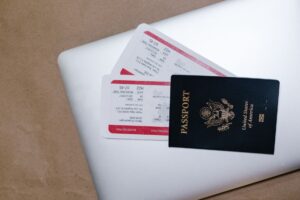

To file a successful flight delay insurance claim, you need to gather and preserve specific records that prove the delay occurred, that you suffered losses as a result, and that you meet the policy requirements. The essential documents include your booking confirmation, boarding pass, proof of payment, the airline’s written delay notification, receipts for expenses incurred due to the delay, and any correspondence with the airline about the incident. Without these records, insurers often deny claims or significantly reduce payouts, treating the claim as unverifiable even if you genuinely experienced a substantial delay. The threshold for what constitutes a documentable delay varies by policy and jurisdiction. In the United States, most flight delay insurance requires delays of at least 3 to 12 hours depending on the policy terms, while some European carriers operating under EU261 rules must compensate for delays of 3+ hours without requiring extensive documentation from the passenger.
However, the burden of proof always falls on you as the claimant. Airlines process hundreds of thousands of flights annually, and they have no obligation to track your expenses or confirm your hardship unless you provide contemporaneous evidence. Consider the case of a traveler who missed a connecting flight due to a 4-hour domestic delay. The airline admitted responsibility in writing but the traveler had discarded the boarding pass, paid for a hotel in cash without requesting a receipt, and communicated the problem to the airline only via phone calls with no confirmation numbers. When they later submitted a claim to their travel insurance, the insurer requested documentation the traveler could no longer produce, and the claim was denied. Had the traveler collected even basic records at the time, reimbursement would likely have been approved.
Table of Contents
- What Documents Prove Your Flight Delay Occurred?
- Insurance Policy Language and Coverage Limits
- Receipts and Proof of Expenses Incurred During the Delay
- Organizing Records and Creating a Paper Trail with Airlines
- Common Documentation Mistakes That Lead to Claim Denials
- Record Retention and Document Preservation
- Working with Multiple Airlines or Connecting Flight Delays
What Documents Prove Your Flight Delay Occurred?
Your booking confirmation and boarding pass form the foundation of any delay claim. The booking confirmation shows when you purchased the ticket and what flight you were scheduled on, while the boarding pass proves you actually appeared at the gate and were checked in. Airlines maintain their own delay records in their systems, but you cannot assume they will spontaneously provide this information to an insurer; you must have your own documentation in hand. Digital records from your email and airline apps are acceptable, but many people delete these after a trip—screenshot and save them to a folder you won’t lose. A written statement from the airline about the delay and its cause is far more powerful than your own recollection.
Request this in writing while you’re still at the airport or within 24 hours, either at the ticket counter, via email to the airline’s customer service, or through their website’s claims portal. Emails from the airline containing language like “your flight was delayed due to” or “the delay lasted” serve as third-party evidence that is harder for an insurer to dispute than a passenger’s verbal claim. Some airlines provide delay certificates or delay letters automatically; others require you to request them specifically. If your flight was rebooked or cancelled, preserve every piece of communication from the airline, including text messages, email confirmations of rebooking, and printed itineraries showing the original and revised flight information. A weather delay that grounds your original flight but allows the airline to rebook you on a later flight still counts as a delay that may trigger insurance if it exceeds your policy’s threshold. The key distinction is that you need documentation showing both the original scheduled time and the actual departure time.
Insurance Policy Language and Coverage Limits
Before you gather any documentation, read your insurance policy carefully to understand exactly what delays are covered and what proof is required. Some policies explicitly exclude delays caused by weather or “acts of God,” meaning a 10-hour delay caused by a hurricane would not qualify regardless of your documentation. Other policies cover any delay exceeding a certain number of hours, regardless of cause. Some policies require you to have incurred a minimum amount of expenses to file a claim, while others pay a flat amount per hour of delay. Your documentation strategy depends entirely on what your policy actually says. Insurance companies have become increasingly strict about requiring original receipts rather than credit card statements alone.
If you spent $200 on a hotel due to an overnight delay, a credit card statement showing “Hotel XYZ: $200” is a starting point, but the insurer will often request the actual itemized receipt showing the date of stay, room rate, taxes, and the specific night you occupied the room. This is a significant limitation if you booked accommodations through a third-party website that issued no physical receipt or if you paid in cash. Digital receipts from email confirmations count, but you must preserve them—they are not recoverable once your email is archived or deleted. Some insurers require “proof of loss” forms to be submitted within 90 days of the delay, meaning your documentation must be organized and ready within roughly three months. If you wait six months to start gathering records, airlines may have discarded their logs, you may not remember the exact sequence of events, and the insurer may claim your documentation is incomplete because you cannot verify timelines or causation. This is especially problematic for expense-based claims where the insurer needs to see a clear chain: departure was delayed, delay lasted X hours, you therefore incurred Y expense directly caused by the delay.
Receipts and Proof of Expenses Incurred During the Delay
Every dollar you claim must be backed by a receipt that clearly identifies what you paid for and when. A receipt for meals purchased during a delay should show the date, time of purchase, and the name of the establishment; a generic credit card statement is insufficient. If you bought a meal for $35 at 11 p.m. on the night of your delayed flight, your documentation must make this connection explicit. Insurers frequently deny meal claims where the passenger has only a credit card statement, because the insurer cannot verify from a statement alone that the meal was purchased due to the delay rather than as a normal part of the trip. Hotel expenses require the most careful documentation. If a delay forced you to stay overnight, you need the itemized hotel receipt showing the exact date of stay, not a receipt dated two days later showing a multi-night reservation. Many hotel chains provide receipts showing only the total amount paid; you must separately document which nights were delay-caused.
If you arrived in a city on day one as planned, but a connecting flight delay meant you were stuck overnight on day two, only day two’s accommodation is an eligible expense under most policies. Some insurers require you to prove you had no other choice—for instance, if the airline did not offer a hotel voucher and you lived more than an hour away, a hotel stay is reasonable and documented expense. Transportation costs during a delay must also be carefully recorded. If you took a taxi to a hotel after missing a connection, keep the receipt. If you rented a car because the delay stranded you in a city where you needed transportation, document the rental agreement and daily rate. However, understand that most policies limit covered expenses to what would not have been necessary if the flight had departed on time. If you would have taken a taxi from the airport to your hotel anyway, the insurer may argue that the taxi ride was not an additional expense caused by the delay—it was an expense you would have incurred regardless. This limitation often causes legitimate expense claims to be reduced or denied.
Organizing Records and Creating a Paper Trail with Airlines
Create a dedicated folder on your computer or in cloud storage specifically for this claim, and organize it chronologically. Name each file with the date: “20260515_boarding_pass.pdf”, “20260515_airline_email.pdf”, “20260516_hotel_receipt.pdf”. This organization will help you present the claim coherently when you submit it and will help an insurer verify that all pieces of the timeline fit together. Many claims are denied not because the documentation is insufficient, but because it is chaotic and the insurer cannot quickly match expenses to the delay incident. Communicate with the airline in writing whenever possible. If you speak to a gate agent about the delay, follow up with an email to the airline’s customer service that night summarizing what you were told: “On May 15, I was informed by staff at Gate 7 that my flight was delayed four hours due to crew scheduling, and the flight eventually departed at 8:45 p.m. instead of the originally scheduled 4:45 p.m.
I have included my confirmation number XXXX.” This creates a written record that ties together your name, flight, and the delay. Airline customer service representatives who receive such emails often respond with a confirmation email or a delay certificate, which becomes invaluable evidence. Take photographs of signage at the airport showing updated flight information if you are able. A photo of the departure board showing your flight delayed from 4:45 p.m. to 8:45 p.m., time-stamped and date-stamped by your phone, is a form of documentation. While not as authoritative as an airline statement, it corroborates your claim that the delay occurred and shows when it was announced. Similarly, if you received a text message or email alert from the airline about the delay, screenshot it and save it with the timestamp visible.
Common Documentation Mistakes That Lead to Claim Denials
A frequent error is submitting only partial documentation. A traveler who paid for a hotel, meals, and transportation due to a delay might submit the hotel receipt but forget the meal receipts or vice versa, and the claim is denied not because the receipts are fraudulent but because the submission is incomplete. Insurers often interpret missing documentation as a sign that the claimant cannot fully support the claim and may assume the missing items were not actually purchased. Even if you have a hotel receipt for $180, if you also spent $60 on meals during the delay and cannot produce meal receipts, the insurer may deny the entire claim pending completion of documentation, or may approve only the hotel portion if they believe the meal claim is insufficiently proven. Another mistake is submitting expense receipts without tying them to the specific delay incident. A receipt dated May 15 for a $200 hotel stay is not automatically connected to your delayed flight unless you include a note explaining that this hotel stay occurred because your flight was delayed on May 15.
Many claims are denied because the insurer cannot see the causal chain—they lack clear evidence that the expense was directly caused by the delay and not part of the normal trip. Write brief explanatory notes on each receipt or in a cover letter: “Attached is the hotel receipt for the night of May 15-16, when I was stranded due to the 10-hour delay on my original flight.” Failing to report the delay to your insurance company within the required timeframe is grounds for outright denial. Most policies require notification within a specific period, often 30 to 90 days. If you file a claim nine months after the delay, the insurer may deny it on the basis that you did not meet the notice requirement, regardless of how excellent your documentation is. Check your policy for the deadline and mark it on your calendar immediately after the delay occurs. Sending even a preliminary email to the insurer saying “I experienced a delay on this flight on this date and am gathering documentation” can establish that you reported the incident within the required window.
Record Retention and Document Preservation
Keep all original documentation for at least three years, because some insurers conduct follow-up audits on claims months or even years after payout. If you are unable to produce the documents later, the insurer may claim the money back. Digital copies stored in cloud storage (such as Google Drive or Dropbox) are acceptable, but ensure you have local backups as well. If you rely solely on email to store receipts, you risk losing them if your email account is compromised or if the email service is disrupted.
Some travelers print important receipts and store them in a physical folder alongside digital copies—this redundancy is not excessive for claims above a certain amount. Be aware that some documents have a natural expiration date. Credit card statements are often available online for only 7 years, and some banks archive older statements in a format that is difficult to access. If you need to prove an expense 18 months after the fact, the original email receipt from the hotel or airline is more reliable than a statement you can no longer easily retrieve from your card issuer. Save your most important documents—the airline’s delay statement, your boarding pass, receipts for any reimbursable expenses—as PDF files on your computer the day you receive them, before they can be lost.
Working with Multiple Airlines or Connecting Flight Delays
If your delay involved a missed connection with a second airline, your documentation must cover both carriers. You need evidence that the first airline delayed you, evidence that this delay caused you to miss your connection, and documentation from the second airline confirming that you were a no-show on their flight. Each airline will attempt to minimize their own responsibility; the connecting airline may claim you were simply late, while the first airline may claim the second flight was also delayed so the connection would have been missed anyway. Your documentation must be specific enough to resolve these disputes. Confirmation numbers for both flights, boarding passes for both flights, and a timeline showing the gate closure time of your connection all strengthen your claim.
Delays that accumulate across multiple flight segments create complex claims. If a 3-hour delay on a domestic flight caused you to miss your international connection, and the international delay then forced you to book a hotel in an intermediate city, your claim involves three separate airlines and multiple overlapping causation chains. Each insurer will have different thresholds and coverage rules; a delay on the first segment might not be covered by that airline’s insurance, while the missed connection portion might be covered by travel insurance you purchased separately. Organize your documentation by segment and by insurance policy, clearly labeling which expenses are claimed under which policy. Many of these claims are denied because the documentation conflates multiple incidents and does not clearly show which airline caused the delay that led to which specific expense.