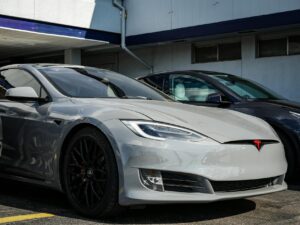

Tesla Autopilot phantom braking is a documented safety defect where Tesla vehicles equipped with Autopilot rapidly decelerate without driver input or warning, creating collision hazards on highways and city streets. The issue has triggered multiple class action lawsuits, a federal investigation covering 416,000 vehicles, and at least one $243 million jury verdict, establishing that Tesla bears legal responsibility for these incidents. If you own a Tesla Model 3 or Model Y that has experienced sudden, unexplained braking while Autopilot was engaged, you may be eligible for compensation through pending class actions or previous settlements. Phantom braking incidents represent genuine safety hazards, not merely inconveniences. Drivers report their vehicles slamming on the brakes at highway speeds—sometimes decelerating from 60 mph to 20 mph in seconds—without any obstacle, vehicle, or pedestrian present.
These sudden stops have caused rear-end collisions, multi-vehicle pileups, and in at least one documented case, serious injuries. The National Highway Traffic Safety Administration (NHTSA) has received 758 reports of phantom braking affecting Tesla Autopilot systems, making this one of the most frequently reported defects in the agency’s database. The legal landscape for Tesla Autopilot phantom braking is evolving rapidly. An Australian class action filed by the JGA Saddler law firm covers Tesla Model 3 and Y owners who purchased or leased vehicles between May 2021 and February 2025. In the United States, a federal court ruling issued in August 2025 allowed core phantom braking claims to proceed in class action litigation, with a settlement conference scheduled for January 22, 2026. This means eligible owners may soon have opportunities to file claims or join settlements without filing individual lawsuits.
Table of Contents
- WHAT IS PHANTOM BRAKING AND HOW DOES IT OCCUR IN TESLA VEHICLES?
- THE REGULATORY INVESTIGATION AND EVIDENCE OF DEFECTIVENESS
- CLASS ACTION LAWSUITS AND SETTLEMENT OPPORTUNITIES
- THE $243 MILLION JURY VERDICT AND ITS IMPLICATIONS
- PHANTOM BRAKING COMPLAINTS: PATTERNS AND COMMON SCENARIOS
- FILING A CLAIM AND DOCUMENTING YOUR PHANTOM BRAKING INCIDENT
- THE FUTURE OF TESLA AUTOPILOT REGULATION AND LITIGATION
WHAT IS PHANTOM BRAKING AND HOW DOES IT OCCUR IN TESLA VEHICLES?
Phantom braking refers to unintended, rapid deceleration that occurs without driver input or a clear external cause. In Tesla vehicles, the issue appears to be linked to Autopilot’s suite of advanced driver assistance systems, which rely on radar, cameras, and ultrasonic sensors to monitor road conditions. When these sensors misinterpret shadows, road reflections, metal objects, or innocent objects as obstacles, they can trigger emergency braking protocols designed to prevent collisions. However, because there is no actual hazard, the sudden deceleration feels “phantom”—unwarranted and dangerous. The defect is not random or isolated. NHTSA received 758 reports of phantom braking issues, with 416,000 Tesla Model 3 and Model Y vehicles currently under preliminary investigation based on 354 formal complaints.
This concentration suggests a systemic problem affecting a broad population of vehicles rather than occasional sensor malfunctions. Owners report phantom braking occurring on highways, city streets, and even during normal traffic flow, making it unpredictable and difficult to avoid. In some cases, the braking is so sudden that following drivers have no time to react, resulting in rear-end collisions. The potential consequences of phantom braking extend beyond property damage. A Miami federal court jury in 2025 awarded a $243 million verdict in a case where a Tesla Model S in Autopilot mode struck a couple at a T-intersection. Although the case involved multiple factors, the jury’s decision to hold Tesla partly responsible demonstrates that courts recognize phantom braking as a serious safety defect capable of causing severe harm. Real-world examples include a Tesla owner whose Model 3 braked unexpectedly on a busy interstate, causing a seven-car pile-up, and another driver whose Model Y phantom-braked three times during a single 30-mile drive, prompting them to disable Autopilot entirely.
THE REGULATORY INVESTIGATION AND EVIDENCE OF DEFECTIVENESS
The National Highway Traffic Safety Administration initiated its investigation into Tesla Autopilot phantom braking based on the volume and consistency of consumer complaints. The sheer number—758 reports to NHTSA, with 416,000 vehicles under investigation—indicates this is not a fringe issue affecting a handful of defective units. NHTSA’s decision to open a preliminary investigation means federal regulators have reason to believe a safety defect may exist across a significant portion of Tesla’s Model 3 and Model Y fleet. The investigation has already progressed to the point where a settlement conference is scheduled, suggesting that regulators and manufacturers are preparing for formal enforcement action. One critical limitation of relying solely on NHTSA’s investigation is that the agency’s complaint database captures only a fraction of total incidents. Many owners who experience phantom braking may not file formal complaints with NHTSA, instead reporting problems directly to Tesla or simply disabling Autopilot.
This means the true incidence of phantom braking could be substantially higher than the 758 reported cases. Additionally, Tesla’s ability to collect internal telemetry data about Autopilot malfunctions gives the company an information advantage. Unless that data is made public through litigation or regulatory action, the full scope of the problem may remain hidden from consumers and policymakers. The federal court ruling in August 2025 that allowed core phantom braking claims to proceed in class action litigation represents a significant legal turning point. When a court permits claims to advance past preliminary motions, it signals that the plaintiffs have presented sufficient evidence of defectiveness. The fact that multiple independent teams of lawyers, litigating in different jurisdictions, have filed cases on this issue underscores that the phantom braking problem is substantive and documented. However, it is important to note that permitting claims to proceed does not guarantee that plaintiffs will win or that all affected owners will receive compensation—these cases are still pending final resolution.
CLASS ACTION LAWSUITS AND SETTLEMENT OPPORTUNITIES
The Australian class action filed by the JGA Saddler law firm represents one of the most comprehensive legal responses to phantom braking to date. The class covers Tesla Model 3 and Model Y owners who purchased or leased vehicles between May 2021 and February 2025, a window that captures hundreds of thousands of vehicles. The inclusion of both purchased and leased vehicles means that leasing customers—who would otherwise have limited recourse—are included in the compensation framework. This Australian action serves as a template for similar litigation in other jurisdictions, and U.S. plaintiffs’ attorneys are pursuing parallel claims in federal court. In the United States, the federal court ruling issued in August 2025 is a watershed moment for affected owners. When U.S. District Judge Rita Lin permitted core phantom braking claims to proceed, she essentially validated the central allegation: that Tesla’s Autopilot system has a design or manufacturing defect that causes it to brake suddenly without a legitimate safety reason. The scheduling of a settlement conference for January 22, 2026, indicates that the parties are moving toward resolution.
Settlement conferences are often the precursor to structured settlements or coordinated class action agreements that compensate members without requiring individual lawsuits. For Tesla owners who have experienced phantom braking, this means a potential avenue to recover damages—whether through direct settlement compensation, price refunds, or other remedies—without the cost and burden of individual litigation. An important distinction exists between ongoing class actions and concluded settlements. If you owned a Tesla Model 3 or Model Y affected by phantom braking, you may be eligible for multiple avenues of relief. You could be part of the Australian class action if you purchased or leased a vehicle within the specified window. You could also be eligible for the U.S. federal class action if you reside in the United States and your vehicle meets the criteria. However, the specifics of who qualifies, what compensation is available, and how to file a claim depend on the final structure of each settlement. It is therefore critical to monitor official court announcements and class action administrator websites to understand your eligibility and submission deadlines.

THE $243 MILLION JURY VERDICT AND ITS IMPLICATIONS
In 2025, a Miami federal court jury awarded $243 million in a case involving a Tesla Model S in Autopilot mode that struck a couple at a T-intersection. Although this case involved specific facts and injuries, the verdict’s significance extends beyond the particular incident. By awarding such a substantial sum, the jury sent a clear message: Tesla bears legal responsibility, at least in part, for injuries and damages caused by Autopilot phantom braking. This verdict serves as a precedent and negotiating benchmark for other pending cases. When class action lawyers point to this verdict in settlement negotiations, they are signaling to Tesla and its insurers that juries are willing to hold the company accountable for phantom braking incidents. However, it is important to understand the limitations of relying on this single verdict as a predictor of all phantom braking outcomes. The $243 million award was specific to that case, which involved catastrophic injuries, clear liability, and sympathetic plaintiffs.
Not all phantom braking incidents result in injury; many cause only property damage or fright. Conversely, some phantom braking incidents—such as the seven-car pile-up mentioned earlier—could generate even larger verdicts if they proceeded to trial. The settlement amounts offered in class actions typically reflect expected average compensation across all class members, not the maximum amounts juries might award in the most severe cases. This means that most owners who settle their claims will receive less than $243 million, though they also avoid the risks and delays of individual litigation. The existence of a substantial jury verdict also influences how courts and regulators view the issue. Judges are more likely to certify class actions and approve settlements when there is evidence that juries take phantom braking seriously. Regulators are more likely to pursue enforcement actions or mandate recalls when verdicts demonstrate that the public considers the defect a serious safety concern. For prospective Tesla buyers, the verdict underscores a tradeoff: Autopilot may offer convenience and innovation, but it comes with documented safety risks that the legal system has now quantified in monetary terms.
PHANTOM BRAKING COMPLAINTS: PATTERNS AND COMMON SCENARIOS
Analysis of NHTSA complaints reveals consistent patterns in how phantom braking manifests. Many owners report that phantom braking occurs repeatedly during single drives, suggesting a systematic rather than random malfunction. Owners describe scenarios such as braking suddenly when passing under highway overpasses, when encountering metal road signs, or when driving through areas with strong shadows cast by buildings. Some reports indicate phantom braking occurs more frequently in certain weather conditions, such as rain or heavy sunlight, which could affect sensor performance. However, other reports describe phantom braking on clear days with excellent visibility, indicating that weather alone does not explain the issue. A critical warning for current Tesla Autopilot users is that phantom braking is unpredictable and cannot be fully avoided through driver vigilance. Unlike defects that manifest only under specific conditions, phantom braking can occur at any time Autopilot is engaged.
Remaining alert and keeping hands on the steering wheel—as Tesla recommends—reduces but does not eliminate the risk. In real-world traffic, phantom braking is particularly dangerous because following drivers may not anticipate the sudden deceleration and could cause collisions. Additionally, phantom braking on highways poses risks that city driving does not, given the higher speeds involved. Some owners have responded by disabling Autopilot altogether, but this remedy is not universally available to all users and may represent an additional cost to consumers who purchased vehicles partly for Autopilot functionality. The duration and severity of phantom braking episodes also vary, adding to the unpredictability. Some owners report single-instance braking events, while others describe cars that brake multiple times per drive. The strength of braking also varies—some episodes are mild deceleration that feels uncomfortable but not dangerous, while others are violent stops that trigger automatic emergency alerts and can cause physical injury to unrestrained passengers. This variability means that two owners of identical vehicles may have vastly different experiences, making it difficult to predict who will be most affected.
FILING A CLAIM AND DOCUMENTING YOUR PHANTOM BRAKING INCIDENT
If you believe your Tesla has experienced phantom braking, documenting the incident is essential for any future claim. This documentation should include the date, time, location, and exact circumstances when phantom braking occurred. If your vehicle has built-in dashcam or Sentry Mode footage, retrieve and preserve this video evidence immediately—many owners report losing access to footage after a certain period if they do not download it. Photograph or document any dashboard warnings or alerts that appeared during the incident. If you filed a report with NHTSA, note the complaint number.
If you reported the issue to Tesla, save a copy of any service records or correspondence with the manufacturer. When the U.S. settlement conference on January 22, 2026, concludes and a final settlement structure is announced, detailed instructions will be provided on how to submit a claim. Class action administrators typically maintain websites where claimants can view settlement documents, verify their eligibility, and submit claim forms. The claim process usually requires you to provide vehicle identification (VIN), proof of ownership or lease, and documentation of the phantom braking incidents you experienced. Having organized your evidence in advance will significantly streamline the claim submission process and increase the likelihood that your claim is accepted.
THE FUTURE OF TESLA AUTOPILOT REGULATION AND LITIGATION
The phantom braking litigation and regulatory investigation are shaping how federal agencies and courts approach autonomous driving technology. As more class actions proceed and settlements are reached, the legal framework for holding manufacturers accountable for defects in advanced driver assistance systems will solidify. Future cases involving other manufacturers—such as General Motors’ Super Cruise or other advanced Autopilot-like systems—will likely reference the Tesla phantom braking settlements as precedent. This means that the resolution of these cases will have implications beyond Tesla owners, affecting how all automakers develop, test, and warrant their autonomous systems.
Looking ahead, the outcome of the January 22, 2026 settlement conference will determine the level of compensation available to affected Tesla owners and the timeline for receiving payment. If the settlement is structured as a widespread class action, most eligible owners should expect notification by mid-2026, with claim submission deadlines typically 6 to 12 months after settlement approval. If negotiations continue past the conference date, the timeline may extend further. Regardless of the timeline, the fact that Tesla Autopilot phantom braking has become the subject of major class action litigation and federal investigation signals that the issue is not going away—owners who have experienced phantom braking have both legal grounds to seek compensation and increasing avenues through which to do so.
You Might Also Like
- Zimmer NexGen Knee Implant Loosening Class Action
- Wright Hip Implant Metallosis Class Action
- Transvaginal Mesh Pelvic Organ Prolapse Class Action
Open Settlements You Can Claim Now
Browse current class action settlements accepting claims — several require no proof of purchase: